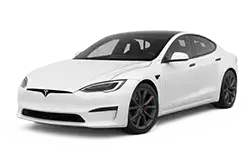
A Tesla battery replacement quote can be scary. Some owners hear numbers around $20,000 and immediately assume the car is totaled.
That is not always true.
A failed Tesla high-voltage battery does not automatically mean your Tesla is done. It also does not mean you only have one option. Before you sell the car, trade it in for almost nothing, or accept the first quote, you need to understand what actually failed, whether your vehicle is still under warranty, and whether a qualified independent EV battery specialist can replace the pack for less.
In one real Greentec Auto case, a Tesla owner was quoted around $20,000 for battery replacement. They paid under $9,000 through Greentec Auto instead. Pricing always depends on the model, year, battery type, availability, and diagnostic results, but the point is simple: do not assume the first number is the only number.
Greentec Auto has been replacing hybrid and EV batteries since 2012, with locations across the U.S., Canada, and the U.K. We work with high-voltage battery packs every day, including Tesla battery replacement, diagnostics, remanufactured packs, and recycling.
Need help now? Check your year, make, and model to see Tesla battery replacement pricing, or contact Greentec Auto for EV battery diagnostics before assuming the car is finished.
Tesla battery replacement cost can vary widely. A dealership quote may be much higher than an independent EV battery specialist, especially when the quote is for a full high-voltage battery pack replacement.
In real-world cases, Tesla owners commonly panic when they hear a quote in the $15,000–$20,000+ range. That does not mean every Tesla battery replacement costs that much, and it does not mean every independent option will be half the price. The correct answer depends on:
Factor | Why It Matters |
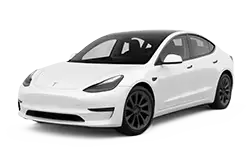
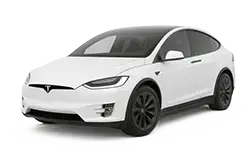
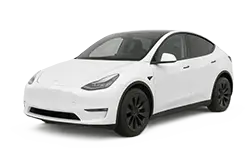
Tesla model | Model S, Model X, Model 3, and Model Y packs are different. |
Battery type | Pack design, chemistry, module layout, and availability affect cost. |
Warranty status | If covered, Tesla may handle the repair under warranty. |
Failure type | A coolant leak, failed contactor, weak brick, or full pack failure may require different work. |
New, remanufactured, or refurbished option | Different replacement options have different price points and warranties. |
Labor and location | High-voltage battery service requires proper tooling, training, and safety procedures. |
The biggest mistake is treating the first quote as the final answer. Get the battery diagnosed. Check the warranty. Compare options. Then decide.
Before paying anything for Tesla battery replacement, check your warranty first.
Tesla’s current U.S. Battery and Drive Unit Limited Warranty is model-specific. Tesla lists Model S, Model X, and Cybertruck coverage at 8 years or 150,000 miles, with minimum 70% battery capacity retention during the warranty period. For many Model 3 and Model Y configurations, the mileage limit is lower: some RWD/AWD versions are listed at 8 years or 100,000 miles, while Premium/Performance versions are listed at 8 years or 120,000 miles, also with minimum 70% retention.
In Canada, Tesla lists Model S, Model X, and Cybertruck battery coverage at 8 years or 240,000 km. Certain Model 3 and Model Y configurations are listed at 8 years or 160,000 km, while others are listed at 8 years or 192,000 km, with minimum 70% battery capacity retention during the warranty period.
That “eight-year” number matters because a lot of older Teslas are now reaching the age where the battery warranty is expiring. Once the car is out of warranty, the owner is responsible for the repair unless another warranty or service plan applies.
At Greentec Auto, we have seen customers come in for a replacement quote and discover they were still under warranty. In that situation, the right move is simple: go to Tesla first and make sure they honor the coverage.
Rule: If your Tesla is still under the Battery and Drive Unit Limited Warranty, do not pay out of pocket until you confirm whether Tesla will cover the repair.
One of the most common Tesla battery mistakes is confusing the low-voltage battery with the high-voltage battery pack.
These are completely different parts.
The low-voltage battery powers things like vehicle electronics, locks, computers, and wake-up functions. Depending on the vehicle, it may be a 12V battery or a newer low-voltage battery design. A low-voltage battery issue can make the car look dead, unresponsive, or unable to wake up.
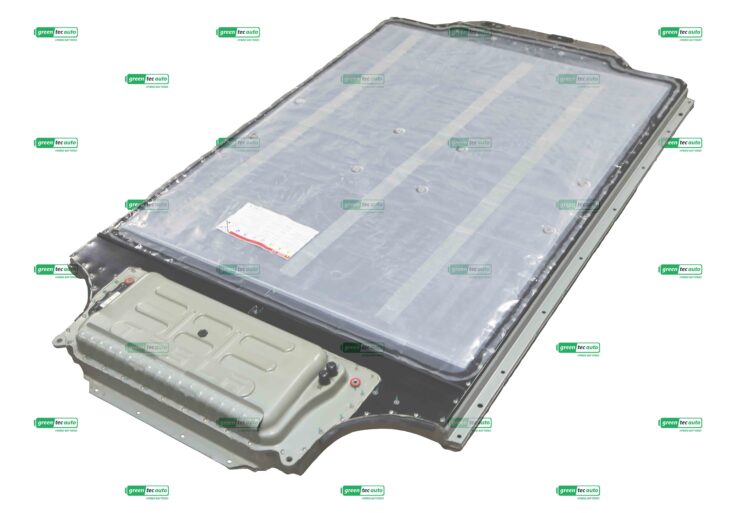
The high-voltage battery is the large traction battery under the vehicle. That is the expensive battery pack that stores energy to drive the car.
Tesla’s own owner information explains that if a Model 3 is unresponsive, will not unlock, open, or charge, the low-voltage battery may be discharged, and Tesla recommends jump-starting the low-voltage system before assuming a larger issue. Tesla also publishes separate low-voltage battery replacement procedures, showing that this is a different system from the high-voltage battery pack.
That distinction matters because one repair can be relatively minor, while the other can be thousands of dollars.
Before you panic, ask one question:
Is Tesla quoting the low-voltage battery or the high-voltage battery pack?
Those are two very different conversations.
A Tesla battery pack is not one giant battery. It is a pack made from many smaller parts working together.
The exact design depends on the model, year, and pack version, but the basic structure is similar across most EV battery systems: individual cells are grouped into modules, and those modules work together inside a larger high-voltage battery pack. The EPA explains that EV battery packs can contain hundreds or thousands of cells arranged into modules, with wide variation across pack designs.
Inside a Tesla pack, you may find:
Component | What It Does |
Cells | The smallest energy-storing units inside the pack. |
Modules | Groups of cells packaged together. |
BMS/BMB electronics | Monitor voltage, temperature, balance, and battery health. |
Contactors and fuses | Control and protect high-voltage power flow. |
Cooling system | Helps regulate battery temperature. |
Sensors | Track conditions inside the pack. |
Pack enclosure | Protects the battery and integrates it with the vehicle structure. |
Tesla service documentation shows that high-voltage battery service involves battery assemblies, cooling-system procedures, air-leak tests, high-voltage electrical components, contactors, fuses, controllers, and HV disablement procedures.
That is why Tesla battery replacement is not the same as swapping a normal car battery. It is high-voltage work. Tesla warns that the high-voltage battery system should only be serviced by trained technicians and that owners should not open, disassemble, remove, or replace high-voltage components, cables, or connectors.
This is also why diagnosis matters. A Tesla can shut down because one section of the pack is weak, one brick is shorted, one module is out of balance, or the battery electronics detect a safety issue.
The whole pack may not be “dead.” But the car may still refuse to drive because the system will not allow unsafe operation.
Tesla batteries can fail for several reasons. Some failures are age-related. Some are caused by water, electronics, cooling, voltage imbalance, or an internal cell problem. Some happen earlier than expected.
Here are the five major failure categories Tesla owners should understand.
Inside a Tesla battery module, cells are grouped into smaller sections often referred to as bricks. If one section becomes weak, internally shorted, or unstable, the battery management system may detect a fault and shut the vehicle down.
This does not always mean every cell in the pack failed. It means the pack is no longer operating within the limits the vehicle considers safe.
Water and high-voltage battery packs do not mix. Moisture can corrode sensors, connectors, electronics, valves, or internal pack components.
Tesla’s owner manual warns that if a vehicle has been exposed to flooding, extreme weather, or submersion, it should be treated like it has been in an accident. Tesla also states that water damage is not covered under warranty.
Tesla battery packs are temperature-sensitive. They rely on thermal management to keep the battery operating safely and efficiently.
Tesla’s service manual includes high-voltage battery cooling-system procedures such as coolant drain/refill, coolant leak tests, and related battery cooling components.
If coolant flow is restricted, leaking, contaminated, or not functioning properly, the battery can overheat or behave abnormally. Cooling issues should be diagnosed quickly because heat is one of the biggest enemies of battery life.
A Tesla battery pack needs the modules and cell groups to stay balanced. When one section drifts too far away from the others, the car may limit charging, reduce power, throw warnings, or shut down.
This is one reason module-only repairs can be risky. If one module is replaced but the rest of the pack is aged and out of balance, the car may work temporarily but develop another issue later.
Battery degradation is normal over time. Tesla says the high-voltage battery naturally degrades with age and energy use, which can reduce maximum driving range. Tesla also recommends charging practices that protect battery health, such as using Level 1 or Level 2 charging when possible, saving Supercharging for trips, avoiding long periods near 0% or 100%, and storing the vehicle around 50% when parked long term.
That does not mean Supercharging automatically kills a Tesla battery. It means battery life is affected by a mix of chemistry, heat, age, charging behavior, storage behavior, and usage.
When a Tesla battery warning appears, most owners do one of four things wrong.
A Tesla owner hears $20,000 and assumes the car is totaled. Then they sell the car cheap, trade it in, or buy another vehicle before getting a second opinion.
Do not do that.
A high quote may be real, but it may not be your only option. Get the diagnostic information. Confirm the failure. Check warranty coverage. Then compare replacement options.
This is the easiest mistake to avoid.
If your Tesla is still under the Battery and Drive Unit Limited Warranty, Tesla may cover the repair. The warranty limits depend on model, trim, country, mileage, and battery capacity retention terms.
Before you pay an independent shop, ask Tesla to confirm whether the battery is covered.
Tesla service is one option. It is not always the only option.
Independent EV battery specialists like Greentec Auto can diagnose, replace, remanufacture, and recycle high-voltage batteries. For some owners, that can mean a much lower cost than the dealership quote.
The key is choosing a shop that actually specializes in EV and hybrid batteries. Tesla battery replacement is not general mechanic work. It requires high-voltage safety procedures, proper equipment, pack handling experience, and diagnostic knowledge.
Tesla’s own Model S service documentation references specialized tools for battery-pack handling, including a battery lift table, and notes that technician assistance is recommended when moving battery packs with a gantry.
A low-voltage battery problem can make a Tesla appear dead. That does not automatically mean the high-voltage pack failed.
Tesla’s manual specifically notes that an unresponsive vehicle may have a discharged low-voltage battery, and running out of range can leave the low-voltage system unsupported.
Always confirm which battery is being quoted.
Some shops will tell you, “We found the bad module. We’ll replace that one piece and the car will be fine.”
Sometimes a module-level repair can get a vehicle moving again. But it is not always the best long-term fix.
Think about putting one new battery into a TV remote while leaving the old batteries inside. It might work for a little while. But the old batteries are still old. The new one is now forced to work with weaker, aged cells around it.
A Tesla pack can have a similar issue. If one module is replaced but the rest of the pack is still aged, degraded, or imbalanced, the repaired pack may become unstable again later.
That matters for three reasons:
That is why Greentec Auto generally looks at the full pack, not just the first failed piece. A short-term patch may be cheaper today, but it can become more expensive if the next module fails soon after.
The goal is not just to make the warning disappear. The goal is to make the car reliable again.
Tesla Model | Year / Pack Type | Battery Option | Estimated Range | Price |
Tesla Model 3 | 2018–2020 | Mid Range Battery | 220–240 miles | $7,999 |
Tesla Model 3 | 2018–2020 | Long Range Battery | 270–280 miles | $8,999 |
Tesla Model 3 | 2018–2020 | Performance Battery | 270–280 miles | $9,999 |
Tesla Model 3 | 2021–2025 | Mid Range Battery | 220–240 miles | $7,999 |
Tesla Model 3 | 2021–2025 | Long Range Battery | 300–320 miles | $8,999 |
Tesla Model 3 | 2021–2025 | Performance Battery | 300–320 miles | $9,999 |
Tesla Model S | 100 kWh Pack | 100 kWh Battery Pack | Approximately 300 miles | $14,500 |
Tesla Model S | Less Than 90 kWh Pack | 90 kWh Battery Pack | Approximately 250 miles | $11,999 |
Tesla Model S | 85 kWh Pack | 85 kWh Battery Pack | Approximately 230 miles | $9,999 |
Tesla Model S | 75 kWh Pack | 75 kWh Battery Pack | Approximately 200 miles | $7,999 |
Tesla Model X | 100 kWh Pack | 100 kWh Battery Pack | Approximately 250 miles | $14,500 |
Tesla Model X | 90 kWh Pack | 90 kWh Battery Pack | Approximately 220 miles | $11,999 |
Tesla Model X | 85 kWh Pack | 85 kWh Battery Pack | Approximately 200 miles | $9,999 |
Tesla Model X | 75 kWh Pack | 75 kWh Battery Pack | Approximately 180 miles | $7,999 |
Tesla Model Y | 2018–2021 | Mid Range Battery | 220–240 miles | $7,999 |
Tesla Model Y | 2018–2021 | Long Range Battery | 270–280 miles | $8,999 |
Tesla Model Y | 2018–2021 | Performance Battery | 270–280 miles | $9,999 |
Tesla Model Y | 2021–2025 | Standard Range Battery | 220–240 miles | $7,999 |
Tesla Model Y | 2021–2025 | Long Range Battery | 300–320 miles | $8,999 |
Tesla Model Y | 2021–2025 | Performance Battery | 300–320 miles | $9,999 |
Greentec Auto is built around hybrid and EV battery replacement. That matters because Tesla battery service is not a side job for us. It is the work.
Instead of treating a Tesla battery failure like a mystery, we focus on proper diagnostics, safe pack handling, replacement options, and responsible recycling.
When a pack is no longer usable, the bad battery components should not be treated like regular trash. Lithium-ion batteries contain valuable critical minerals, and recycling helps keep those materials in the supply chain while reducing disposal risks. The EPA states that end-of-life lithium-ion batteries contain valuable critical minerals needed for new batteries and that recycling keeps batteries out of garbage and recycling systems where they can create fire risks. The U.S. Department of Energy also notes that battery recycling can help recover critical materials and reintroduce them into the supply chain.
Greentec Auto’s position is simple:
Do not assume the car is done before the battery is diagnosed.
If the Tesla is under warranty, check with Tesla first. If it is out of warranty, compare your options before accepting a massive replacement quote.
If your Tesla is losing range, throwing battery codes, refusing to charge, sitting at 0%, or showing high-voltage battery warnings, take these steps:
Step | What To Do |
1 | Confirm whether the issue is the low-voltage battery or high-voltage battery. |
2 | Check Tesla warranty coverage by model, trim, mileage, and age. |
3 | Avoid trying to open or service the high-voltage pack yourself. |
4 | Get a professional diagnostic before selling or trading in the car. |
5 | Compare Tesla’s quote with a qualified EV battery specialist. |
6 | Ask whether the replacement is new, remanufactured, refurbished, or module-only. |
7 | Ask what warranty comes with the replacement. |
If your Tesla is out of warranty, contact Greentec Auto for EV battery diagnostics and replacement pricing. You may have more options than you think.
Tesla battery replacement can cost thousands of dollars, and dealership quotes may reach the $15,000–$20,000+ range depending on model, pack type, and failure. Greentec Auto has seen Tesla owners save significantly compared with dealership quotes, including one case where a customer quoted around $20,000 paid under $9,000. Exact pricing depends on the vehicle and diagnostic results.
No. A failed Tesla battery does not automatically mean the car is totaled. The vehicle may need a high-voltage battery replacement, a remanufactured pack, a repaired pack, or a different repair entirely. The car should be diagnosed before you assume it is worthless.
If your Tesla is still under the Battery and Drive Unit Limited Warranty, yes. Tesla’s current warranty terms vary by model and country, but many vehicles have 8-year battery coverage with mileage limits and a minimum 70% battery capacity retention term.
Yes, qualified independent EV battery specialists can replace Tesla high-voltage batteries. The key is choosing a shop with proper high-voltage training, equipment, diagnostics, pack-handling procedures, and battery replacement experience.
A module-only repair can sometimes work short term, but it can be risky if the rest of the pack is aged, degraded, or imbalanced. Greentec Auto generally recommends looking at the entire pack condition before deciding whether module repair or full replacement is the better long-term option.
Common warning signs include sudden range loss, charging problems, inability to charge, battery warning messages, reduced power, unusual state-of-charge behavior, or the car refusing to drive. A low-voltage battery issue can also make the car appear dead, so proper diagnosis matters.
Tesla warns that high-voltage battery service should only be performed by trained technicians and that owners should not open, disassemble, remove, or replace high-voltage components, cables, or connectors.
Tesla warns not to let the high-voltage battery fully discharge. If the battery reaches 0%, other components may be damaged or require replacement, and discharge-related expenses may not be covered by warranty or roadside assistance.
*Offer cannot be combined with other promotions.
We use cookies and similar technologies to operate the website, understand how it is used, and support advertising. Optional analytics and marketing technologies will not be activated unless you give your consent. You can accept all, reject non-essential technologies, or manage your preferences. You can change your choices at any time.
Global Privacy Control has been detected. Advertising sale/share choices are disabled where configured.