Great job with our 2014 Volt. Second time (first was our 2011volt). Happy both times. Unbeatable value and efficiency! Thank you

James Fidler
Sep 17, 2025 11
Greentec shipped a NEW GENERATION battery for my 2012 VOLT Premier to their shop in Concord, NC. It arrived in less than a week, and a week later, shop manager Dennis phoned that my car was alive and ready to go home. I am thrilled with their work and having my beautiful baby back home. This HAPPY customer highly recommends Greentec!!!
Joyce Dodd
Nov 19, 2025
Great service, fair prices and fabulous staff! We brought our Volt from Louisiana all the way to Houston for them to change the battery out- they were amazing and went above and beyond to make sure everything was done right and working properly. We would definitely recommend them to anyone that needs battery work on their EV. Worth the drive for the great service and peace of mind.
Sandra Bradley
Nov 29, 2024



Why pay more at the dealership? At Greentec Auto, we offer affordable, accessible and reliable hybrid battery replacements at up to 50% less than dealership prices without compromising on quality. Get the best value with expert service, mobile installation, and a warranty you can trust.


![Green dollar sign inside a circular green border, representing money or pricing.]」,](https://greentecauto.com/wp-content/uploads/2026/06/Screenshot-2026-06-03-at-00.23.08.webp)


The cost of shipping to you is included with your purchase. This offer is good for the entire continental United States. Add $200 for shipping to a residential address. Let Greentec Auto make it simple to return your core to us, ask about our reduced return shipping rates.

A refundable “core deposit” of $500.00 will be added to your order at checkout. Once we receive your old battery, we will refund the core deposit back to you minus the cost of return shipping. Cores must be returned within 45 days of purchase. This applies to shipping orders only. In all other circumstances, the core will be picked up at the time of service, no deposit required.

Once your new hybrid battery has arrived, put the core battery back into the same packaging your battery arrived in. As soon as we receive your core battery, we will refund the core deposit back to you. It’s that easy.
A Chevy Volt battery replacement costs $3,999 to $7,999 at Greentec Auto — 30% to 50% below dealership pricing. Where you land in that range depends on your generation and whether you choose a remanufactured pack or a new one. We cover every Chevrolet Volt from 2011 through 2019, and every replacement includes a diagnostic, full system testing, and free recycling of your old pack.
| Model Years | Battery Type | Warranty | Rating | Was | Price |
| 2011–2012 | Remanufactured | 18 months | — | $4,499 | $3,999 |
| 2013–2015 | Remanufactured | 18 months | ★ 5.00 / 5 | $7,500 | $4,499 |
| 2011–2012 | Replacement pack | 36 months | — | $12,495 | $7,999 |
| 2013–2015 | Replacement pack | 36 months | ★ 4.67 / 5 | $12,495 | $7,999 |
| 2016–2019 | Replacement pack | — | — | $9,999 | $7,999 |
Pricing active at time of publication and subject to change. Chevy Volt packs are shop installation only — contact us to schedule.
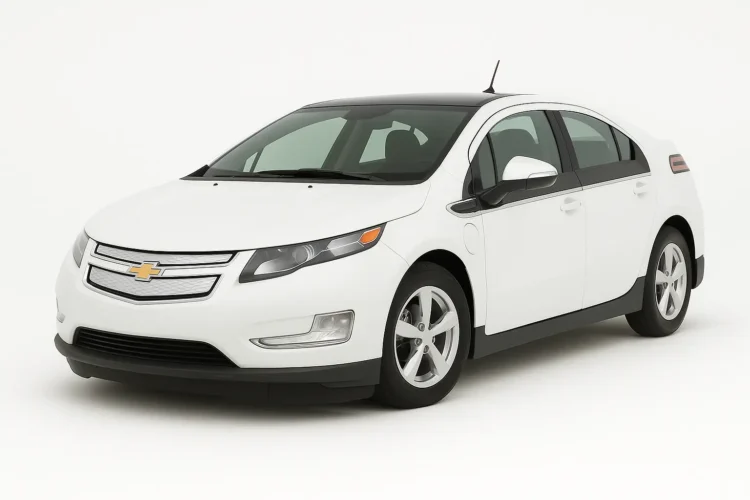
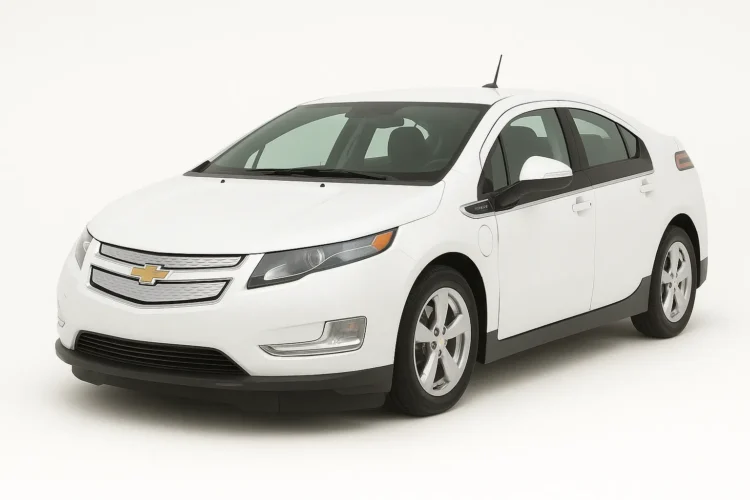
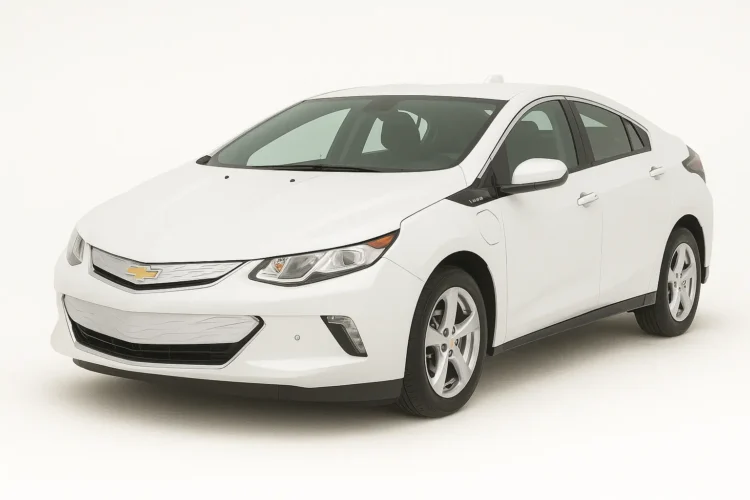
Every Chevrolet Volt built, across both generations. Three different packs cover the range, so check which fits your car:
First generation
Second generation
The first generation splits into 2011–2012 and 2013–2015 packs. The second generation uses a 2016–2019 pack. Not sure which you need? Call 800-773-6614 and we’ll confirm from your VIN before anything ships.
Both are first-generation Volt packs, but GM revised the battery during the run capacity increased slightly across those model years, and the packs are not interchangeable between the two groups. Pricing differs too: the 2011–2012 remanufactured pack is currently our lowest-priced Volt option.
The 2016–2019 Volt was a full redesign. GM increased usable capacity to roughly 18.4 kWh, which lifted electric range to around 53 miles from the first generation’s 35 to 38. The pack architecture changed with it, so a first-generation battery will not fit a second-generation car under any circumstances.
The Chevrolet Volt is a plug-in hybrid specifically an extended-range electric vehicle. It runs on electric power alone for the first 35 to 53 miles depending on generation, then a gasoline engine takes over as a generator to keep you moving.
That design is why a failing Volt battery shows up differently than on a conventional hybrid: you lose electric range first, and the car quietly starts running on gas far sooner than it used to.
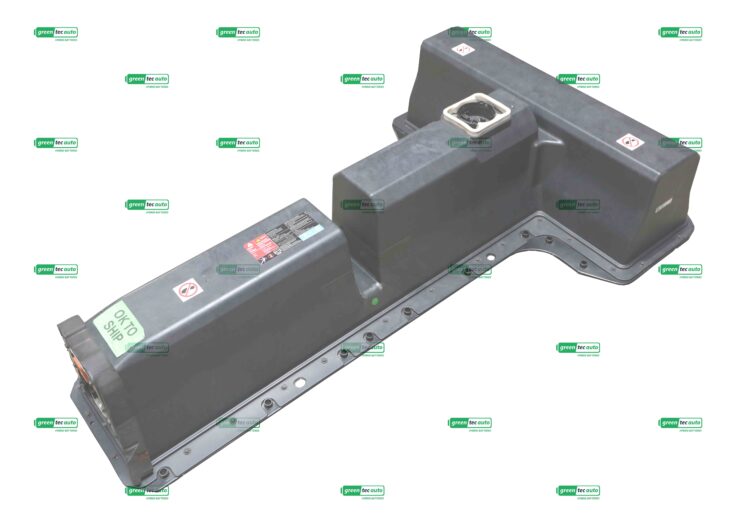
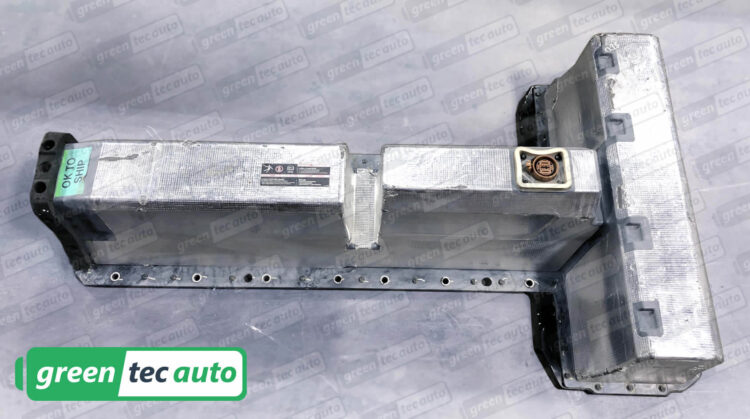
A liquid-cooled lithium-ion pack running at roughly 360 volts, laid out in a T-shape down the center tunnel and under the rear seat.
That liquid cooling matters. Most hybrids of the same era use air-cooled nickel-metal hydride packs that fail from heat when a cabin vent gets blocked. The Volt does not have that failure mode — GM engineered active thermal management from the start, and it is a large part of why Volt packs have held up as well as they have.
Unusually so. GM deliberately reserved a buffer at both the top and bottom of the Volt’s usable capacity, meaning the pack never fully charges or fully depletes even when the dash reads 100% or 0%. That conservative management, combined with liquid cooling, is why many Volts have passed 150,000 miles with modest degradation.
If you are weighing whether to keep your Volt, that history is worth knowing. A pack needing replacement now is one at the end of a long life, not a car that was poorly built.
GM ended Volt production after the 2019 model year as it shifted toward full battery-electric vehicles. For owners, that mostly means dealerships have little enthusiasm for supporting a discontinued plug-in hybrid which is where independent specialists come in.
The Volt tells you clearly, and the first sign is unmistakable if you know to look:
Because the Volt shows estimated electric range on the dash every time you unplug it, you have a running record most hybrid owners don’t. If that number has fallen well below where it used to sit, that is your answer.
A healthy first-generation Volt (2011–2015) delivers roughly 35 to 38 miles of electric range. A healthy second-generation Volt (2016–2019) delivers roughly 53 miles.
Cold weather reduces those figures temporarily a Volt showing 25 miles in January and 37 in June is behaving normally. What signals a failing pack is range that stays low through warm weather too.
Usually yes, and this is a real advantage of the Volt’s design. Because the gasoline engine can drive the car as a generator, a Volt with a degraded pack still runs you simply lose the electric portion and burn fuel constantly. Once the car throws a propulsion power reduced message, though, have it diagnosed before driving further.
Because a battery warning does not automatically mean a dead pack. On a Volt the same symptoms can come from the charging system, a coolant circulation fault in the thermal management loop, a failed sensor, or the battery control module and every one of those costs a fraction of a replacement.
We would rather tell you that you do not need a battery than sell you one you do not need. Anyone quoting you a Volt pack over the phone, without testing the car, is guessing with your money.

A Chevy Volt battery typically lasts 8 to 10 years or 100,000 to 150,000 miles, though many have gone considerably further. Degradation is gradual rather than sudden, showing up as steadily shrinking electric range rather than an abrupt failure.
Three things, in order of impact:
No. Cold reduces available range while temperatures are low, and the Volt will use some energy conditioning the pack, but neither causes lasting harm. Range returns as temperatures rise.
What does cause avoidable wear is leaving the car sitting at 100% charge for extended periods, particularly in heat.
The difference is what goes into the pack.
The decision comes down to how long you plan to keep the Volt. The step up doubles the warranty. If you intend to keep the car beyond two years, the longer coverage usually earns its cost. If you are preparing to sell, the remanufactured pack restores full function for less — and on a 2011–2012 Volt that means $3,999.
Sometimes, when the fault is genuinely isolated and the surrounding modules still match on measured capacity. On a pack that has aged as a whole, though, replacing one module leaves the next-weakest one setting the ceiling and a few months later you are back where you started.
That is the trap with partial repairs. Each round costs another diagnosis, another teardown and more downtime, without addressing why the pack degraded. It is also why a fully rebuilt, matched pack can carry a warranty and a partial repair cannot.
For most owners, yes. A Volt with working electric range is worth substantially more than the same car with a dead pack, because every buyer prices in the repair plus a risk margin and on a discontinued plug-in hybrid, that margin tends to be generous.
Replacing the pack and then selling generally nets more than selling as-is. And if you keep it, you have your commute back on electricity instead of gasoline, which on a daily driver pays back a meaningful share of the repair.
Yes. The lost range comes from reduced usable capacity in the pack, and a replacement restores it
GM covered the Volt battery for 8 years or 100,000 miles federally, with longer terms in California and other states following CARB emissions rules. Every 2011–2015 Volt is now outside that window on age. Late second-generation cars 2018 and 2019 may still be inside it depending on mileage, and those owners should check with a Chevrolet dealer before paying out of pocket.
It does not void the vehicle warranty. Under the Magnuson-Moss Warranty Act a manufacturer cannot void coverage simply because service was performed elsewhere they must show the outside part caused the failure being claimed. What an independent replacement ends is any remaining factory coverage on the pack itself, which for most Volt owners expired years ago.
18 months on remanufactured packs and 36 months on replacement packs, from the date of installation.
No. The Volt pack carries roughly 360 volts and integrates with a liquid cooling circuit that must be properly filled and bled after installation. Correct isolation, torque specification and post-installation calibration all require training and equipment.
Not for the Volt. Chevy Volt battery replacement is shop installation only. The pack runs the length of the vehicle’s center tunnel and ties into the liquid cooling system, which makes it a job that needs a proper lift and bay rather than a driveway.
Contact us at 800-773-6614 to schedule at your nearest location.
Greentec Auto covers major cities across the US and Canada, including Los Angeles, Dallas, Chicago, Atlanta and Vancouver. Find your location and schedule your Volt battery service.
Every module in your returned pack is tested individually. Modules still meeting specification go back into remanufactured packs. Those that fall short move to second-life applications such as home energy storage Volt modules are particularly well suited to this, since they were built with generous thermal headroom.
Only what cannot be reused at all is processed for material recovery. Recycling is included with every replacement at no charge.
Our 2013–2015 Volt packs are rated 5.00 out of 5 (remanufactured) and 4.67 out of 5 (replacement) by verified customers.
Power Your Volt Again
A degraded battery does not mean the end of your Volt. These are well-engineered cars with liquid-cooled packs and conservative battery management most owners facing replacement have years of driving ahead.
Get it diagnosed before you buy anything. A charging fault, a coolant circulation problem or a failed sensor can produce the same symptoms and cost a fraction to fix.
If you notice warning lights on your dashboard, don’t rush to the dealership for an expensive diagnostic report. Many local auto parts stores can scan your vehicle and provide error codes for free just ask them to run a quick scan with a diagnostic tool.
Above, we’ve listed some of the most common hybrid error codes. Keep in mind that the check engine light must be onfor major issues to be detected. If your vehicle is experiencing hybrid battery failure, dealerships often charge thousands of dollars for a replacement typically with a limited warranty.
At Greentec Auto, we offer a cost-effective alternative, providing high-quality hybrid battery replacements at a fraction of the price. Plus, we back our batteries with a comprehensive warranty to give you peace of mind.
Costs vary depending on the model year. Greentec Auto offers replacements for 2011–2019 models at prices significantly lower than dealerships.
The Chevy Volt is a plug-in hybrid (PHEV), meaning it runs on electricity first but has a gas engine for backup.
Most Volt batteries last 8 to 10 years or 100,000–150,000 miles. Driving conditions, climate, and usage patterns can affect lifespan.
All Volt hybrid replacement batteries from Greentec Auto include a warranty, with extended coverage available for select models.
*Offer cannot be combined with other promotions.
We use cookies and similar technologies to operate the website, understand how it is used, and support advertising. Optional analytics and marketing technologies will not be activated unless you give your consent. You can accept all, reject non-essential technologies, or manage your preferences. You can change your choices at any time.
Global Privacy Control has been detected. Advertising sale/share choices are disabled where configured.