“Second Prius battery replacement, first Prius lasted a full 439,000 miles in the original and the replacement, second Prius original battery replaced at 224,000 miles and expecting at least another 200K on this one. Both replacements are Greentec, make them your first call, they are very nice, batteries are great and you save a ton vs. the manufacturer.”

Paul Boender
Aug 21, 2025
“Mike was awesome to deal with from start to finish. It’s incredibly refreshing to have such amazing customer service and attention to detail. You could tell that he did everything he could to help me and it was a great experience. I will be going back there again! My 2011 Prius battery replacement went very smooth! “
Sheldon Sutherland
Feb 17, 2022
“Had a great experience with Gus, who helped me replace my Prius battery in a professional and efficient way. He handled the work quickly and answered all my questions with patience and kindness, and did a detailed diagnostic before replacing the battery. I called many shops in town to compare, and Greentec is definitely the best out of all of them. I highly recommend this place if you have any EV or hybrid car problems.”
Wuyang Yang
Sep 5, 2025



Why pay more at the dealership? At Greentec Auto, we offer affordable, accessible and reliable hybrid battery replacements at up to 50% less than dealership prices without compromising on quality. Get the best value with expert service, mobile installation, and a warranty you can trust.
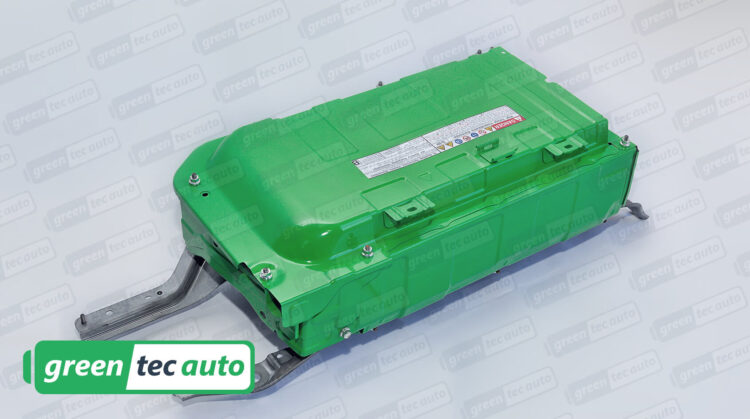
Hey guys, [music] if you’re watching this video right now, I’m assuming you’re one out of three people. Either you already own a Prius C and your hybrid battery has [music] just failed. Maybe you own a Prius C and you think your battery is on its last leg and going to fail soon. Or maybe you haven’t even bought a Prius because you heard about [music] these crazy battery replacement costs online and you are scared to buy one. Whichever one of those people you are, you click on the [music] right video because today we’re going to be going over everything you need to know about your Toyota Prius C hybrid [music] battery replacement. In today’s video, we’re going to talk about what is actually inside of this battery [music] pack itself, how long these hybrid batteries last, how much it’s going to cost to replace the hybrid battery, what is [music] the difference between new cells and remanufactured, and is it worth it to go to a dealership or an aftermarket company? And if you stick with me through today’s video, I’m going to be giving away a $150 discount code for not if, but when your Prius [music] hybrid battery eventually goes back. So, without further ado, let’s get straight into it. Now, as you can tell, [music] this is what the Prius hybrid battery actually looks like that’s standing right in front of me right now. And [music] underneath this metal case, you’re going to have 20 of these modules inside of the battery pack, laid side by side inside the battery [music] pack like this. Now, if you search up online a Prius battery replacement, likely you’re going to see a firstg Prius, a second gen Prius, or a third gen Prius. And those look a lot bigger than the Prius [music] C itself. On average, those have 28 modules inside of the battery pack itself. But when we take the case off, all the electrical components, the fans, the temperature sensors, everything underneath [music] the case looks the same as a first gen or a second gen Prius. And while we’re on the topic of modules, this is [music] what one looks like right here. And you’re actually going to have six cells inside of one module. So 1 2 3 4 [music] 5 6. The reason why I’m telling you this is because if you’re searching up online Prius hybrid battery replacement, there’s going to be a lot of people you see [music] maybe on Reddit or on YouTube talking about module replacement. Now what is module replacement? And what’s funny [music] about module replacement is people online, you’ll see when you search up call it cell replacement, [music] but they’re calling it a cell when actually it’s a module. Kind of just proves they don’t really know what they’re talking about. In this battery pack itself, you’re going to have 20 modules inside that look [music] exactly like this, right? And people will say, “Okay, if one of them goes bad, all you have to do is replace that one module and everything [music] will be okay.” But there is a big problem with that because sure, it may be one module that is bad, but on that same page, there are 19 other modules inside of the battery pack that [music] are still 10 plus years old. So sure, you fix the problem at the moment, but these 19 other cells modules [music] are actually eventually going to go bad as well. And we experience this on a day-to-day basis where people call in, they don’t want to replace the full [music] battery pack itself. They just want to replace one or two modules and they do it. And then one or two months go down the road and then they have to replace another module. Another 3 months [music] happens and they have to replace another module and they’re playing whack-a-ole for months, maybe even years on end until they finally decide to replace the full battery gun. Now, let’s get into the next question. How long does a Prius [music] C hybrid battery actually last? And what kills these batteries the fastest? On average, you’re generally looking at around eight all the way to 10 [music] plus years for the lifespan of the battery. Now, that is not an exact number for the [music] battery life. It does depend on how much you drive the car, where you live, the climate, and [music] a lot of other factors. But one of the biggest killers of a hybrid batteries is heat. And as I have said, inside of this one module, there are six [music] individual cells as we have discussed. And if you live somewhere hot like California, Texas, or Florida, and there’s heat constantly [music] hitting your battery, even if the car is just outside, the chemistry inside of the cells itself are going to break down, and that speeds up battery [music] degradation and can really shorten your battery’s lifespan. That’s why the temperature and where you live and how cool your battery stays affects the batteries lifespan a lot. Now, let’s get into what you probably clicked on this video for. How much does a PREC hybrid battery replacement actually cost? On average, you’re looking at somewhere between $1,395 and $1,999. For the battery options we’re talking about today, now when you’re looking at your replacement options, you’re going to have two different choices. [music] The first is a remanufactured battery, and the second is one with new cells. The remanufactured option is currently $1,395 [music] and comes with a 18month warranty. And the new cell option is currently $1,999 [music] and comes with a 36-month warranty. So, what’s the difference between these two? The simplest way to explain it is that the remanufactured battery is the more affordable option, while the new cell option is designed for someone looking for more longevity and it comes with a longer warranty. So, which one should you choose? Well, it really depends on what your plan is with [music] your car. If your Prius is in great condition and you want to keep it driving for years, spending the additional money on the new cell option and getting the longer warranty might [music] make more sense. But if you’re planning on keeping the car for just a few more years or you’re simply looking for a very affordable option, in that case, the remanufacturer battery could make perfect sense for you. Now, let’s talk about going to the dealership because dealerships charge significantly more for the battery itself. You’ll see people online being [music] quoted anywhere from $6,000 all the way to $8,000, potentially even more for a hybrid battery replacement. And the reason is pretty [music] simple. Dealerships are in the business of selling cars, not batteries. They are not battery specialists. Luckily, that’s where Green Tech Auto comes in. [music] We’ve been specializing in hybrid and EV battery replacement for over the past 13 years. [music] We’ve developed a network of over 35 locations in the United States, Canada, and in the UK. And literally all we do every single day is replace hybrid batteries. And on top of that, you don’t even have to leave your house because we offer a mobile installation service where if you live close enough, we can come out to you and install your hybrid [music] battery in your driveway. So, now that you know how much these batteries cost, how long they last, and what your different options are, let’s [music] get into the final question. Is it actually worth it to replace your Prius CE hybrid battery? Honestly, it depends on the condition of your car. How long are you planning to keep it? Is the engine in good condition? Is the rest of the car running well? Because if your Prius C is in great shape and the hybrid battery is the main issue, replacing the battery could give you years of additional life out of the car. Now that you understand the different battery options, you can make the decision based on your plans and what works for your budget. If you want to keep the car for a long time, the new generation cell option and longer [music] warranty may be worth considering. But if you’re planning on selling the car or only want to keep it for a few more years, the remanufactured option might make more financial sense. Either way, a failed hybrid battery doesn’t [music] mean the entire car is finished. You have to look at the condition of the entire [music] vehicle and compare it to the cost of replacing the battery versus buying a brand new car. And just as I promised at the start of the video, here is coupon [music] code GT AI for $150 off for not if, but when your hyper [music] battery goes bad. Click the link in our description or give us a call if you want to buy a battery or drop a comment if you have any questions. We answer all of them. See you guys in the next video. [music]


![Green dollar sign inside a circular green border, representing money or pricing.]」,](https://greentecauto.com/wp-content/uploads/2026/06/Screenshot-2026-06-03-at-00.23.08.webp)


The cost of shipping to you is included with your purchase. This offer is good for the entire continental United States. Add $200 for shipping to a residential address. Let Greentec Auto make it simple to return your core to us, ask about our reduced return shipping rates.

A refundable “core deposit” of $500.00 will be added to your order at checkout. Once we receive your old battery, we will refund the core deposit back to you minus the cost of return shipping. Cores must be returned within 45 days of purchase. This applies to shipping orders only. In all other circumstances, the core will be picked up at the time of service, no deposit required.

Once your new hybrid battery has arrived, put the core battery back into the same packaging your battery arrived in. As soon as we receive your core battery, we will refund the core deposit back to you. It’s that easy.
A Toyota Prius c hybrid battery replacement runs from $1,395 to $1,999 at Greentec Auto, covering every model year from 2012 through 2019. Remanufactured packs start at $1,395 with an 18-month warranty. New cell packs are $1,999 with a 36-month warranty, on most qualifying batteries.
Pricing is the same across both Prius c generations, and every replacement includes a free diagnostic, mobile installation, cooling system cleaning, and free recycling of your old pack.
That makes the Prius c one of the least expensive hybrids on the road to re-battery and there is a real engineering reason for it, covered below.
| Cost | $1,395 – $1,999 |
| Warranty | 18 months remanufactured · 36 months new cells, on most qualifying batteries |
| Years covered | 2012, 2013, 2014, 2015, 2016, 2017, 2018, 2019 |
| Battery type | Nickel-metal hydride (NiMH), 144 volts |
| Where it sits | Under the rear seat |
| Installation | Mobile in most service areas, or at any of our locations |
| Diagnostic | Free |
| Financing | Available on every pack |
| Recycling | Included at no charge |
| Model Years | Battery | Warranty | Price |
|---|---|---|---|
| 2012–2017 | Remanufactured | 18 months | $1,395 |
| 2018–2019 | Remanufactured | 18 months | $1,395 |
| 2012–2017 | New cells | 36 months | $1,999 |
| 2018–2019 | New generation cells | 36 months | $1,999 |
Pricing shown may not be current. Check the product listing for your model year for the exact price before ordering, or call 877-383-6437 and we will confirm it from your VIN.
Warranty terms apply to most qualifying batteries. Shipping is available on most orders if you would rather have your own technician handle the installation.
Every Prius c sold in the United States, across both generations. The two generations take different packs, so confirm which one you have:
2012–2017 Toyota Prius c first generation
2018–2019 Toyota Prius c — facelift generation
Toyota sold the Prius c in the US for eight model years and discontinued it after 2019. Both generations cost the same only the pack we send you changes. If you are not sure which you have, check the model year on your driver’s door jamb sticker, or call 877-383-6437 and we will confirm it from your VIN.
Watch the year ranges of other sellers list. You will find Prius c batteries advertised as fitting “2010–2019” or “2012–2017.” Neither is right for the US market. The Prius c did not exist before 2012, and it did not stop in 2017.
No. The Prius c is a smaller car on a different platform, and it uses a smaller, lower-voltage pack than the standard Prius. A Prius pack will not fit a Prius c, and a Prius c pack will not fit a Prius. The Prius v and Prius Prime use different packs again.
| Prius c | Prius (standard) | |
|---|---|---|
| Body | Subcompact hatchback | Midsize hatchback |
| US model years | 2012–2019 | 2001–present |
| Engine | 1.5L | 1.8L |
| Battery location | Under the rear seat | Behind the rear seatback, cargo area |
| Pack size | 0.9 kWh | Larger |
If the badge on the back reads “Prius c” — lowercase c — you are on the right page. If it reads “Prius v,” that is the wagon and a different pack again.
No, and this is one of the most common and most expensive ordering mistakes. Prius, Prius c, Prius v and Prius Prime packs differ in voltage, physical size, mounting and chemistry. Order by your exact model and year.
Not the Prius c it is nickel-metal hydride across all eight model years. Toyota did use lithium-ion in some other Prius variants and trims, which is why forum advice written for a different Prius often does not apply to your car.
Beneath the rear seat, in a sealed enclosure. The seat cushion has to come out to reach it — it is not in the cargo area.
That trips a lot of owners up. If you have followed a guide written for a standard Prius and gone looking in the hatch, that is why you did not find it.
The pack is air-cooled by a fan drawing cabin air through an intake vent, which is why what accumulates around the rear seat directly affects how long the battery lasts.
The pack carries 144 volts of DC — enough to cause serious injury. Service requires the high-voltage disconnect and proper isolation procedure.
A 144-volt nickel-metal hydride (NiMH) pack, sometimes called the traction battery or HV battery in Toyota’s own documentation.
NiMH degrades gradually rather than failing suddenly, which is why a weakening Prius c battery shows itself through falling fuel economy months before the car ever sets a warning light.
| Spec | Detail |
|---|---|
| Chemistry | Nickel-metal hydride (NiMH) |
| Voltage | 144 volts nominal |
| Capacity | 0.9 kWh |
| Location | Under the rear seat |
| Cooling | Air-cooled, cabin-air intake with fan |
| Engine | 1.5L 1NZ-FXE four-cylinder |
| Combined output | 99 hp (73 hp engine plus 60 hp electric motor) |
| Japanese market name | Toyota Aqua |
Because the car is smaller, and so is the pack.
At 0.9 kWh, the Prius c has the smallest hybrid battery Toyota sold in the United States. A Camry Hybrid pack is meaningfully larger. A Highlander Hybrid pack is larger still. Less material means a lower price for the same quality of build.
That changes the whole calculation for owners. On an expensive hybrid, a battery quote can approach the value of the car. On a Prius c it usually does not come close.
It depends on your model year, and both figures matter because fuel economy is your best diagnostic tool.
Either way, the number is high enough that any meaningful drop is easy to notice. A Prius c returning low 30s is telling you something.
No it is what the car was built for. The “c” stands for city, and stop-and-go driving suits the hybrid system well, because regenerative braking keeps the pack cycling in a healthy middle range.
What actually shortens battery life is heat, a blocked cooling vent, and long periods of sitting unused.
Toyota ended US sales after 2019 as buyers moved toward crossovers and the Corolla Hybrid took over the affordable-hybrid slot. The car remained hugely popular elsewhere — it is sold as the Toyota Aqua in Japan and is one of the best-selling hybrids ever made there.
For owners, discontinuation mostly means dealerships have limited interest in supporting a subcompact that is now several years out of production, and parts availability for discontinued models tends to worsen over time. Independent specialists are where these cars get serviced. We stock these packs.
The Prius c gives clear warning. These are the signs, roughly in the order they appear:
Because the Prius c has a small pack, symptoms tend to arrive faster and more obviously than on a larger hybrid — there is less reserve capacity to hide behind. And because the car is so economical to begin with, a fuel economy drop is unusually easy to spot. If your mileage fell and nothing else explains it, get the pack tested.
P0A80 means “Replace Hybrid Battery Pack.” The battery ECU sets it when it detects modules operating outside acceptable voltage range.
Unlike a sensor fault, P0A80 will not clear on its own, and it confirms the pack itself rather than a peripheral component. Other codes in the family include P0AA6 (isolation fault), P3000 (battery control system), and P3011–P3024 (a specific block out of range).
It indicates a fault the hybrid system considers serious. On a car of this age the battery is the most common cause, but the same light can come from the inverter, the cooling system, or a sensor. The car may enter a reduced-power limp mode, or refuse to start.
This message means the pack is not getting enough airflow — almost always a blocked intake vent or a failing cooling fan, not a dead battery.
It is a warning worth acting on immediately, because sustained heat is what destroys NiMH cells. Catching this message early can save the pack entirely. Catching it late is how an otherwise healthy battery ends up needing replacement.
In most cases it degrades long before it dies outright: economy collapses, EV mode stops working, and warnings appear. If it fails completely the car will not start or move. The failure is rarely sudden, the fuel economy drop usually shows up months in advance.
Short distances, yes — but not for long, and not as a plan. A failing pack forces the engine and inverter to compensate, and inverter replacement costs considerably more than a battery. Once the red triangle is lit, the car can refuse to start without warning.
The dash display shows state of charge, not state of health — a failing pack can still show a full bar. Real assessment means reading individual block voltages and stored codes with a scan tool that reads hybrid data.
Our diagnostic does exactly that, at no charge.

Because a hybrid warning does not automatically mean a dead pack. The same symptoms can come from a blocked or seized cooling fan, a temperature or voltage sensor, an inverter fault, a one-time low-voltage event from a car that sat or the small auxiliary battery, which is always worth ruling out first on a no-start. Each of those costs a fraction of a replacement.
Our diagnostic is free and it tests at the module level. We would rather tell you that you do not need a battery than sell you one you do not need.
Anyone quoting a pack over the phone, without testing the car, is guessing with your money.
The dominant cause is heat from a blocked cooling vent.
The pack sits under the rear seat and breathes through an intake in the cabin. Over a decade that vent fills with dust, crumbs, lint and pet hair. A blocked intake means the pack runs hot, and heat degrades modules faster than mileage ever will.
It will kill a brand-new pack just as quickly as an old one — which is why every Greentec Auto installation includes cleaning the fan and duct.
Three things, and together they are the cheapest thing any Prius c owner can do:
And treat the ducting as a real component, not trim. The tube carrying air into the pack matters if a previous installation cracked or dislodged it, a brand-new battery will overheat exactly like the old one did.
Significantly. Sustained heat is the enemy of NiMH cells.
A Toyota hybrid battery is happiest between roughly 0 °C and 30 °C — 32 °F to 86 °F. Prius c packs in Arizona, Texas, Nevada and Florida generally show more capacity loss at the same mileage than identical cars in temperate regions. Hot-climate cars sometimes need a pack well under 100,000 miles, while moderate-climate cars regularly pass 200,000.
Cold reduces available power temporarily but causes no lasting harm.
Yes. Modules self-discharge at slightly different rates, and a car parked for months lets them drift out of balance. Once the pack drops below a certain voltage, individual modules can be permanently damaged rather than just weakened.
A Prius c used as a second car or a seasonal commuter often ages its pack faster than a higher-mileage daily driver. Drive it at least once a week — a short trip is enough. That is the entire maintenance requirement.
Original packs typically last 8 to 12 years, or 150,000 to 200,000 miles. Every first-generation Prius c is now inside or past that window, which is why replacements are common on these cars now rather than a sign anything went wrong.
The difference is what gets replaced inside the pack.
Remanufactured — 18 months. The pack is opened, every module is load-tested individually, and any module outside tolerance is replaced with a tested unit before the pack is rebalanced.
New cells — 36 months. Every cell is replaced regardless of condition.
| Remanufactured | New cells | |
|---|---|---|
| What gets replaced | Modules outside tolerance | Every cell |
| Warranty | 18 months | 36 months |
| Price | $1,395 | $1,999 |
| Best for | A few more years of driving, or a tighter budget | Keeping the car long-term, and anyone in a hot climate |
New cells are the better battery — longer service life, double the warranty term, and a starting point that has not already spent a decade in a car. On a Prius c, a car people keep precisely because it is cheap to run, that usually favors new cells. If you live somewhere hot, that is where we would put the money, because heat is what is doing the damage.
If you are preparing to sell, the remanufactured pack restores full function for less.
Our packs are built to outlast their warranty. In practice we typically see at least double the warranty period, and frequently a good deal more.
That is what we observe across the packs we build, not a guarantee — batteries are wear items and conditions vary. The warranty is the floor we stand behind, not our estimate of the pack’s life.
You can, and it is a false economy. Here is why.
Every cell in your Prius c pack has lived the same life — the same heat, the same cycles, the same decade or more. When one fails, the others are rarely far behind. Replace the single worst cell and the pack works again, briefly. A couple of months later the next-weakest cell fails, and you are back where you started.
That becomes an expensive game of whack-a-mole. Each round costs another diagnosis, another teardown, more labor and more downtime, and none of it addresses the root problem: the pack as a whole has reached the end of its service life.
We have had clients arrive after doing this three, four and five times elsewhere. On a small pack like the Prius c it is worse, not better — there is less healthy capacity to absorb one weak module.
This is why we test and replace at the module level across the entire pack. It is also why we can offer 18 to 36 months of warranty. You cannot warranty a pack you have only partially repaired.
No, and we would not recommend it. The Prius c’s hybrid system, battery ECU and cooling are all designed around a NiMH pack at 144 volts. A correctly built NiMH replacement is what restores the car to how it was designed to work.
For most owners, yes and the case is unusually strong on this car.
A running Prius c is worth well above what a replacement costs, and it returns close to 50 MPG for years afterward. Few repairs pay for themselves as directly.
Run the comparison the right way: not against what your Prius c would fetch with a dead pack, but against what a comparable used car actually costs today. Selling a Prius c with a known battery fault means accepting a discount considerably larger than the repair, because every buyer prices in the fix plus a risk margin.
The cases where it does not make sense are narrow: significant accident damage, engine or transaxle failure on top of the battery, or severe rust. If any of those apply, we will tell you during the diagnostic rather than sell you a battery.
Largely, yes. The mileage loss comes from the engine compensating for a pack that can no longer assist. Restore the pack and economy returns close to what the car was delivering before the pack degraded, along with EV mode and normal acceleration.
What a new battery cannot do is make the car more efficient than it was when new.
A dealership quote typically runs considerably higher than an independent hybrid specialist, with labor billed separately by the hour on top of the pack price. Greentec Auto sends one estimate with installation already on it, rather than hourly labor added at the end.
No. A 2012 Prius c battery replacement costs the same as a 2019. Pricing is identical across both generations — only the pack we send you changes.
Yes. Financing is available on every pack, so a replacement can be spread rather than paid up front.
Yes. We test your Prius c hybrid battery at no charge to confirm whether it actually needs replacing.
Yes. Our mobile installation service brings a hybrid-certified technician to your home or office — no towing, no waiting room, no dealership visit. We also install at Greentec Auto locations across the US, and through Greentec Auto Canada for Canadian customers.
Mobile availability depends on your address, so confirm it when you book.
About an hour on most Prius c cars. The rear seat cushion comes out, the pack is swapped, the system is verified and the codes are cleared.
No. The pack carries 144 volts, enough to cause serious injury. Correct isolation, torque specification and post-installation calibration all require training and equipment. Listed prices are for the battery. Installation is included on the estimate we send you.
Yes, on most orders, if you would rather have your own technician handle the installation. Contact us with your model year and we will confirm the correct pack.
Every module in your returned pack is tested individually.
Recycling is included with every replacement at no charge.
A failing hybrid battery does not mean the end of the car. A Prius c with a healthy pack returns close to 50 MPG and will run for years more — which makes this one of the easiest financial decisions in hybrid ownership.
Start with the free diagnostic. A blocked cooling vent, a failed fan, or a weak auxiliary battery can all produce the same symptoms and cost a fraction to fix.
If you notice warning lights on your dashboard, don’t rush to the dealership for an expensive diagnostic report. Many local auto parts stores can scan your vehicle and provide error codes for free just ask them to run a quick scan with a diagnostic tool.
Above, we’ve listed some of the most common hybrid error codes. Keep in mind that the check engine light must be onfor major issues to be detected. If your vehicle is experiencing hybrid battery failure, dealerships often charge thousands of dollars for a replacement typically with a limited warranty.
At Greentec Auto, we offer a cost-effective alternative, providing high-quality hybrid battery replacements at a fraction of the price. Plus, we back our batteries with a comprehensive warranty to give you peace of mind.
Prices vary depending on the model year and type of battery. Greentec Auto offers both new generation and remanufactured options to fit your budget.
Typically between 8 to 10 years, but performance depends on driving habits and maintenance.
It’s not recommended. Hybrid systems are complex and require specialized tools and knowledge. Our mobile installation team can handle it for you safely.
Yes. All our batteries are backed by a warranty ranging from 18 to 36 months depending on the type.
Absolutely. Greentec Auto Canada offers the same trusted service and warranty options for Canadian Prius owners.
*Offer cannot be combined with other promotions.
We use cookies and similar technologies to operate the website, understand how it is used, and support advertising. Optional analytics and marketing technologies will not be activated unless you give your consent. You can accept all, reject non-essential technologies, or manage your preferences. You can change your choices at any time.
Global Privacy Control has been detected. Advertising sale/share choices are disabled where configured.