
Prompt, quick, professional service. So much cheaper than getting another car. I would highly recommend their service to anyone who needs a hybrid battery replacement.

Chris Walker
January 2, 2025
Lisa Tufano
January 10, 2025
Ellrick Garcia
February 13, 2025



Why pay more at the dealership? At Greentec Auto, we offer affordable, accessible and reliable hybrid battery replacements at up to 50% less than dealership prices without compromising on quality. Get the best value with expert service, mobile installation, and a warranty you can trust.
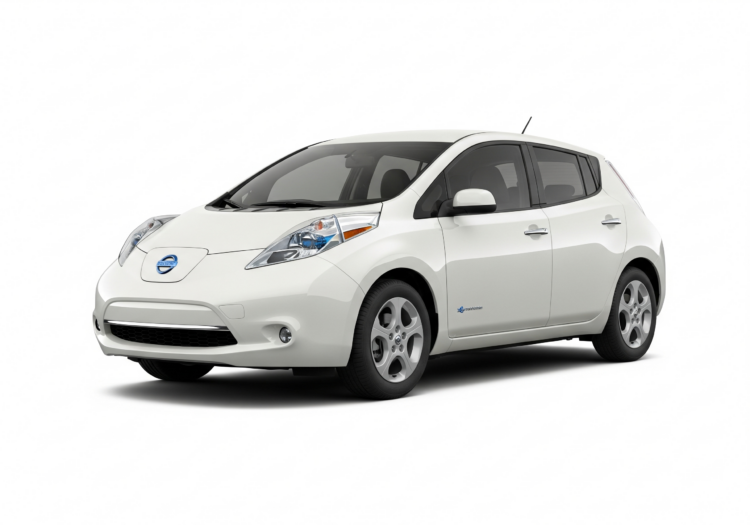
When most people buy a Nissan Leaf, they buy it for a couple of different reasons. You know, number one, they either like to save money on gas, or it was one of the first EV cars mass-produced in America, so they want it for that factor. There were actually around 165,000 of these cars produced and sold in America and then around 650,000 sold worldwide. But something people don’t really talk about much is the battery that’s inside of there, and a lot of people don’t like to talk about it until it’s too late. So let’s go talk about that and dive into that right now.
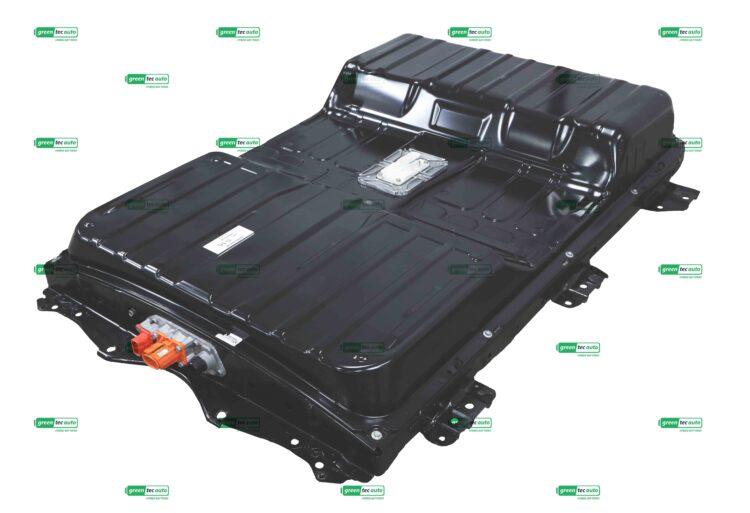
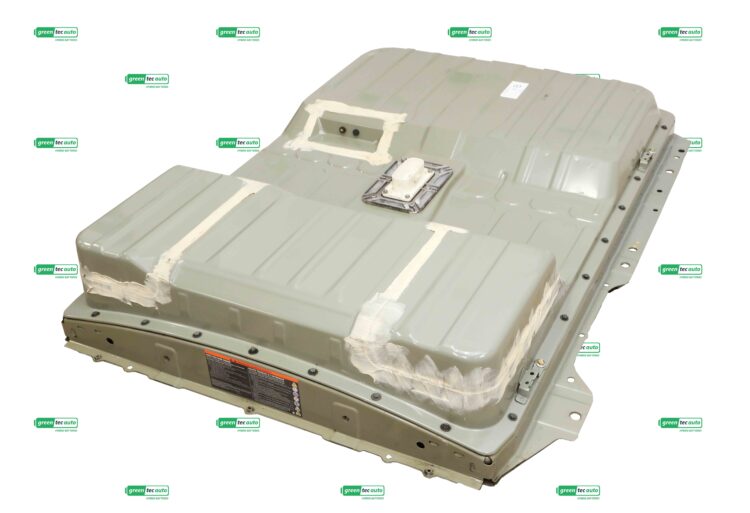
All right. So the battery pack right here — this is a 24 kWh battery pack. This is what goes in the 2014 Nissan Leaf. So they made these Leafs from 2013 to 2015, and then this is 2011 to 2012. Okay. So the big problem with these batteries — and we get a lot of customers come in specifically in the wintertime — is because of one main reason. They don’t have a TMS, which is a thermal management system. And so these batteries can’t cool down or heat up on their own. Meaning like if you live somewhere hot like California, Arizona, Texas, or Florida, and the battery is super hot, the car is super hot, it can’t cool down on its own. Or if you live somewhere cold like Canada, for example, the battery is freezing inside and it can’t heat it up, right? Which leads to degradation being a lot faster than normal.
So again, this is a 24 kWh 2013 to 2015, and this is also a 24 kWh 2011 to 2012. And we’re actually going to go check out what this battery looks like inside underneath the case. We’re going to do the same with this battery. So let’s go.
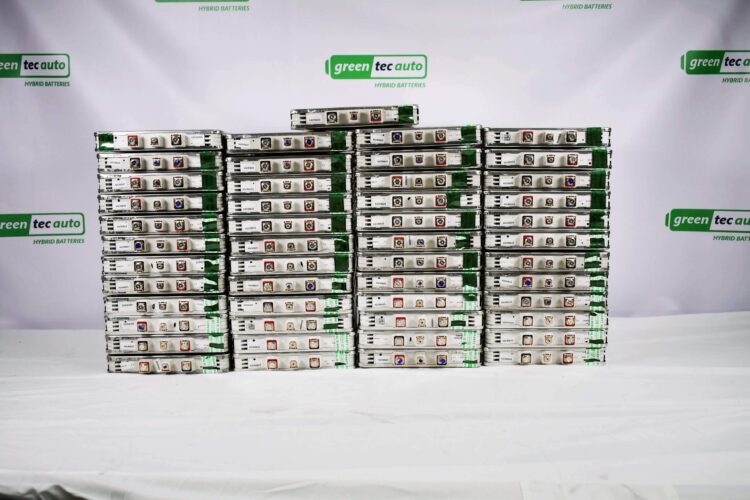
So right here in front of us is a 24 kWh 2011 to 2012 Nissan Leaf. In here we’re going to have 48 Gen 1 modules. Okay. So what he’s doing right now is he’s one by one taking these modules out — these Gen 1 modules — and then once we take them all out, we’re going to take our Gen 3 modules and put them inside the pack. There’s further remanufacturing that still needs to be done. But what this does is it increases the amp hours of the battery, which is going to increase your overall range. Also a cool thing that we’ll get to later on in the video is what we do with these modules since they’re out of the pack, right? Because like for example, some of these are not going to be put into a new battery pack, but they still have lots of life inside of them. So we’ll discuss later what happens to them for their second life.
So let’s go check out this pack right here. They’ve got it with the lid off right now. This is a 40 kWh 2013 to 2015 Nissan Leaf battery pack. Okay. So you’re going to have 24 of these modules inside the battery pack. If you kind of look closely, you’ll actually see two of them are kind of in one module itself, right? So you have two — what we would call modules in the other pack — kind of stacked into one. If you kind of like this module information or you’re interested in second life applications, we actually released a video going over every single generation of Nissan Leaf modules. So if you’re into that, go watch that video — we’ll put it in the link in our bio.
But again, this is a 40 kWh pack. So for this range, these modules are going to be about 85% state of health, and these are Gen 3 modules inside the battery pack. You’re probably going to get around 130 to 100 miles of range on this battery pack. With the 24 kWh battery pack for the 2013 to 2015 Nissan Leaf, you’re looking at around 70% state of health and probably 55 to 65 miles of range.
Okay, so now we’re going to go put the lid on top of this battery pack, go install it on the car, and we can also talk about some second life applications while we go for a drive, guys.
So the battery just got installed — let’s go ahead and do some zero emission driving. Let’s go.
Okay. So the modules that you’re looking at on the screen right now are the modules that are inside of this car. And as we talked about earlier — how for example, for this battery, we take out the Gen 1 modules and we put inside the Gen 3 modules — what happens to the other ones, right? So Nissan Leaf modules go from 100% to 70% state of health relatively fast. But once they’re at that 70% level, that threshold, it stays there for years and years and years. So what do people do with them? Well, they use them for like home energy storage systems, EV conversions. And if you look at the screen now, you’re looking at an EV conversion. So these are some modules that we sold to a guy — he put it inside of a Nissan Leaf battery pack and he did his own EV conversion. And people also use these full battery packs and the modules in these battery packs to make their own home energy storage system.
So where we’re at right now, the power is — I think it’s like 15 cents per kilowatt hour during daytime, and during nighttime it drops all the way down to 2 cents per kilowatt hour. So what people do is they stack these Nissan Leaf modules on top of each other, they have our own BMS kit that we sell at Greentec, and they charge up the battery during nighttime when it’s cheaper power and then discharge during daytime, and they can only pay 10 or 15 bucks a month on power.
So the cool thing about it is it doesn’t even end there, right? So you have your battery life in the car, then you have your home energy storage or the second life with the modules, and then after that what we’re able to do with Greentec Recycling is we recycle these modules. We discharge them first, recycle the modules, and with that we gain valuable materials which can be used to build more batteries in the future. So it’s kind of like this full loop, right? Because a lot of people are under the perception of, oh, batteries are really bad because you have to mine for the materials. But what Greentec’s doing here is literally world changing. We’re able to take the batteries, remanufacture them after their first life in a car to another life in a car, then after that use them for home energy storage systems, EV conversions, or whatever else people want to do for projects, and then finally recycle them to gain materials to build more batteries, right? Because once gas is in the air, it’s in the air — it’s gone forever. But EVs, they can hold charge, they can discharge, but they also hold materials, and gas doesn’t hold as a material. So I hope you guys enjoyed that little lesson right there.
And let’s go talk about why we have so many of these batteries, why I’m in a Nissan Leaf right now, and why we have hundreds of these batteries at our warehouse.
All right, so we got the Gen 1 Leaf right in front of us right now. We just unplugged the 12-volt. What we’re going to do is we’re going to put these yellow slabs right underneath it, lift the car up, unbolt the battery, remove it, and then we can kind of go from there.
Okay. So what he just did is he unbolted all these bolts along the battery. Now it’s just literally lifting up the car — you’ll see the battery. Boom, right here. We go around and look at it from this side.
Okay. So boom — battery’s out. He’s taken it out. We’re putting a new one in right now. But this is what it looks like underneath the actual car itself. See the battery fits in perfectly underneath the car. You’ve got that orange cable right here — this is what plugs into the car. So that’s this wire right here, which you’d plug right into the battery itself. Okay, that’s connecting the high voltage all the way to here. And right now, that’s basically the installation process. It’s pretty simple. What he’s going to do now is he’s going to go grab a new battery and put it inside the car. When you do the installation, taking the battery out and putting it in is pretty simple. It’s a bit more complex is the programming that needs to happen. Other than that, it’s pretty simple.
Hey guys, so hope you guys enjoyed today’s video. If you have any other questions, you can just drop it in the comment section. And I do have something special for you. As promised, if you use discount code GTAI, you’re going to get $300 off for not if, but when your battery needs to be replaced. All you have to do is either give us a call with the phone number on the screen or click on our website.
All right guys, see you in the next one.
Hello, my name is Levi Thomas with Greentec. Today I wanted to tell you a little bit about our 50 amp and our 100 amp BMS that we make for the Generation 1 and Generation 2 Nissan Leaf modules.
When you buy the BMS kit with the batteries, it comes with this all-thread that connects seven modules together and the BMS that bolts directly onto the cells themselves. However, if you’re going to be doing a whole bunch of batteries together and doing multiple BMSs connected in parallel, you can get a 4-foot or an 8-foot all-thread rod from Home Depot or any hardware store that runs all the way through all the cells. And then we also have these solid metal compression plates that you put on each end that bolt down and press all the cells together and keep them super solid. Lithium ion and lithium iron phosphate pouch cells like to be compressed, and that increases the total lifespan of the battery. So while you can do it without a compression plate, it’s highly recommended that you add this to it, especially if you’re going to do a whole bunch of cells together in a long string.
So here we have our Greentec 50 amp continuous BMS made for the Nissan Leaf Generation 1 and 2 modules, next to our new 100 amp prototype. So it doesn’t have any other writing on it, but I just wanted to open them up and show you the differences of both of these BMSs.
So if we take this lid off, which has the LCD screen, we can see the BMS and all the wiring and the fuses on both models. Both BMSs use the JBD BMS, which is an extremely reliable brand and has one of the best apps whether it’s iPhone or Android. The JBD BMS is by far the best one out of any brand I’ve seen yet.
This is the 50 amp continuous which has 100 amp peak. This one’s the 100 amp continuous which does 200 amp peak. Both of them use two 10-gauge silicone wires coming out of the battery negative connection — to the negative-most contact on the negative-most battery — to the BMS. Then the BMS only disrupts the negative side. Both of these BMSs are a common port BMS, which means they charge and discharge out of the same negative wire. That is way more convenient than ones that have a charge wire and a discharge wire separate, because you can use one plug and you can have power flowing in or out, or you can have some charge going in while even more discharge is coming out. Say in a solar application, if the solar panel was putting in less than your inverter was pulling out, a common port BMS is way more convenient for that situation.
Now this 50 amp BMS has a 100 amp peak, so we’ve got four 30 amp slow-blow fuses soldered directly onto the PCB board. Now these are super easy to desolder and solder new ones on if you were to ever need to replace them, and they’re also extremely cheap — less than a dollar. This 100 amp continuous has a 200 amp peak. Now this one has a 200 amp fuse and it doesn’t solder on at all — it’s just a bolt with a nut on the bottom so you can just take it off and put a new one directly on it. So that’s even easier to replace if you needed to.
Both BMSs have MOSFETs inside of them that open the circuit to turn off the flow of current through the negative side. You only need to open circuit from one side — the negative side. You don’t need to disrupt the positive side. So the positive wire on both of these comes from the positive-most connection on the battery, through the fuse, right to the Anderson plug. On this 50 amp it comes through the PCB board, through these four fuses right here, also to the Anderson plug.
Both BMSs have temperature sensors built right into the BMS itself. There’s a temperature sensor on the MOSFETs and there’s a temperature sensor on the little processor inside of it. Also, both of these BMSs have two 10,000-ohm thermistors on wires coming out of the bottom that you can glue to two different cells. That way, if the batteries themselves are too cold it will stop the charging, or if the batteries get too hot it can stop the discharging. Same thing with the temperature sensors inside the BMS — if anything gets too cold or too hot it can turn off charge or discharge or both.
Both the 50 amp and the 100 amp BMS have balance sense wires. Now this has 15 wires here, so it has the B0, which is the negative-most connection, independent from the negative-most main silicone wires that handle all the current flow. Now that’s beneficial — that way if you’re under a high load where there’s a little bit of a voltage dip, this balance sense wire on the negative-most connection is showing an accurate reading to the negative-most connection independent from that. And then it has all the other 14 wires that go to the positive connection on every single cell, all the way up to the red which is the positive-most connection — again independent of the large silicone wire, for the same reason.
Both of these go directly to a plug, so when you take these two layers apart there’s a male and a female plug that just disconnects, so you can pop them apart easily. And then on the bottom it goes through trace leads on the PCB board to every single connection that connects to every cell.
Both the 50 amp and the 100 amp BMS can use Generation 1 or Generation 2 Nissan Leaf modules, and both Generation 1 and Generation 2 Nissan Leaf modules are more than capable of handling 50 amp continuous or 100 amp peak, or the 100 amp continuous with a 200 amp peak. So either Gen 1 or Gen 2 will work with either one.
The main reason you would want to go with the larger 200 amp is if you needed that extremely high current flow — say for golf carts — and you only wanted to do like one or two modules for a small footprint, instead of having four or eight modules connected in parallel.
Both BMSs are common port, which means they can charge and discharge through the same wire. So that’s also really handy. If you want to connect two or three or four — however many you want to do — in parallel, you only need to connect the two wires to each BMS: black to black to black to black, and red to red to red to red. Before you do that, you want them to be really close in voltage — I’d say within 1 volt. So go ahead and charge them up so they’re equal, balance all the cells before you connect them all into parallel, so that there’s not a large inrush of current between the different packs.
Once they’re connected all into parallel, you can charge and discharge them all together as if it was one big battery. So now that I’ve taken the 100 amp BMS off of the Nissan Leaf modules, I want to show you the underside of both of them.
So on the 50 amp BMS, we have this copper and nickel coating right here on the PCB board itself, and that’s the contact for the balance sense wires as well as carries the current between the series of each cell. And that only gets about 15 to 20 degrees Fahrenheit warmer than room temperature with a 50 amp continuous load. However, once you’re doing 100 amp continuous or 200 amps peak, you want to add this super thick copper bus bar so that carries a ton of current in series. And then at the end you have the super thick silicone wire. So once we did 100 amp continuous load for the entire capacity of the entire module itself, it never got more than 15 degrees Fahrenheit warmer than room temperature. That is fantastic, because any temperature buildup on these transfers right into the cell and damages the electrolyte. So having this copper bus bar with the 100 amp continuous load is super important.
So here I have two 50 amp BMSs — each one is hooked up to seven batteries, which is a 14S module — and then they’re both just combined together. And then the Anderson plugs here come out and hook them up into parallel. Connecting into parallel just increases capacity but remains the same voltage. So whether you’re doing two, three, four, or 50 of them, you can connect all the red wires together and then all the black wires together, and then have the main leads come out to your inverter or whatever device you’re powering, and that just increases capacity but doesn’t increase the voltage.
One very important thing to note before you hook them up into parallel is they need to be really close in voltage, or the percentage of state of charge, to prevent an inrush of current from a higher voltage pack into a lower voltage pack. So right here on the BMS, each one says 93%. Or you can log into the app and look at each one before you hook them up — red to red, black to black. That prevents the rush of current, because if they’re too out of whack — say more than one volt, or I’d say a few percent — that risks a lot of power coming over and the BMS should sense that and open circuit and turn off the connection, the charge, and the discharge. But it also does have fuses that could protect it in case it was too much too fast, but that would pop the fuses and you’d have to go and replace them, and things can be damaged. So always charge up the lower packs to be with the higher ones, and then connect red to red, black to black, and hook them all up into parallel.
So like I said before, the 50 amp BMS can do about 2,600 watts or 2.6 kilowatts. So that’s great for some small applications like this 2,200 watt inverter. But if you needed a lot of power in a small footprint — say in like a golf cart or something like that — that’s where this 100 amp really shines. This 100 amp continuous BMS doing 5.2 kilowatts is great for larger inverters, say like an 18,000 watt inverter. You could get by with only like four or five of these kits hooked up into parallel in a small footprint as well.
However, say if you wanted to do like in your house — 15 or 20 or 50 of these kits hooked up to an 18,000 watt large whole-home inverter — then again you could go back to a 50 amp BMS and that would be perfectly fine. You always want to do a little bit more power on the BMS and the batteries than what you’re doing, because you don’t want to run them at exactly their peak all the time — they’re just going to run too hot. It’s also going to run out of power a lot quicker obviously, because you’d have less total kilowatt hours in your total bank. So adding more batteries is always a safer bet than trying to push it to its limit. But if you need it to be in a small footprint — whether it’s in an RV, camper, or a golf cart or something like that — this 100 amp with fewer cells is obviously a really good solution for that.
Both the 50 amp and the 100 amp BMS use JBD brand BMSs here, so they both use the Xiaoxiang Electric app, which is a fantastic app for iPhone or Android. They have Bluetooth built right into them, so you can connect and you can see the total voltage, amperage, the differences — you can see a graph of the history of what’s happened, discharge and charge. You can control the on and off of the charge or discharge. You can autobalance. This BMS can also show you every single cell’s voltage — so here’s 1 through 14, and the green is the highest and the gray is the lowest. Now these are all 4.04 to 4.05, so they’re super equal. It also shows you the temperature of the MOSFETs inside the BMS and the processor inside the BMS, and the temperatures of the wires that you would glue right onto the cells themselves. That way, if anything gets too hot or too cold, it will turn off the charge or the discharge to protect the cells or to protect the BMS.
Thanks again for watching another one of our videos. Don’t forget to like and subscribe to see future videos, and if you have any questions feel free to comment down below or don’t hesitate to reach out to us on our website. Thanks.
Hello everybody. My name is Art with Greentec Auto, and today we’re going to talk about the evolution of the Nissan Leaf battery modules. We’re going to go from the 2011 24 kWh Nissan Leaf modules all the way up to the 2019 and newer 62 kWh modules. We’ve seen a lot of information online about the packs in general, but no one’s really gone through and done an assessment on module changes over the years. We’re also going to talk about what you can do with these battery modules after they’re degraded to a point where they’re no longer useful in the car — which they still have a lot of energy left, just not enough for the vehicle.
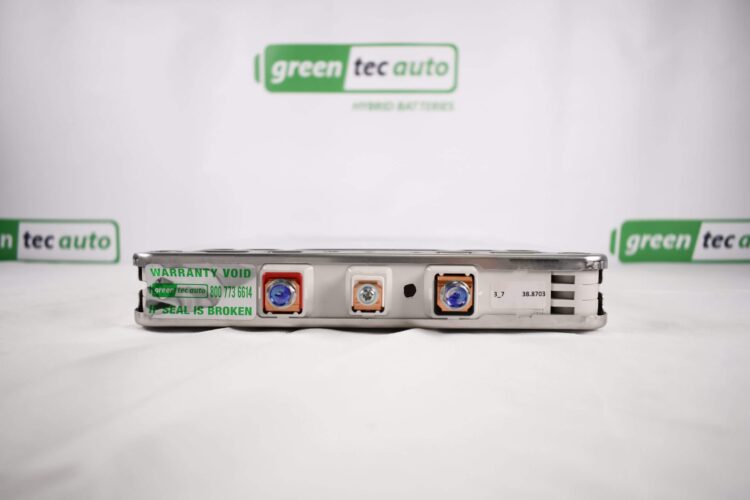
So the first modules are from a 2011-2012 Nissan Leaf 24 kWh battery pack. The modules themselves are rated for 500 watt hours. They have a lip on the top that indicates a direction that you need to stack them in, which also means they flip polarity between the top one and the bottom one. They also have to have spacers in between each module. And there are two types of spacers — ones that have mounting bracket bolts and ones that don’t. This is used during the assembly of the battery to hold the back 24-module stack together and help mount it down. That’s one of the first things they did away with in the next generation.
These are the Gen 2 Nissan Leaf modules from 2013 up to 2015. The biggest difference is the polarity change. They no longer have the lip on top — they’re smooth on both sides and allow you to place them however you’d like. There’s no longer a left side or a right side module. The other difference is that this metal bracket is built into the mount of modules that they need in order to hold that bracket in the 24-cell stack. Now, they did say that there was a difference in chemistry between the Gen 1 Leafs that’s supposed to help with the battery degradation due to high heat. But over the years, it’s been discovered that even though they intended for it to work and help, it actually didn’t do much difference. So they’re about as good as the Gen 1 Leafs in terms of degradation.
The next modules are the 30 kWh modules. Those are used in 2016 and 2017 Nissan Leaf battery packs. The module itself is 1,250 watt hours, but you can clearly see that it is two modules of the previous generation squished into one. They’ve used similar chemistry as the Gen 2, but by removing the steel plate that would be sandwiched between these two modules, they were able to make the cells a little bit bigger, and then that gave it a little bit better capacity. However, these did not fare very well and they actually had a severe degradation loss, and essentially Nissan went out and has a recall on them. If you still have a 30 kilowatt hour pack original to your car, you are eligible for a free upgrade to a 40 kWh pack from Nissan. I can’t tell you about the wait times, but it is free.
So these next modules are from the 40 kilowatt hour Leaf. They look very similar to the 30 with a few major changes. The first one being the chemistry itself changed once again, and these are a lot more reliable than the 30s. The other thing was the actual capacity of course. These modules are 1,670 watt hours compared to the previous 1,250. So they fit a lot more capacity into the same space. These are identical in size as the 30 kilowatt hour modules. The rest of it is pretty much the same — we still have the same bracket, same orientation of the modules, the same double-stack cells inside the module.
So this last battery is the 62 kWh Nissan Leaf pack. Those were offered from 2019 and newer, and you can buy either this pack or the 40 kWh pack — it was an option at purchase. And the biggest difference is obviously the battery size, but module variation as well. So the smallest module is a 4S3P and it comes in at 2,589 watt hours. The next module is a 7S3P and that comes in at 4,531 watt hours. This last one is a 9S3P and that comes in at 5,826 watt hours.
So what does that mean? Well, really it’s that they fit the battery in as best they can with the size. There are four of these tall ones, four of these medium ones, and eight of these smaller ones that are snugged into the pack to use up as much space as possible to get as many kilowatt hours fit in there as possible. One of the downsides to this of course is reusability. These larger ones — if there’s any single issue with the cell, it’s very difficult to fix and creates a large loss with a single cell failure, which traditionally has been relatively easy and cheap to fix. Now if there’s a cell failure in any one of these, it’s very much harder or more expensive to replace. However, we got energy density — a lot more kilowatt hours tucked in the same square footage. Actually, this battery pack is a little bit taller, so it’s a little bit bigger battery as well.
The other big difference is that this is now three cells in parallel. Prior to this, every single battery pack was only two cells in parallel. So this is the first one that has three cells in parallel. Gives it a lot more capacity, a lot bigger battery pack, a little bit harder to repair.
So we’ve developed these BMS kits that help use these modules in second life applications. Now, these are quite tired to use in the vehicle, but they still have plenty of life left in them outside of the vehicle. The biggest reason why is because in the vehicle they are under high current load and they can’t handle it anymore. However, in solar storage or golf cart applications, you don’t really draw a lot of current and these things work great in those applications.
We’ve made several versions of these BMS kits by demand. And if you have a new orientation or new type of style that you want us to make, let us know in the comments. Right now we have a 14S 50 amp BMS, a 14S 100 amp BMS, and a 12S 50 amp BMS. Now the reason we made the 100 amp BMS is for golf carts — a little higher current draw, you get more power out of this BMS. The batteries can still handle that quite well. The vehicle pulls close to 400 amps in some cases, so these can handle 100 amps no problem. Now, you still want to parallel a couple of these systems together in order to get more range. But what you do is grab these modules — either seven of these modules or seven of these — configure it the way it needs to be. You need four of one polarity and three of the other for the Gen 1s, or just seven of the Gen 2s. And you slap on one of these, build it on layer by layer, and the Bluetooth BMS connects to your phone and tells you everything you need to know about the battery condition.
The 12S is what we made for these 40 and 30 kilowatt hour modules. It’s a little harder to get seven modules out of them, so we made a 12S that’ll use three modules. Now if you’re savvy and you have a double stack, you could use the 14S BMS and the middle module will be shared between both BMSs — totally doable. Not everybody has the space, and we made the 12S version that is also backwards compatible to the Gen 1 and Gen 2 packs.
So for the 62 kWh modules, we do not offer a BMS kit of any type yet. The reason being is they’re quite easy to series together — it’s a wire with two ring terminals. Whereas the earlier modules, you’d have to create jumpers between the cells quite often. Second, these are still very new and it’s mostly used in the cars, so there’s not a large influx of them, and people that do have them typically want to reuse them in the vehicle. Not always the case — I’m sure someone will get their hands on them for a second life. But until we get a lot more of these off of the road for end of life, we don’t have any options for these yet.
Thank you for watching. Visit our website for more information on modules like these and other modules that we may have. Let us know in the comments which BMS configurations you might want, as well as what the next video should be of the modules on our site. And lastly, follow us for more videos.


![Green dollar sign inside a circular green border, representing money or pricing.]」,](https://greentecauto.com/wp-content/uploads/2026/06/Screenshot-2026-06-03-at-00.23.08.webp)


The cost of shipping to you is included with your purchase. This offer is good for the entire continental United States. Add $200 for shipping to a residential address. Let Greentec Auto make it simple to return your core to us, ask about our reduced return shipping rates.

A refundable “core deposit” of $500.00 will be added to your order at checkout. Once we receive your old battery, we will refund the core deposit back to you minus the cost of return shipping. Cores must be returned within 45 days of purchase. This applies to shipping orders only. In all other circumstances, the core will be picked up at the time of service, no deposit required.

Once your new hybrid battery has arrived, put the core battery back into the same packaging your battery arrived in. As soon as we receive your core battery, we will refund the core deposit back to you. It’s that easy.
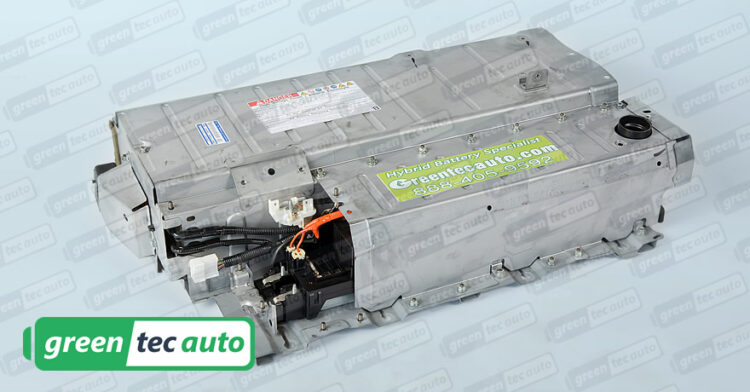
Greentec Auto is trusted nationwide for high-performance hybrid and EV battery replacements. Our remanufactured and premium battery packs are rigorously tested and built using genuine Nissan modules. Whether your battery is failing or you just want a longer-lasting upgrade, we make it easy to get back on the road with confidence.
All our batteries come with:
Plus, our pricing is up to 50% lower than dealerships, without sacrificing quality or warranty coverage.
Expert Battery Replacement for Every Nissan
We service the full Nissan EV and hybrid lineup. From city commuting to cross-country driving, we help Nissan owners get more life and value from their vehicles without the cost of a full replacement car.
We cover:
Each model comes with custom battery options to fit your budget, driving style, and long-term goals. Explore Nissan hybrid battery options.
If your Leaf is losing range or charging more often, it’s time to take action. Our remanufactured battery packs restore performance and give you options:
Every pack is rebuilt using OEM Nissan modules, includes a warranty, and can be installed by our nationwide mobile team. Want more compatibility? Add our optional CAN Bridge for seamless upgrades.
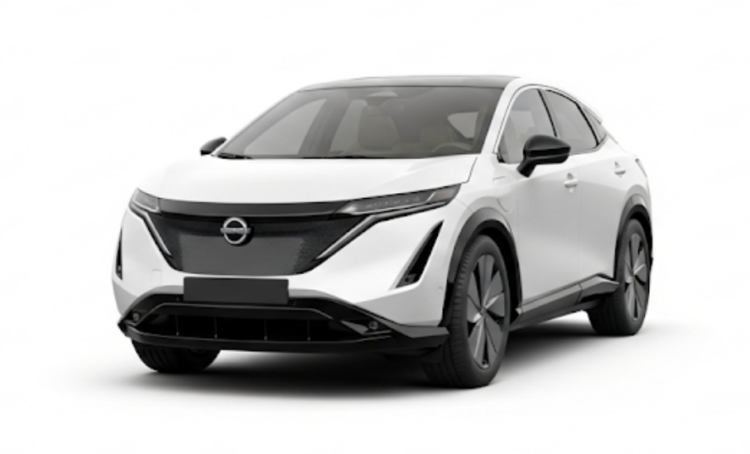
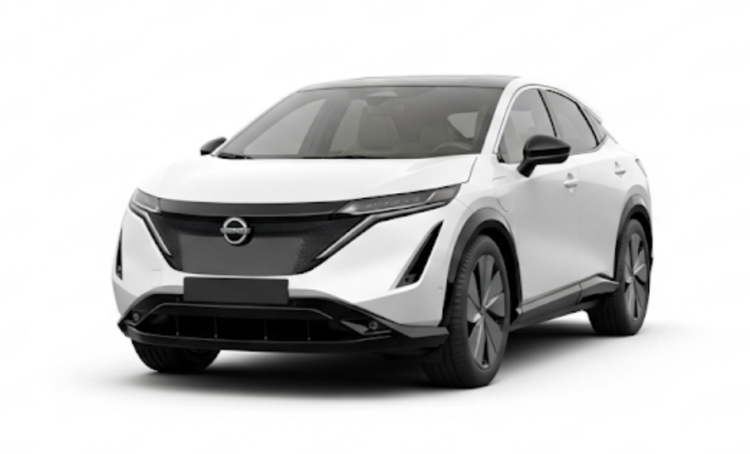
The Ariya is a modern, full-electric SUV with excellent range and power. But even new technology needs maintenance. If your Ariya isn’t holding charge or is showing signs of strain, we offer battery diagnostics and support tailored to this newer generation of EVs.
As Ariya models age, you’ll be glad to know we’re ready with OEM-grade replacements backed by years of EV battery expertise.
If your Altima Hybrid no longer delivers the fuel economy you’re used to, or the hybrid system feels sluggish, the battery may be the issue. Our remanufactured hybrid batteries restore smooth shifting and strong MPG without the cost of replacing the vehicle.
Each unit is inspected, tested, and installed with care either in one of our shops or by our mobile team at your home or office.

This family-friendly SUV needs a healthy battery to handle long drives, towing, and daily commutes. When performance drops or dashboard lights appear, our team can step in with high-grade hybrid battery replacements built for longevity.
We manage the full process, from diagnostics to recycling your old battery. You choose where to have it installed.
Here are common signs your Nissan’s battery may be failing:
If any of these sound familiar, book a free diagnostic with Greentec Auto. We’ll pinpoint the issue and offer a solution whether it’s a replacement or a system adjustment.
Our batteries are designed to last. We use original Nissan cells and proven remanufacturing methods to give you top-tier performance at a fraction of dealership pricing. Most customers save 30% to 50%, and financing plans are available to make the investment easy.
You get peace of mind with a strong warranty and premium performance, without overspending.
Let Greentec Auto help you restore your Nissan’s power, range, and peace of mind. Our battery experts are ready to bring top-tier service to your driveway or your nearest Greentec shop.
✅ High-performance Nissan battery packs
✅ OEM-grade modules and safety testing
✅ Mobile installation and shop service
✅ Transparent pricing and flexible financing
✅ 24–36 month unlimited mileage warranties
Explore your Nissan battery options today.
Book your free diagnostic or call to order.
If you notice warning lights on your dashboard, don’t rush to the dealership for an expensive diagnostic report. Many local auto parts stores can scan your vehicle and provide error codes for free just ask them to run a quick scan with a diagnostic tool.
Above, we’ve listed some of the most common hybrid error codes. Keep in mind that the check engine light must be onfor major issues to be detected. If your vehicle is experiencing hybrid battery failure, dealerships often charge thousands of dollars for a replacement typically with a limited warranty.
At Greentec Auto, we offer a cost-effective alternative, providing high-quality hybrid battery replacements at a fraction of the price. Plus, we back our batteries with a comprehensive warranty to give you peace of mind.
A failing battery hurts your car’s resale value. Replacing it not only improves performance but can also help you sell for more. If you’re planning to keep your Nissan for a few more years, a new battery is an investment that extends its life and saves you on running costs.
We’ll help you weigh your options and offer guidance on next steps that make sense financially.
On average, Nissan hybrid and EV batteries last 8 to 10 years. The Nissan Leaf, in particular, can lose range bars after year 4 or 5. That’s when most drivers notice the drop and when many choose to replace.
With a Greentec replacement, your vehicle can deliver years of reliable use beyond its original lifespan.
*Offer cannot be combined with other promotions.
We use cookies and similar technologies to operate the website, understand how it is used, and support advertising. Optional analytics and marketing technologies will not be activated unless you give your consent. You can accept all, reject non-essential technologies, or manage your preferences. You can change your choices at any time.
Global Privacy Control has been detected. Advertising sale/share choices are disabled where configured.