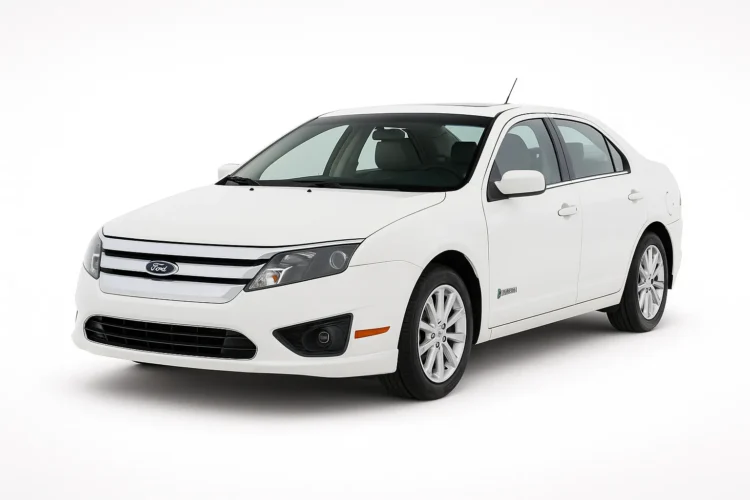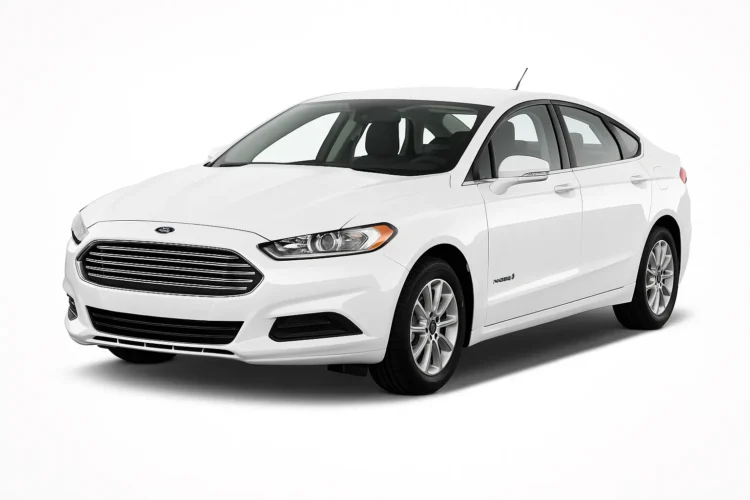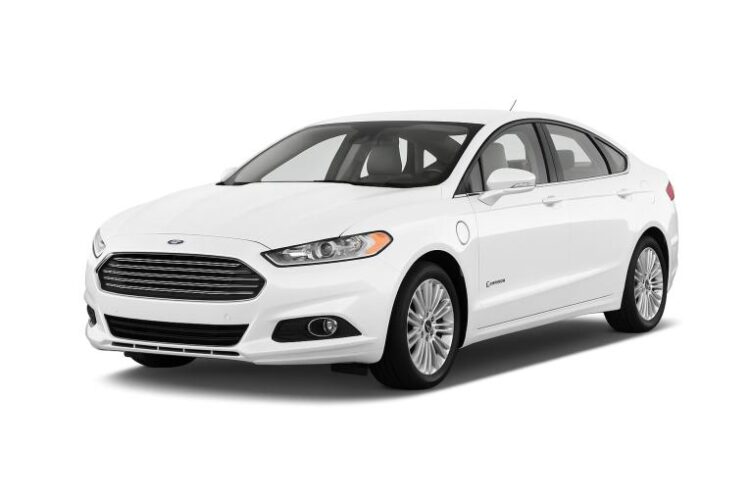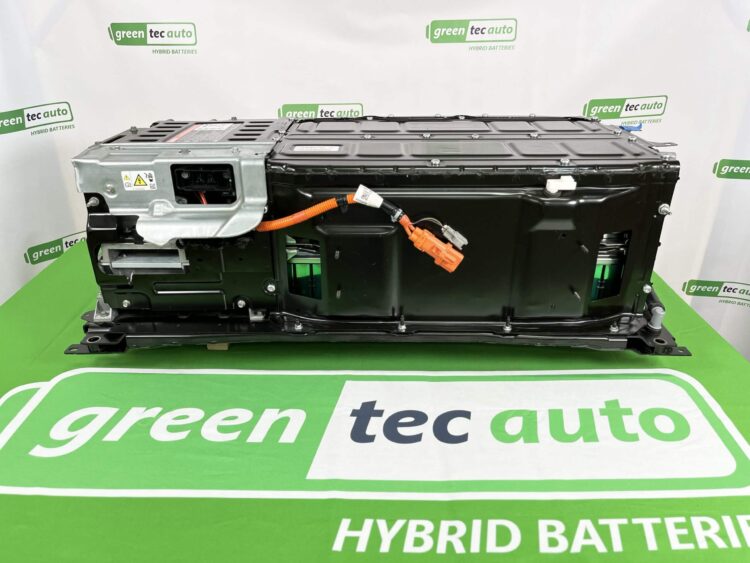
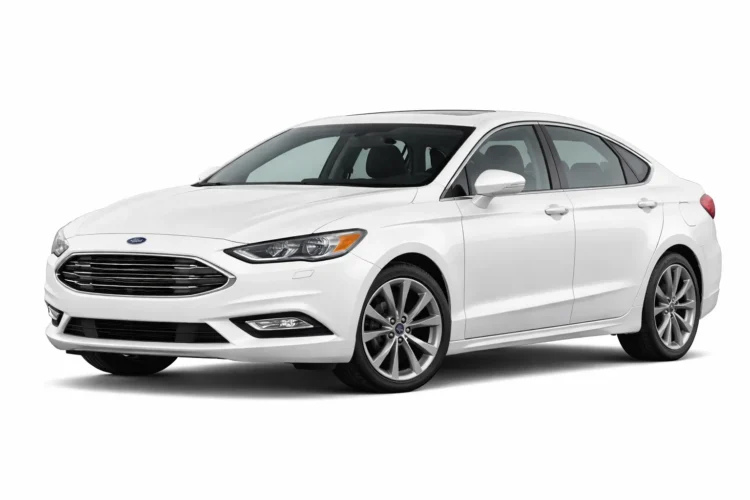

Cannot speak highly enough about the expertise and attentiveness provided by John, who I repeatedly interacted with by phone. Our 2012 Ford Fusion Hybrid would not start. 12V battery held only 5+ volts, but could be jumped back to 14+. Lights and instruments functioned, but car still would not start. Ford dealer recommended a $150 diagnostic test (plus towing!). If a high voltage battery replacement needed, would be $6,800 without labor. After a bit of back-and-forth, John suggested as a first step to simply take the 12V battery out of the loop and jump the hybrid electrical system directly with our truck (taking care not to fry the system through misconnections). Lights, instruments and car fired right up, could be put in gear and moved. Needless to say my wife and I were ecstatic. Without a doubt we will be purchasing a high voltage battery from Greentec when the time comes, and at less than half the price quoted by the Ford dealership.

Jay Groppe
Dec 30, 2019
2012 Ford Fusion Hybrid battery no longer available from Ford Motor Company. We researched online and found GreenTec had a replacement battery available at a reasonable price and a shop in New Jersey, reasonable driving distance for a car maintenance job. Daniel was great to work with, he was knowledgeable, professional and friendly. He answered questions and explained what we needed to know about replacing the hybrid battery in our Ford Fusion. We made appointment and the work was done quickly. They treated our car with respect. Daniel has even followed up with us to see how everything is working. As of 1 week after the battery replacement, all is good.
Barbara H.
Apr 28, 2025
I’m so very pleased with their work. After having an expensive more than 6 months bad experience in a Ford dealership with my Ford Fusion Hybrid that at the end they didn’t fix it. Found them on the internet selling the hybrid battery module that I needed, which by the way buying the Ford factory would cost me more than $9,000 and with Green tec auto less than half with a 3 year warranty. My rating to them is of 10 stars not only 5. Would fully recommend them for hybrid cars.
Francisco Lozano
Apr 8, 2022



Why pay more at the dealership? At Greentec Auto, we offer affordable, accessible and reliable hybrid battery replacements at up to 50% less than dealership prices without compromising on quality. Get the best value with expert service, mobile installation, and a warranty you can trust.


![Green dollar sign inside a circular green border, representing money or pricing.]」,](https://greentecauto.com/wp-content/uploads/2026/06/Screenshot-2026-06-03-at-00.23.08.webp)


The cost of shipping to you is included with your purchase. This offer is good for the entire continental United States. Add $200 for shipping to a residential address. Let Greentec Auto make it simple to return your core to us, ask about our reduced return shipping rates.

A refundable “core deposit” of $500.00 will be added to your order at checkout. Once we receive your old battery, we will refund the core deposit back to you minus the cost of return shipping. Cores must be returned within 45 days of purchase. This applies to shipping orders only. In all other circumstances, the core will be picked up at the time of service, no deposit required.

Once your new hybrid battery has arrived, put the core battery back into the same packaging your battery arrived in. As soon as we receive your core battery, we will refund the core deposit back to you. It’s that easy.
A Ford Fusion hybrid battery replacement costs $1,550 to $6,499 at Greentec Auto, covering 2010 through 2020 plus the Fusion Energi plug-in. A remanufactured pack for a 2010–2012 Fusion Hybrid starts at $1,550. The Fusion Energi, which carries a far larger plug-in battery, sits at the top of that range.
Two things decide your price, and neither is obvious. First, whether you have a Fusion Hybrid or a Fusion Energi those are different cars with very different batteries. Second, whether your car is a 2010–2012 or a 2013-and-newer, because Ford changed battery chemistry entirely in 2013.
Both are settled below in under a minute.
| Cost | $1,550 – $6,499 depending on model, year and battery |
| Warranty | 18 to 36 months on most qualifying batteries |
| Years covered | 2010–2012, 2013–2015, 2016–2019 Hybrid, and 2013–2020 Energi |
| Battery type | Nickel-metal hydride (2010–2012) · Lithium-ion (2013 and newer) |
| Where it sits | In the trunk, behind the rear seat |
| Installation | Mobile available on 2010–2015 packs; 2016–2019 and Energi are shop install only |
| Diagnostic | Free |
| Shipping | Available on most orders |
Ford issued a safety recall — 23S33, NHTSA 23V-440 covering 2019 and 2020 Fusion Energi plug-in hybrids. Around 14,500 vehicles are affected.
The defect involves the battery energy control module (BECM). When the current interrupt device activates, excess voltage and current can pass through the BECM, causing loss of motive power or a fire in the BECM area. Ford reported seven fires in the cargo area and roughly 270 warranty claims for loss of power. Ford’s interim guidance to affected owners was to stop charging the vehicle, because a lower state of charge reduces the risk.
What to do, in this order:
This is the most consequential question on the page, and a lot of owners genuinely do not know which car they have. The price difference runs into thousands.
The fastest way to tell: open the trunk.
| Fusion Hybrid | Fusion Energi | |
|---|---|---|
| Trunk space | Normal-looking, usable | Noticeably shallow — the battery takes a large bite out of it |
| Charge port | None | Yes, on the driver’s-side front fender |
| Battery | 1.4 kWh | 7.6 kWh |
| Electric-only range | None — it charges itself | About 20–22 miles |
| US years | 2010–2020 | 2013–2020 |
| Pack price here | $1,550 – $2,999 | $2,499 – $6,499 |
If there is a charge port on the front fender, you have an Energi. If the trunk looks oddly shallow with a wall of battery where luggage should go, you have an Energi. That trunk complaint is the most common thing Energi owners say about the car, and it is the giveaway.
The Energi battery costs more because it is more than five times the capacity — it has to move the car on electricity alone for around twenty miles, which the standard Hybrid never does.
Ford Changed the Battery Chemistry in 2013
The second thing that decides your price, and it catches people who read a guide written for the wrong generation.
| 2010–2012 Fusion Hybrid | 2013–2020 Fusion Hybrid | |
|---|---|---|
| Chemistry | Nickel-metal hydride (NiMH) | Lithium-ion |
| Voltage | 275 V | 275 V |
| Capacity | — | 1.4 kWh |
| Engine | 2.5L Atkinson | 2.0L Atkinson |
| Pack price here | From $1,550 | From $1,999 |
Ford moved to lithium-ion for the 2013 redesign because it weighs less and delivers more power than the nickel pack it replaced. It is the better battery. It is also more expensive to build, which is why a 2013 Fusion pack costs more than a 2011 one even though the cars look similar and sat on the same showroom floor a couple of years apart.
Practical consequence: a 2012 and a 2013 Fusion Hybrid take completely different batteries. If someone quotes you without asking your model year, they have not looked at your car.
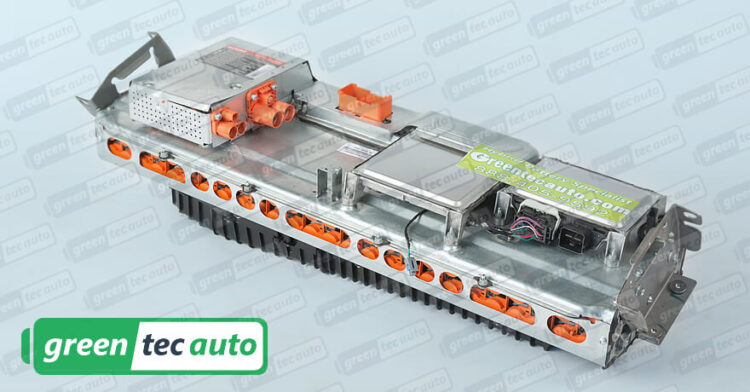
The Ford Fusion hybrid battery is in the trunk, behind the rear seatback. That is true for every model year from 2010 through 2020, and for the Fusion Energi as well.
You reach it from the trunk side. The trunk trim and rear bulkhead come out first, and on the Energi the pack occupies a substantial portion of the cargo area, which is why an Energi replacement takes longer.
By generation:
The pack runs at 275 volts. That is lethal, and service requires the high-voltage disconnect and proper isolation procedure. It is not a driveway job on any Fusion.
The Fusion degrades in a recognizable order rather than quitting outright.
On an Energi specifically, watch the electric range number after a full charge. It is the most sensitive early indicator on any plug-in, because you can see it on the dash every single morning. Cold weather reduces range temporarily; permanent loss shows up in warm weather too.

A hybrid system warning does not automatically mean a failed pack. We regularly diagnose Fusions whose owners arrived expecting a four-figure bill and paid a fraction of it.
Things that produce pack-shaped symptoms but are not a failed pack:
Our diagnostic is free. If your Fusion needs a cheap part, that is what we will tell you.
Most Fusion hybrid packs last 8 to 12 years, or roughly 100,000 to 150,000 miles. Where a specific car lands depends on four things, and mileage is the least important of them.
Ford’s factory hybrid component coverage runs 8 years or 100,000 miles federally, extended to 10 years or 150,000 miles in California-emissions states. Most Fusions on the road are now past it but if yours is a 2018, 2019 or 2020, check your VIN with a Ford dealer before you spend anything. The 2020 cars in particular may still be inside the window.
There is a cheaper offer on the market: find the single weak module, swap it, close the pack, send you home.
Every module in a Fusion pack has been through the same years, the same heat cycles and the same charge cycles. When one crosses the failure threshold, the others are right behind it. A single fresh module does not lift an aging pack — the aging modules drag it down and the pack falls out of balance again within weeks or months.
We have had clients arrive after doing this three, four and five times elsewhere. Each round is a few hundred dollars and a short stretch of normal driving. Added up, they spent more than a full replacement and still owned an aging pack.
It also follows the car to resale. “One module is new and the rest are eleven years old” is what you have to tell a buyer, and any informed buyer prices it exactly that way.
What we do instead: the pack is rebuilt from cells tested individually for capacity and internal resistance, rested and re-measured, then balanced so the finished battery behaves as one unit. Cells that do not meet standard are not reused they go to Greentec Recycling.
Both are available for 2010–2012 and 2013–2015 Fusion Hybrids.
| Remanufactured | New generation cells | |
|---|---|---|
| What it is | Tested, matched and balanced cells recovered from existing packs | Cells that have never been in service |
| Warranty | 18 months | 36 months |
| 2010–2012 price | $1,550 | $1,950 |
| 2013–2015 price | $1,999 | $2,749 |
| Best for | A few more years of driving, or a tighter budget | Keeping the car long-term, and anyone in a hot climate |
New cells are the better battery. Longer service life, double the warranty term, and a starting point that has not already spent a decade in a car. On a 2010–2012 Fusion the step up is only $400 for twice the coverage, which is the easiest upgrade decision on this page.
Remanufactured is a legitimate choice built to the same process. For a Fusion you plan to drive two or three more years, it is often the smarter buy.
Mobile installation is available for 2010–2012 and 2013–2015 Fusion Hybrid packs in most of our service areas. A technician comes to your home, your workplace, or a shop of your choosing and does the replacement on site.
Shop installation is required for the 2016–2019 Fusion Hybrid and the Fusion Energi. These need equipment that does not travel — contact us to arrange it.
Shipping is available on most orders if you would rather have your own technician handle the installation. Greentec Auto operates more than 30 locations across the U.S., Canada, and the U.K.
On the 2010–2015 cars, comfortably yes. A $1,550 to $2,749 pack on a car that is otherwise sound returns it to full value, and the Fusion’s drivetrain — engine, eCVT, body — is generally in good shape at the age these batteries fail. Compare that against what a comparable used car actually costs today, not against what your Fusion would fetch with a dead pack.
On a Fusion Energi, do the arithmetic more carefully. A $6,499 pack is a serious number against an Energi’s current market value. It can still be the right call — you know this car’s history and you do not know the next one’s, and an Energi with a healthy pack is worth substantially more than one without. But it is a real decision rather than an obvious one, and we will talk you through it honestly rather than just quoting you.
The cases where replacement clearly does not make sense: major accident damage, transmission failure alongside the battery, or severe rust.
If you notice warning lights on your dashboard, don’t rush to the dealership for an expensive diagnostic report. Many local auto parts stores can scan your vehicle and provide error codes for free just ask them to run a quick scan with a diagnostic tool.
Above, we’ve listed some of the most common hybrid error codes. Keep in mind that the check engine light must be onfor major issues to be detected. If your vehicle is experiencing hybrid battery failure, dealerships often charge thousands of dollars for a replacement typically with a limited warranty.
At Greentec Auto, we offer a cost-effective alternative, providing high-quality hybrid battery replacements at a fraction of the price. Plus, we back our batteries with a comprehensive warranty to give you peace of mind.
A Ford Fusion hybrid battery replacement costs $1,550 to $6,499 at Greentec Auto. A remanufactured 2010–2012 pack is $1,550, a 2013–2015 pack is $1,999, and the 2016–2019 pack is $2,999. The Fusion Energi plug-in pack runs $2,499 to $6,499.
$1,550 remanufactured with an 18-month warranty, or $1,950 with new generation cells and a 36-month warranty. These are the nickel-metal hydride generation and they are the least expensive Fusion packs we build.
Yes. Ford recall 23S33 (NHTSA 23V-440) covers 2019 and 2020 Fusion Energi vehicles for a battery energy control module defect that can cause loss of motive power or a fire. Check your VIN with Ford or NHTSA before any paid battery work, and if the recall is open, go to a Ford dealer — that work is free.
Look for a charge port on the driver’s-side front fender — if it is there, you have an Energi. The other giveaway is the trunk: an Energi’s cargo area is noticeably shallow because the larger battery takes up a big share of it.
Short distances, usually. It is not a plan. Fuel economy collapses, the engine is doing work it was not sized to do alone, and a pack that is failing keeps failing.
*Offer cannot be combined with other promotions.
We use cookies and similar technologies to operate the website, understand how it is used, and support advertising. Optional analytics and marketing technologies will not be activated unless you give your consent. You can accept all, reject non-essential technologies, or manage your preferences. You can change your choices at any time.
Global Privacy Control has been detected. Advertising sale/share choices are disabled where configured.