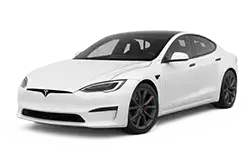
Replaced Tesla Model S battery 175k miles. Excellent Service. Professional. Car runs great. Highly recommend. Also $10k cheaper than Tesla. Warranty for 4yrs, 48k miles.

Kurt Voos
Apr 22, 2026
Just picked up our car. First impressions we are very pleased. This company is very professional and responsive.They delivered when they said they would. We have a 2016 Tesla Model S.
The Joseys
Apr 13, 2026
Only battery shop I could find that’d give a 4 y warranty on a full battery replacement. Cheaper than Tesla (by a few thousand). Rich rebuilds shop recommended these guys to me & glad I went with them. Jorge is the man
John Salvatore
Jul 21, 2026



Why pay more at the dealership? At Greentec Auto, we offer affordable, accessible and reliable hybrid battery replacements at up to 50% less than dealership prices without compromising on quality. Get the best value with expert service, mobile installation, and a warranty you can trust.
This man was quoted over $20,000 to replace his Tesla battery, but he paid us under nine. So, if you own a Tesla or you’re thinking about buying one, in today’s video I’m going to talk about five things Tesla will never tell you about battery replacement. [music] Let’s go check out some batteries and get straight into it. We have been replacing hybrid and EV batteries since 2012. On top of that, we have 34 locations across the United States, Canada, [music] and in the UK where literally all we do is replace batteries. And you might be thinking, how many batteries actually go bad in the first place? Well, the answer is a lot. And instead of just telling you, let me show you why. Right now, there are tens of thousands of Tesla about to hit the 8-year-old mark. That is the magic number. That’s when the battery warranty runs out, and that’s where the panic starts [music] to kick in. Because everywhere you look online, people are saying the same [music] thing. My Tesla battery died. Tesla quoted me $20,000. The car is totaled. I’ll never buy an electric car again. But here’s what nobody is telling you online. A dead Tesla battery does not mean your entire car is done. It does not mean you have to pay Tesla [music] $20,000. Tesla wants you to think there’s only one option, but there’s not, and I’m going to prove it. But first, let’s have a look at a Tesla Model 3 and a Tesla Model S battery just to get a better idea. This is a Tesla Model S battery pack, and this [music] is a Tesla Model 3 battery pack. Right away, you can tell they look different, but here’s what most people don’t realize. [music] Neither one of these is a single battery. These packs are made up of individual modules and thousands of individual cells working together. [music] The Model 3 and the Model Y, they have four long modules inside of the battery pack. But, going to the Model S and the Model X, depending on the year, has [music] anywhere from 14 to 16 modules. And each module has its own electronics, sensors, cooling lines, >> [music] >> and safety systems. And here’s the part that changes everything. Even if one section of this pack goes wrong, one weak module, one shortened brick, the entire car shuts down. Not because every module is dead, but because the computer won’t even let it run. Now, if you’re really interested and want to go deeper into the BMS and the BNB and the actual electronics inside of these packs, go watch our last video on the Tesla Model 3 battery. We break it down piece by piece. But, for now, just understand this. Your [music] Tesla battery isn’t one big thing. So, with all of these components inside these battery packs, it sparks the question, why [music] do these batteries actually fail in the first place? And usually, it’s one of these five things. >> [music] >> Number one, a weak internal short in a single brick. This can happen at any mileage at any age. [music] Tesla technicians will tell you it’s not even necessarily caused by supercharging. It just happens. Number two, moisture or water intrusion. This can lead [music] to corroded sensors, failed valves, and bad seals. Three, cooling system failure. These packs are liquid cooled. If the coolant does not flow, the battery can and will overheat. Number four, voltage imbalance. One module drifts away from the others and the whole pack stops working. Number five, age and heat cycling. Years of fast charging, hot summers, cold winters, they [music] add up. Now, before I tell you what it actually cost, let me tell you the four biggest mistakes Tesla owners make when their battery [music] actually dies. Mistake number one, they take Tesla’s first quote. They get told $20,000 and they panic. They sell the car, they trade it in for nothing, >> [music] >> and then they go buy the next new Tesla. That’s exactly what Tesla wants you to do. And the next mistake, they don’t check the warranty. This one’s actually kind of funny. We had a customer come in for a battery replacement quote, and while we were talking through the details with the customer, we realized they were still under Tesla’s warranty. This means Tesla would have covered it completely, and they had no idea. So, make sure to always check your warranty before you spend a single dollar. Mistake number three is they think Tesla is their only option. Independent companies [music] like ours can do the same exact replacement for up to 50% [music] less than what Tesla charges. Same result, usually half the price, and we’ll get into exactly what that looks like in just a minute. Mistake number four, and this one catches more people than you’d ever think. They confuse the high voltage battery with the 12-V battery. These are two completely different [music] parts. One is $200, the other one is $8,000 to now that you know what not to do, let’s go into what you actually should do, and which option is right for you. If your Tesla is under 8 years old and under the mileage gap, go to Tesla first and make them honor that warranty. Don’t spend a single dollar if you don’t have to. [music] Because you’re actually going to find a lot of shops online. These little independent guys who watch a few YouTube videos and call themselves Tesla experts. And they’ll tell you, “Hey, we found a bad module. It’s just one block. We’ll replacement and everything will be just fine.” But, here’s the problem with that. And I always tell people, it’s like this. Have you ever had a TV remote where it takes two double a batteries and the TV remote dies and there’s two batteries inside? You take one bad one out, you take a new one and you put it back inside the remote. That TV remote is actually going to work maybe for a couple days, maybe for [music] a week and then it’s going to go bad again. It’s the same principle with batteries and it’s actually way more in depth because you’re going to have thousands and thousands of component [music] in each battery pack itself and they’re finding out what is bad not what is going to go bad. And on top of that, I would ask you this, what happens when you go to sell the car? Someone asks about the battery, you tell them, “Oh, yeah, you know, it went bad. We replaced one out of the 16 modules. Everything else in the pack is 10 years old, but there’s one module that’s new. One fresh piece, 15 [music] old ones. That’s not a fix. That’s a band-aid on a broken system. >> [music] >> So, here’s what we do at Greentec Auto and why it’s different. Number one, we’ve been in business for 13 years. We’ve seen what actually happens when repairs get cut short and we decided a long time ago, we’re not going to do it the cheap way. [music] That’s why we do a similar thing that Tesla does, but at a fraction of the cost. All of the modules come out, every single one. The bad ones don’t get repaired, they don’t get reused. [music] They get sent to our recycling facility where the batteries are recycled to gain valuable materials to build new batteries in the future because [music] that’s how you do this. Not 3 hours of guessing which module is bad, not one fresh piece inside a 10-year-old [music] pack. A complete and proper replacement is what we do. So, if you’re watching this and your Tesla battery is acting up, maybe losing range, throwing codes or won’t charge, don’t panic and definitely don’t take the first quote you get. Reach out to us, we’ll do a free diagnostic. We’ll tell you exactly [music] what failed, no pressure, no upselling, just the truth. Now, I want to actually hear from you guys. So, if you’ve got quoted for a Tesla battery [music] replacement, put it in the comments below and I want to see. And if your Tesla’s still running strong, [music] put the mileage below so we can kind of see where everybody else is at. And on top of that, if you actually stuck with me throughout today’s video, use coupon code GT133 to get $350 off for not if, but when your Tesla battery goes bad. See you guys in the next one.


![Green dollar sign inside a circular green border, representing money or pricing.]」,](https://greentecauto.com/wp-content/uploads/2026/06/Screenshot-2026-06-03-at-00.23.08.webp)


The cost of shipping to you is included with your purchase. This offer is good for the entire continental United States. Add $200 for shipping to a residential address. Let Greentec Auto make it simple to return your core to us, ask about our reduced return shipping rates.

A refundable “core deposit” of $500.00 will be added to your order at checkout. Once we receive your old battery, we will refund the core deposit back to you minus the cost of return shipping. Cores must be returned within 45 days of purchase. This applies to shipping orders only. In all other circumstances, the core will be picked up at the time of service, no deposit required.

Once your new hybrid battery has arrived, put the core battery back into the same packaging your battery arrived in. As soon as we receive your core battery, we will refund the core deposit back to you. It’s that easy.
A Tesla Model S battery replacement costs $6,999 to $14,500 at Greentec Auto, depending on your pack size. A 70 kWh pack sits at the bottom of that range and a 100 kWh pack at the top. Tesla quotes the same job at roughly $20,000 to $25,000.
Supercharging works af ter our replacement. That is not true of most aftermarket Model S packs, and it is the first thing to ask any company you call.
Every pack carries a 48-month limited-mileage warranty on most qualifying batteries. Model S installation is performed at our locations — this is a lift-and-drop job, not a driveway job, and we will not pretend otherwise.
| Cost | $6,999 – $14,500 by pack size |
| Tesla’s price | Roughly $20,000 – $25,000 |
| Supercharging | Preserved |
| Warranty | 48-month limited-mileage on most qualifying batteries |
| Years covered | 2012–2015 and 2016–2021 Model S |
| Pack sizes | 70, 75, 85, 90 and 100 kWh |
| Upgrades | Yes — 75 kWh packs can move up to 85, 90 or 100 kWh |
| Installation | At our locations. Shop install only for Tesla. |
| Diagnostic | Free |
| Model S Pack | Capacity | Approximate Range | Price |
|---|---|---|---|
| Battery | 100 kWh | ~290 miles | $14,500 |
| Battery | 90 kWh | ~240 miles | $11,999 |
| Battery | 85 kWh | ~220 miles | $9,999 |
| Battery | 75 kWh | ~200 miles | $7,999 |
| Battery | 70 kWh | ~190 miles | $6,999 |
Fits 2012–2015 and 2016–2021 Model S. Pricing is active at publication and may change — call to confirm for your VIN.
Where the money actually goes at Tesla. Tesla Service Centers bill labor hourly on top of the pack, at roughly $175 to $200 per hour, and a Model S pack replacement can run 3 to 13 hours. That is $525 to more than $2,600 in labor alone before the battery is counted. Greentec Auto charges one flat installation fee. There is no hourly meter running while your car sits on a lift.
This deserves its own section because it is the single most common reason Model S owners stay stuck paying Tesla.
Search this and you will find dozens of threads saying you cannot Supercharge after an aftermarket battery replacement. For most aftermarket and module-level repair companies, that is true. The pack does not communicate correctly with the car, the car flags it, and Supercharging is restricted or disabled.
If you live in an apartment, a condo, or anywhere without home charging, that turns a cheaper battery into a car you cannot use.
Our Model S replacements keep Supercharging functional. When you call any other company about a Model S pack, ask that question first and make them answer it plainly, because the answer determines whether the car is still usable to you.
Yes. A Model S on a 75 kWh pack can move up to an 85, 90 or 100 kWh pack. This is one of the few places in the automotive world where replacing a worn part leaves you better off than you started.
An upgrade buys you three things at once:
The car’s computer has to be programmed to the new pack so it reports the correct capacity and range, and we cycle test the finished car through two to three full charge cycles to confirm it is actually delivering the range the upgrade promises. A pack that reads 100 kWh on a screen and delivers 85 in the real world is not an upgrade.
If your battery is failing anyway, the marginal cost of stepping up a size is the cheapest range you will ever buy for this car.
Model S pack failure is rarely the whole pack dying at once. It is almost always one of five things:
Here is the part that catches owners off guard: when one section fails, the entire car shuts down. Not because every module is dead — because the computer will not let the car operate with a pack it cannot trust. A Model S that will not move often has fifteen perfectly healthy sections and one bad one.
That is also why a failed Model S battery is almost never actually worthless.
This is the part that separates a replacement that lasts from one that buys you six months.
Every Model S module has components beyond the cells — a temperature sensor and a monitor board that reports voltage and temperature back to the pack’s main controller. Those components fail, and when a shop only tests for dead cells, it misses them entirely.
Ask any company you are considering whether they check these three. Write them down:
Notice that the third one causes the other two. A company that replaces a corroded board without finding the failed valve that let the moisture in has fixed the symptom and left the cause in your car.
Most owners picture one large battery. It is not one battery.
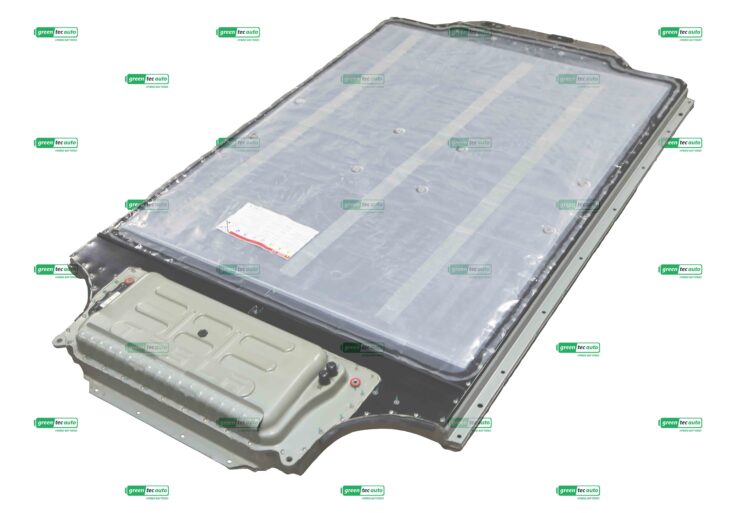
A Model S pack is a case containing a set of individual modules, and each module contains thousands of small cylindrical cells. Every module carries its own battery monitor board (BMB), which measures that module’s voltage and temperature and reports it upward. All of those reports feed a single battery management system (BMS) the pack’s brain, mounted inside the pack itself.
The distinction matters: the BMBs collect raw data, the BMS makes decisions. The BMS controls charging, discharging, thermal management, cell balancing and the high-voltage contactors, and it processes on the order of fifteen thousand data points every second to do it.
The cooling is liquid, and it runs inside the modules. Look at a Model S pack with the lid off and you will see cooling lines threading through the pack and entering the modules themselves not flowing around them. Coolant carries heat out in summer and warms the pack in winter. This is a generation beyond the fan-cooled packs used in hybrids like the Prius, and it is also one more system that can fail.
Thousands of components means thousands of things that can go wrong. That is the honest way to think about a Model S pack, and it is exactly why testing has to happen module by module.
There is a cheaper offer on the market: find the bad module, swap it, put the lid back on, send you home. It is a repair, not a replacement, and it fails for a reason you already understand intuitively.
Think about a TV remote that takes two AA batteries. One dies. You replace that one and leave the other in. The remote works for a few days, maybe a week, and then it is dead again — because the second battery was the same age as the first.
A Model S pack is that problem multiplied by thousands of components. A shop doing module-level repair is finding what has already failed. It has no way of finding what is about to fail, and everything else in that pack has been through the same decade of heat cycles.
And then there is resale. When you sell the car, the buyer asks about the battery. The honest answer is: one module is new, every other module is ten years old. One fresh piece in an aging pack. That is not a fix, and any informed buyer will price it as exactly what it is.
What we do instead: every module comes out. Every module is tested individually against a point checklist that covers the sensors, the monitor board and the cells. Modules that do not meet standard are not repaired and not reused they go to Greentec Recycling. The pack is rebuilt from modules that passed and balanced so the finished battery works as one unit.
That is why our warranties run to four years. We build the packs to last well beyond that term — that is the design target, not a printed guarantee.

This alert is not a failing battery pack, and it is nowhere near a $20,000 problem.
Your Model S high-voltage pack contains a pyrotechnic fuse a profuse that exists to sever the high-voltage circuit instantly in a crash. It is a safety device. The car monitors its condition, and when the diagnostics indicate the fuse should be serviced, you get a “Battery fuse requires replacement soon” message on the screen.
What to actually do:
If you are seeing this alert on a 2016–2021 Model S, bring it in. Our diagnostic is free, and if a fuse is all you need, that is what we will tell you.
Your Model S has two batteries. Confusing them is the single most expensive mistake in this entire article.
| High-voltage pack | 12-volt battery | |
|---|---|---|
| What it does | Drives the car | Wakes up the computers, runs the electronics |
| Where it is | Under the floor, full length of the car | Under the frunk liner, or in the rear on some later cars |
| Cost | $6,999 – $14,500 | A couple hundred dollars |
| Symptoms | Range loss, charging faults, pack error codes, car will not move | Car will not wake, doors will not open, screen dark or rebooting, cascading warnings |
A dead 12-volt battery in a Model S produces dramatic symptoms. The car will not wake up, the screen goes black or loops, the door handles do not present, and every system on the network throws an alert simultaneously. It looks catastrophic. It is a couple hundred dollars.
Before you accept a high-voltage quote from anyone, confirm which battery is actually the problem. That is what a free diagnostic is for.
Tesla’s battery and drive unit warranty runs 8 years, with a mileage cap that varies by model year and pack, and it covers retention of at least 70% of original capacity.
If your Model S is inside that window, go to Tesla first and make them honor it. Do not spend a dollar with us or anyone else.
We say this because it has happened in our own shop. A customer came in for a replacement quote, and partway through the conversation it became clear the car was still under Tesla’s warranty. Tesla would have covered it in full. He had no idea.
The 8-year mark is where the pattern is right now. Tens of thousands of Model S cars are crossing it, the warranty lapses, and that is exactly when the first range complaints and pack faults surface. If you are at 7 years and 9 months and seeing symptoms, get it in front of Tesla immediately.
Unlike a gas car, the tank does not stay the same size. This is the part nobody warns EV buyers about.
Owners typically replace a Model S pack not because the car stopped, but because half the range is gone. That is a legitimate reason. You bought the range.
Most Model S packs last 8 to 12 years. The commonly repeated figure online is 10 to 20 years. What we see in our shops is that the fade starts showing up around the 8 to 10 year mark close to the same window as a conventional hybrid pack.
Mileage matters less than years and heat. A Model S is designed to retain roughly 70% to 80% of original capacity over its service life, and the things that push it below that faster are:
For daily use, keeping the charge between roughly 20% and 80% is the single most effective habit for pack longevity on a nickel-based Model S.
A question worth answering because it gets misread as a failing battery. Picture a parking lot. When it is empty, finding a space is instant. When it is 80% full, you circle. Lithium ions work the same way — as the pack fills, it gets progressively harder for ions to find a place to sit, so the charge rate tapers.
That taper is normal on a healthy pack. What is not normal is a pack that tapers hard at 50%.
Model S installation is shop-only. We do offer mobile installation on many hybrid models. We do not offer it for Tesla, because dropping a structural floor pack safely requires a lift and equipment that does not travel.
We have been replacing hybrid and EV batteries since 2012 the business started in Sacramento, California, and our main US distribution center is now in Kansas City, with more than 30 locations across the U.S., Canada, and the U.K.
It does not go to a landfill and it does not sit in a yard.
Modules that still perform are tested, balanced and used in remanufactured packs.
Modules that do not meet standard go to Greentec Recycling, where lithium-ion packs are processed to recover lithium and cobalt that go back into building new batteries rather than being mined again.
Some modules get a second life instead of being broken down passed to Greentec Energy for use in home energy storage systems and EV conversions, where a module that no longer meets automotive standards still has plenty of useful capacity for a stationary application.
If you notice warning lights on your dashboard, don’t rush to the dealership for an expensive diagnostic report. Many local auto parts stores can scan your vehicle and provide error codes for free just ask them to run a quick scan with a diagnostic tool.
Above, we’ve listed some of the most common hybrid error codes. Keep in mind that the check engine light must be onfor major issues to be detected. If your vehicle is experiencing hybrid battery failure, dealerships often charge thousands of dollars for a replacement typically with a limited warranty.
At Greentec Auto, we offer a cost-effective alternative, providing high-quality hybrid battery replacements at a fraction of the price. Plus, we back our batteries with a comprehensive warranty to give you peace of mind.
A Tesla Model S battery replacement costs $6,999 to $14,500 at Greentec Auto, depending on pack size. A 70 kWh pack is $6,999, a 75 kWh is $7,999, an 85 kWh is $9,999, a 90 kWh is $11,999, and a 100 kWh is $14,500. Tesla quotes roughly $20,000 to $25,000 for the same job.
Two reasons. Tesla bills labor hourly at roughly $175 to $200 per hour on a job that can take 3 to 13 hours, on top of the pack price. And Tesla is in the business of selling cars a $20,000 battery quote on an eight-year-old Model S is designed to make buying a new one look reasonable. We charge one flat installation fee and batteries are the only thing we do.
With most aftermarket and module-level repair companies, no Supercharging gets restricted. With our Model S replacements it continues to work. Ask this question of every company you call before you discuss price, because it determines whether the car is usable if you do not have home charging.
Yes. Upgrading from a 75 kWh pack to an 85, 90 or 100 kWh pack increases range, increases performance, and reduces how often you need to charge. The car is programmed to the new pack so it reports capacity and range correctly, then cycle tested to confirm it delivers.
Most last 8 to 12 years. Online figures of 10 to 20 years are optimistic against what we see fade typically starts showing up at the 8 to 10 year mark. Heat is the biggest accelerant, followed by routine charging to 100% on nickel-based packs.
*Offer cannot be combined with other promotions.
We use cookies and similar technologies to operate the website, understand how it is used, and support advertising. Optional analytics and marketing technologies will not be activated unless you give your consent. You can accept all, reject non-essential technologies, or manage your preferences. You can change your choices at any time.
Global Privacy Control has been detected. Advertising sale/share choices are disabled where configured.