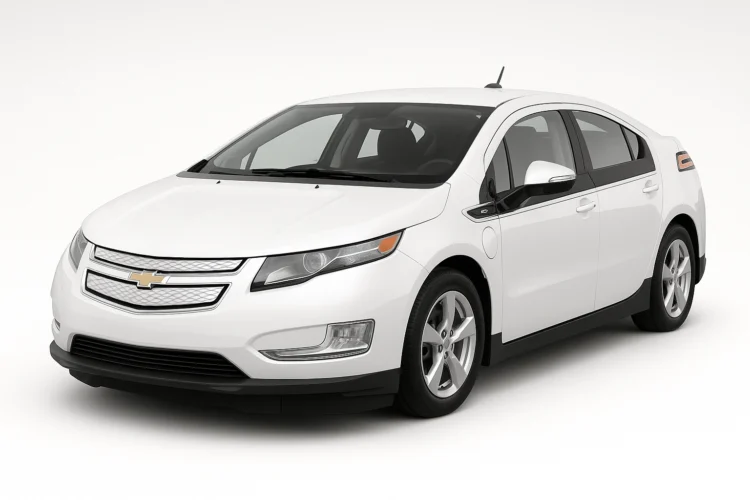
If you own a Chevrolet Volt, this video is going to be a must-watch for you because we’re going to be diving into everything you need to know about Chevrolet Volt plug-in hybrid battery replacement. First, we’re going to lift this car up, drop the battery out, take the lid off, show you the internal parts of the battery, talk about second life usage, put the battery back in the car, talk about the replacement process, drive the car, go to a charging station, talk about everything you need to know about charging, and then if you stick with us through today’s video, we’re going to show you a way to save $15,000 on your battery replacement. Let’s get into it.
Okay, so we’re underneath the car right now. Battery’s right above us. Right here we have the antifreeze we just took from underneath the car. Now we’re going to move this out of the way and get to the process of taking this battery out, and then we’ll see you on the other side.
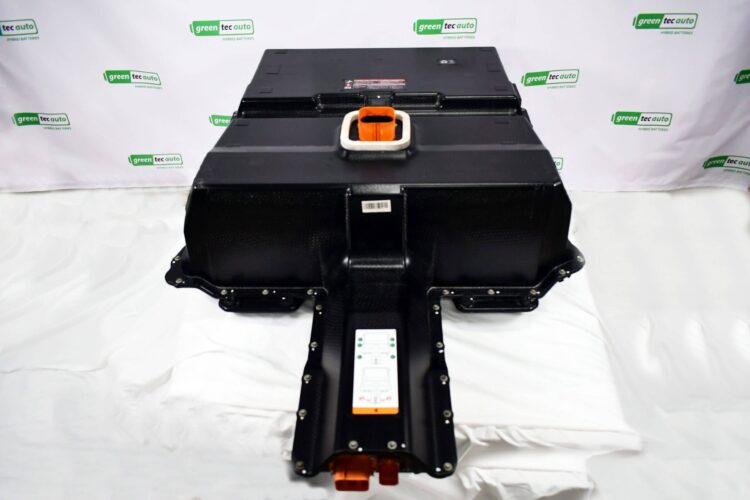
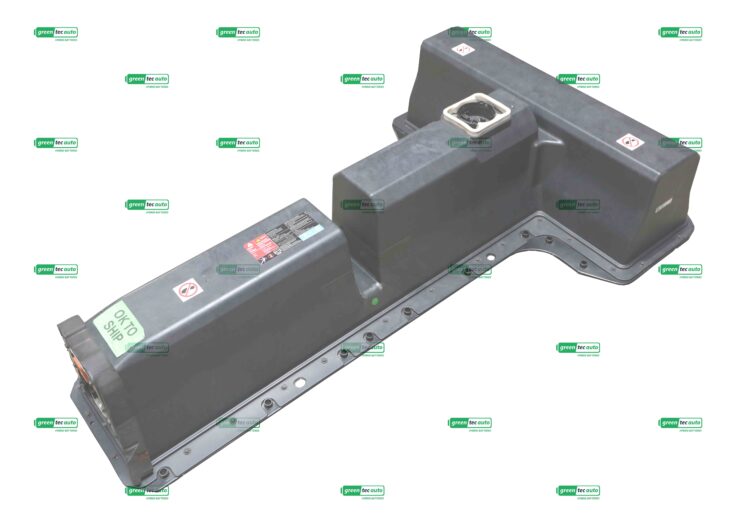
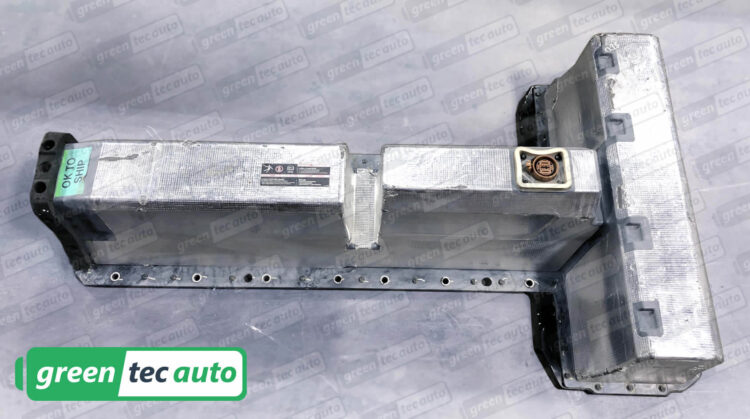
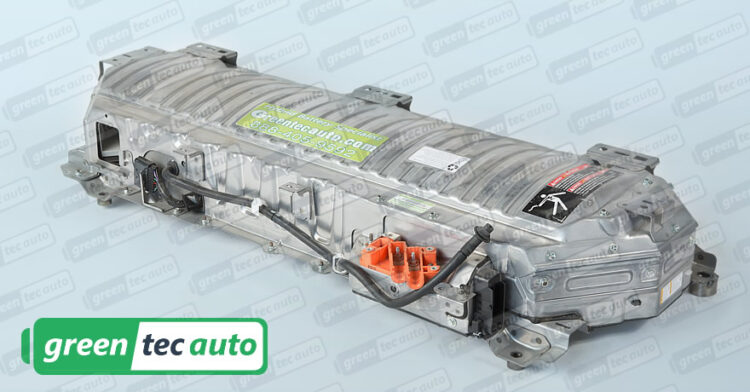
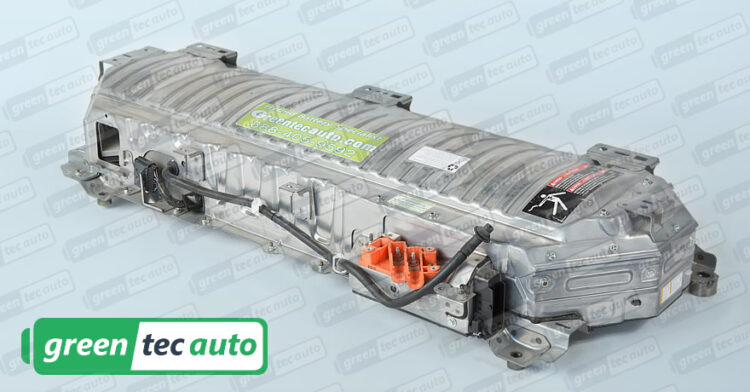
Okay, so right now the car is getting lifted up and the battery is actually right underneath it, and it’s going to get lifted up. He’s going to pull it out. This is actually what the battery looks like right here. So as you can tell, all these boltings along here is how the battery is held up underneath the car. This is what the battery case looks like. It’s actually very interesting because if you look at other batteries — for example, we’re going to be showing right now a Tesla Model 3 and what a Nissan Leaf looks like — this looks a lot different because this is a T-shape. A lot of batteries are usually kind of like a flat battery with the modules inside. Here it’s kind of like a T-shape battery, and this car is again a four-seater car.
What have we done so far? We’ve disconnected the 12V battery, we’ve disabled the high-voltage service disconnect, we’ve removed the protective covers underneath the vehicle, we took the antifreeze out, and then we’re lowering the battery from underneath the car. So this is what the battery pack actually looks like out of the car.
Right now we just unbolted all these, so I’m going to try to make it look easy and take this case off right now, and then we’re going to kind of talk about what’s inside of the battery itself. So as you can tell, it looks like three big sections, right? One here, one here, and then one here. But that’s actually not the case — it’s a lot more intricate, so let me show you how it actually works. There are nine modules throughout the whole battery pack itself. This is one, this is one, this is one, and there’s nine throughout the whole battery pack. You’re going to have 288 cells throughout the whole battery pack itself. You’re going to have 96 of the cells in series, which is going to increase the voltage of the battery, and then every three-cell group — so every one, two, three — they are electronically in parallel, which increases the capacity of the battery itself.
Okay, so one of the most important parts of the battery pack itself that not many people talk about is actually the coolant flow. What does that even mean, right? So this battery has liquid cooling. If we go way back like a generation one, generation two, or generation three Prius, it’s air cooling — there’s a fan, and the fan is cooling down the battery itself. But later on they found out that wasn’t the most effective thing. So with a lot of EV batteries now, especially Teslas as well, it is liquid cooling. Why that’s important is because batteries fail in the heat. So if you live somewhere hot like California, Arizona, Texas, or Florida, even with the liquid cooling in this new system that they have, your battery will fail sooner than living somewhere like Seattle or a more mild climate.
Why this is really important as well is, for example, a Nissan Leaf battery pack — it doesn’t have a TMS, which is a thermal management system that detects the temperature of the battery itself. So we have a lot of people that come to us in the wintertime especially with a bad Nissan Leaf battery because it can’t really warm up the battery. So why cooling is super important is because when the battery overheats, it can cool it down — because again, batteries fail in the heat. The reason why is the cells that are inside the battery pack, when heat comes in and they’re not getting cooled down, they begin to overheat and the chemistry inside of the cells begins to break down. And this could be something simple — it’s not like your battery overheats and it’s just done. You will experience stuff like range loss and degradation of the battery, but over time it could lead to a battery failing or just extreme range loss where you will have to come to a company like us and replace the battery.
Let’s talk about what this coolant system actually does here. So the way it works is the coolant enters the pack, flows through these channels and plates that sit alongside the modules, and then it exits the battery. So it’s constantly circulating, carrying heat away from the cells as the vehicle is driving or charging. Another thing is that the system doesn’t just cool the battery — it can also help maintain the temperature in colder conditions. The vehicle’s thermal system can regulate the battery so it stays within optimal range whether it’s hot or cold.
Okay, so we’ve taken the battery out of the car, we’ve talked about the battery and all the internal parts of it — everything you need to know about that. Now we’re going to take the battery, put it back in the car, install it, then we’re going to take it on a test drive, go to a charging station, and let’s go from there.
All right guys, we’ve got the Volt in front of us right now. I want to first talk about what a Volt is and what a Volt isn’t, because a lot of people don’t really understand this. It’s not a hybrid and it’s not an EV — it’s a plug-in hybrid. So you have the option for electric and you have the option for gas. But it’s not something where you press a button and you can go to gas, or you press a button and you can go to electric. First, what this is going to use is all of the electricity. So if you go over here, this is actually the charging port right here — you go and you charge the vehicle right here. Left side of the vehicle you’re going to have the charging port, and then on the far back right side of the vehicle is where the gas port is.
And the reason why a Chevrolet Volt is one of my favorite cars is because a lot of people are scared to make the big shift to electric. Why? Because they’re like, oh, you know, I’m scared that my electric range is going to run out. Now we see cars like Teslas that can get two, three hundred miles of range, and it isn’t a big worry. But for some people making the first shift, it’s something that kind of holds them back. So what I like about the Chevrolet Volt is, for the first generation, you’re going to get around 30 to 40 miles of range on electric, and then after all of the electric is done, it will use the gas motor. And in the second generation of Volt, you’re going to get around 50 to 60 miles of range. But again, saying that, it really depends on the weather conditions. So I drove this exact car for about a year and a half, two years, and there were times where it could go all the way from 30 to 40 miles and sometimes even 50, but it really just depends.
One thing I would suggest — if it’s a really sunny day like it is now, if I’m charging my car outside and it’s hot, or if it’s super cold all year long, it will damage the battery. There are conditions — for example, the summer is usually better than the winter for the driving conditions — but if you have a garage, I would definitely suggest charging the car in there and keeping it in an indoor place as much as possible.
Okay, so now when it comes to charging, you have two options. There’s level one and level two charging. So first let’s start with a generation one Volt level one charging, right? That’s going to be around 120V, which is like the average thing you can get from your house or garage. This is going to take around 10 to 12 hours to fully charge your generation one Volt. Now we get to the generation two Volt — same level one charger, it’s going to take around 12 to 13 hours to fully charge. And then we get to level two charging, which is faster. For the generation one and generation two Chevy Volt, it’s going to take only four to four and a half hours to fully charge, and it’s going to be 240V.
So let’s go take this on a drive, and I want to show you what the flow looks like when you’re driving inside the vehicle. All right, so now we’re inside the Volt, and this is exactly what I wanted to show you guys. So actually we’re all out of electric right now — we’re running purely on gas. But if you look at this flow chart right here, and if you own a Volt you’ll be able to relate to this — right now I’m going all on engine power. But as you can tell, when I slow down a little bit, you will see regen power recovery. What that means is this car has regenerative braking. So when I’m slowing down and when I’m braking, it is going to charge up the battery itself. So this is another thing — if you live in a city area or in an area where you’re constantly stop-go, this is a pretty good car because you’ll be charging that battery while you do it. And then there are also times where it will use battery power like it is now, and then it will also use battery and gas power at the same time. So it’s a pretty cool combination.
I want to go upstairs real quickly and tell you a pretty crazy story that we heard from one of these Chevrolet Volt dealerships, and then we’ll talk about how to also save some money.
Okay, so the news article you’re seeing on the screen right now is correct. I know it says $30,000 Volt battery replacement — it’s pretty close to being true. If you look at the article, the battery was actually $26,600, which is still crazy expensive. I mean, when you get a battery replacement for that price, it’s not even worth replacing the battery — you might as well buy a new car. And when we think about it, companies like Chevrolet, they’re in the business of selling cars, not batteries. Not only that, but they don’t have batteries in stock ready to go like we do. We’ve actually been replacing hybrid and EV batteries the past 13 years across our 34 locations in Canada, America, and the UK.
Why am I telling you about this? Because not only would we be able to save you up to 70% less than that cost you see in the article, but on top of that we’re offering a $500 discount code — the biggest discount code we’ve ever offered. In today’s video, if you use the discount code GTAI, you’ll be able to get $500 off for not if, but when your Chevrolet Volt battery goes bad. Thank you guys.










![Green dollar sign inside a circular green border, representing money or pricing.]」,](https://greentecauto.com/wp-content/uploads/2026/06/Screenshot-2026-06-03-at-00.23.08.webp)