If you bought a new electric car five years ago for around $60,000, there is a real chance it may only be worth somewhere in the mid-$20,000 range today. That is not just normal car depreciation. That is the specific problem with EV depreciation.
According to iSeeCars’ 2026 depreciation study, the average vehicle loses 41.8% of its value after five years. Electric vehicles lose 57.2% on average, while hybrids lose 35.4%. In other words, hybrids are currently holding value better than gas cars, while EVs are losing value faster than almost every major vehicle category.
That sounds terrible if you bought a new EV.
But it can be an opportunity if you are buying used.
The important question is not just, “Do EVs depreciate?” The better question is, why do EVs depreciate so fast, and how can you use that information before buying or selling one?
Before assuming an EV is a bad vehicle or a used EV is a bad purchase, you need to understand the five main reasons behind the price drop: battery anxiety, fast-moving technology, aggressive new EV price cuts, incentives, and a smaller used-buyer pool.
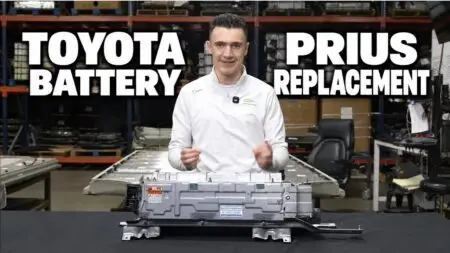
If you are shopping for a used EV or hybrid, do not assume the vehicle is done just because the battery is older. Get the battery diagnosed first. Greentec Auto specializes in EV and hybrid battery testing, repair, replacement, and remanufacturing, and can help you understand whether the battery is actually failing or simply misunderstood.
The short answer is simple: EVs currently depreciate the fastest, hybrids hold value the best, and gas vehicles sit in the middle.
Here is the five-year depreciation comparison from iSeeCars’ 2026 study:
Vehicle type | Average 5-year depreciation | What it means for buyers |
Hybrids | 35.4% | Best value retention among these groups |
Overall market average | 41.8% | Typical five-year depreciation |
EVs | 57.2% | Fastest depreciation among major vehicle types |
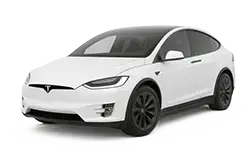
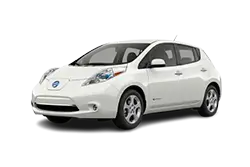
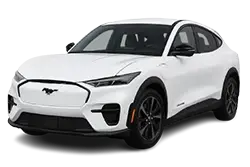
The same study found that several EVs are among the highest-depreciating vehicles on the market. The Nissan LEAF lost 63.1% after five years, the Volkswagen ID.4 lost 62.1%, the Ford Mustang Mach-E lost 60.8%, and the Tesla Model Y lost 57.8%. Even the Tesla Model 3, one of the stronger EVs for resale, still lost 54.6% after five years.
That does not mean every EV is a bad car. It means the used market discounts EVs heavily because buyers are still unsure about battery life, charging convenience, future technology, and replacement cost.
The biggest reason EVs depreciate so fast is not always the battery itself. It is battery anxiety.
When someone shops for a five-year-old gas car, they usually are not afraid the engine is about to fall out. They may ask about mileage, maintenance, oil changes, transmission service, or accident history. But when someone shops for a five-year-old EV, the first fear is usually the high-voltage battery.
That fear makes sense. Many EV owners have heard stories about dealership battery replacement quotes of $15,000, $20,000, or more. They have seen posts online saying EV batteries are finished after five years. They may assume that once the battery starts degrading, the whole car becomes worthless.
But that is not the full picture.
Geotab’s updated 2026 EV battery health study analyzed real-world battery data from more than 22,700 electric vehicles across 21 makes and models and found an average battery degradation rate of 2.3% per year. Geotab also noted that charging behavior, high-power DC fast charging, very hot climates, and extreme states of charge can affect battery degradation.
That means a five-year-old EV battery is not automatically dead. Many used EVs still have most of their usable capacity left. The problem is that used buyers often price the car as if the battery is about to fail.
That is the real depreciation issue.
Perception drives price. But perception does not always equal battery reality.
This is where a battery diagnostic changes everything. A used EV is only a great deal if the battery is actually healthy. Without testing, the buyer is guessing. With proper diagnostics, the buyer can make the decision based on battery data instead of fear.
Another reason electric cars depreciate quickly is that EV technology is improving much faster than traditional gas-car technology.
A five-year-old gas car usually does not feel ancient. A 2020 Honda Civic and a newer Honda Civic may have different screens, safety features, or styling, but the basic ownership experience is similar. You still fill it with gas, drive it, maintain it, and expect the same general range and refueling experience.
EVs are different.
Battery range, charging speed, battery chemistry, software, heat pumps, efficiency, and charging-network access can change a lot within one model cycle. The U.S. Department of Energy reported that when modern EVs entered the market in model year 2011, available models had ranges from 63 to 94 miles, with a median range of 68 miles. By model year 2022, the median EV range had risen to 257 miles, with one model reaching 520 miles.
That fast improvement affects used EV values.
A used EV with 200–230 miles of original range may still be useful. But if a newer version offers more range, faster charging, better thermal management, and a more mature charging experience, the older EV feels less competitive. Buyers notice that, and they pay less.
This is one of the big differences between EV depreciation and gas-car depreciation. Gas cars age mostly through mileage, wear, and maintenance history. EVs also age through technology comparison.
Used vehicle prices do not exist in a vacuum. They are tied to new vehicle prices.
When automakers cut new EV prices, used EV prices have to fall too. Otherwise, buyers would just buy new.
Tesla is the clearest example. In January 2023, Reuters reported that Tesla cut U.S. prices on Model 3 and Model Y vehicles by 6% to 20%, with the base Model Y dropping from $65,990 to $52,990. Later in 2023, Reuters reported additional Model 3 and Model Y price cuts, with the standard Model 3 down about 17% since the start of the year and the Model Y Long Range down more than 26%.
That matters for depreciation because every major new-price cut resets the used market.
If a new EV drops by $8,000, the used version cannot keep yesterday’s price. The used car has to move down too. That is painful for the first owner, but it can create a major opportunity for the second owner.
Gas vehicles can have rebates and dealer discounts, but the EV market has been more volatile. When prices move quickly, used EV values can fall quickly with them.
Government incentives also affect EV depreciation because they change what buyers actually pay for a new EV.
If a new EV has a sticker price of $45,000 but qualifies for a large credit or incentive, the real purchase decision is not based on $45,000. It is based on the effective after-incentive price. That puts pressure on used EV prices because used buyers compare pre-owned vehicles against discounted new vehicles.
In the U.S., the federal clean vehicle credit changed significantly in 2025. The IRS states that the previously owned clean vehicle credit applied only to vehicles acquired on or before September 30, 2025, and qualified used EV buyers could previously receive up to $4,000 under the program.
The International Energy Agency also reported that U.S. electric car sales were affected by policy shifts in 2025, including the termination of new and used EV purchase tax credits after September 2025. EV sales made up about 10% of U.S. car sales for the full year, but only 6–7% in Q4 2025 after the credit changes.
The takeaway is simple: incentives can help new buyers, but they can also distort resale values. When incentives change, demand shifts. When demand shifts, used prices move.
EVs are growing, but they are still a smaller share of the vehicle market than gas cars and hybrids in many areas.
That matters because resale value is driven by demand.
If you sell a used Toyota Corolla, Honda CR-V, Toyota Camry, or Toyota RAV4 Hybrid, the buyer pool is huge. People understand those vehicles. Mechanics understand them. Banks understand them. Families understand them.
With used EVs, the buyer pool is still more limited. Some buyers do not have home charging. Some are worried about winter range. Some do not understand battery health. Some are afraid of repair costs. Some simply do not want to change their driving habits.
Cox Automotive reported that U.S. EV share of new-vehicle sales peaked at 10.5% in Q3 2025, then fell to 5.8% in Q4 2025, with expectations for EV share near 8% in 2026.
A smaller buyer pool means less competition for each used EV. Less competition usually means lower resale prices.
That does not mean used EV demand is dead. It means used EV pricing is still under pressure because the market is not as broad as the gas or hybrid market yet.
EV depreciation is painful if you bought new.
But if you are shopping used, it can be one of the best opportunities in the car market.
A three- to five-year-old EV can sell for a fraction of its original price while still having a healthy battery, strong performance, modern safety features, lower maintenance needs, and access to the same charging network it had when new. The first owner absorbed the biggest depreciation hit. The second owner may get most of the car’s usefulness at a much lower price.
That is why the correct conclusion is not, “Never buy an EV.”
The better conclusion is:
Be careful buying a new EV if resale value matters. Be very interested in used EVs if the battery checks out.
This is especially true with vehicles like a used Tesla Model 3 or Model Y. Many used Teslas still receive software updates, still have strong charging-network access, and still offer a driving experience that feels current to many buyers. The depreciation may look bad for the original owner, but it can become a major discount for the next buyer.
The risk is the battery.
A used EV is only a deal if the battery is healthy, repairable, or priced correctly for its condition. That is why battery diagnostics should be part of the buying process, not an afterthought.
The battery is the most important part of the used EV purchase.
Not the screen. Not the wheels. Not the color. Not the dealership sales pitch.
The battery.
Before buying a used EV, ask for battery health information, warranty status, charging history if available, and any diagnostic reports. If the seller cannot provide that information, get the vehicle inspected by a qualified EV battery specialist before you commit.
A proper EV battery diagnostic can help answer questions like:
Battery question | Why it matters |
How much usable capacity remains? | Determines real-world range and battery health |
Are there weak modules or cell groups? | Helps identify repairable problems before full failure |
Are there fault codes? | Shows whether the vehicle has active battery or charging issues |
Is the issue battery-related or something else? | Prevents unnecessary full battery replacement |
Is replacement, repair, or continued driving the best option? | Helps avoid overpaying |
This is where Greentec Auto helps EV and hybrid owners make a better decision. Greentec Auto has years of real-world experience with hybrid and EV battery diagnostics, battery repair, replacement, and remanufacturing. Many vehicles that get written off as “needing a full battery” should be tested first.
Do not assume the car is done before getting the battery diagnosed.
If you are shopping for a used EV, contact Greentec Auto for EV battery diagnostics before you buy. If you already own an EV and a dealer has quoted you for a full battery replacement, get a second opinion before spending thousands.
EV depreciation is bad news for new EV buyers who care about resale value.
It is good news for used EV buyers who know how to check battery health.
That is the entire point.
The same depreciation that hurts the first owner can help the second owner. A used EV with a healthy battery can be a strong buy because the market may be pricing in more fear than reality. But a used EV with a weak battery can become expensive quickly if the buyer does not inspect it first.
So the best strategy is not emotional. It is practical.
If you are buying new, understand that EV resale values may be volatile. If you are buying used, take advantage of depreciation, but verify the battery first. If you own an EV and are facing a scary dealership quote, get an expert diagnosis before replacing the entire battery or giving up on the vehicle.
Check your year, make, and model to see EV or hybrid battery replacement pricing, or contact Greentec Auto to find a location near you.
EVs depreciate faster because used buyers are worried about battery replacement cost, EV technology improves quickly, new EV prices can change aggressively, incentives affect real transaction prices, and the used EV buyer pool is smaller than the gas-car buyer pool.
No, an EV battery is not automatically failing after five years. Battery health depends on the vehicle, climate, charging habits, mileage, battery chemistry, and maintenance history. Geotab’s 2026 battery-health data found average EV battery degradation of 2.3% per year across more than 22,700 vehicles, which means many EV batteries still retain significant usable capacity after five years.
Used EVs can be a great deal because the first owner often absorbs the largest depreciation hit. However, a used EV is only a smart buy if the battery is healthy, the price reflects the vehicle’s condition, and the buyer understands charging needs, warranty status, and real-world range.
EVs currently depreciate more than hybrids. In iSeeCars’ 2026 study, EVs lost 57.2% of their value after five years, while hybrids lost 35.4%.
Hybrids hold value well because they appeal to a larger buyer pool. They offer better fuel economy than gas cars without requiring full charging behavior changes. Buyers also tend to be less afraid of hybrid resale risk than EV battery replacement risk.
A new EV may make sense if you want the latest range, technology, warranty coverage, and features. A used EV may make more financial sense if you want to avoid the steepest depreciation. Before buying used, get the battery checked so you know whether the discount is a real opportunity or a warning sign.
Before buying a used EV, check battery health, usable range, warranty status, charging history, fault codes, accident history, tire condition, charging-port function, and whether the vehicle qualifies for any remaining manufacturer coverage. The most important step is getting the high-voltage battery diagnosed.
Sometimes, yes. Some EV battery problems may be repairable depending on the vehicle, battery design, module condition, fault codes, and parts availability. A full battery replacement is not always the only option, which is why getting a second opinion from an EV battery specialist can save money.
*Offer cannot be combined with other promotions.
We use cookies and similar technologies to operate the website, understand how it is used, and support advertising. Optional analytics and marketing technologies will not be activated unless you give your consent. You can accept all, reject non-essential technologies, or manage your preferences. You can change your choices at any time.
Global Privacy Control has been detected. Advertising sale/share choices are disabled where configured.