If you are thinking about buying an electric car in 2026, do not walk into the dealership just because gas prices are high.
That is exactly how people overspend.
EVs can be one of the smartest vehicle purchases you make in 2026, but only if the numbers work for your lifestyle. The wrong EV can leave you with higher insurance, painful depreciation, limited charging options, and a car that does not fit the way you actually drive.
The right EV can save you thousands in fuel, avoid dealership maintenance traps, and give you a reliable daily driver at a much lower operating cost than a gas vehicle.
The difference comes down to three things: the math, the battery, and whether you buy new or used.
Before you put down a deposit, here is what you need to know.
Already own an EV or hybrid and worried about the battery? Do not assume the car is done. Greentec Auto specializes in EV and hybrid battery diagnostics, replacement, and remanufactured battery solutions across North America and the UK.
Gas prices are forcing a lot of drivers to reconsider electric cars. With the Strait of Hormuz disruption affecting global oil markets, fuel prices have become a much bigger part of the car-buying conversation. The IEA reported restricted Hormuz tanker traffic and major oil supply losses in 2026, while EIA forecasts still show crude prices remaining a key factor for drivers watching pump costs.
That does not automatically mean everyone should buy an EV.
A lot of buyers make the mistake of only comparing gas versus electricity. They look at the cost of filling up, compare it to the cost of charging at home, and assume the EV wins.
Sometimes it does.
But the real EV buying decision includes depreciation, insurance, charging access, battery health, warranty coverage, driving habits, and how long you plan to keep the vehicle.
That is where the real answer shows up.
Before buying an EV in 2026, answer these three questions:
Question | Why It Matters |
Does the math work? | Fuel savings only matter if they beat depreciation, insurance, and upfront cost. |
Is the battery healthy? | Battery condition affects range, resale value, and long-term ownership cost. |
Should you buy new or used? | Used EVs may offer the best value because the first owner already took the depreciation hit. |
Most EV buying mistakes happen because people skip one of these.
An EV can save a lot of money on fuel, especially if you charge at home.
A typical commuter driving around 10,000 to 12,000 miles per year can spend thousands per year on gasoline, depending on fuel prices and vehicle efficiency. Charging an EV at home is usually much cheaper than buying gasoline or diesel on an energy-equivalent basis, and the U.S. Department of Energy says EV drivers can save as much as $14,500 in fuel costs over 15 years.
That is the part most people already know.
Here is the part they miss: fuel savings are not the whole ownership cost.
A new EV can come with:
Cost Factor | Why It Matters |
Higher purchase price | Many EVs still cost more upfront than comparable gas vehicles. |
Higher insurance | EV repairs can be more expensive, which may raise premiums. |
Depreciation | Many EVs lose value quickly in the first few years. |
Home charger setup | Level 2 charging may require installation costs. |
Public charging costs | Fast charging can be much more expensive than home charging. |
That is why a brand-new EV does not always save money immediately.
For many buyers, the break-even point on a new EV may not show up until year four, five, or six. That means if you buy a new EV and sell it within two or three years, you may lose more in depreciation than you saved in fuel.
The simplest way to think about it is this:
EVs usually reward long-term owners, home chargers, and buyers who avoid paying peak new-car prices.
The biggest fear around electric cars is the battery.
A lot of drivers still think an EV battery suddenly dies after a few years and leaves them with a $20,000 repair bill. That can happen in certain failure cases, but it is not how most EV batteries age.
Geotab’s updated 2026 EV battery health study analyzed more than 22,700 electric vehicles across 21 makes and models. The study found an average battery degradation rate of 2.3% per year.
That means an EV battery does not usually go from healthy to dead overnight. It gradually loses capacity.
Here is a simple example:
Original Range | Estimated Capacity After 8 Years at 2.3% Annual Degradation | Approximate Range After 8 Years |
300 miles | About 81% | Around 240 miles |
250 miles | About 81% | Around 200 miles |
200 miles | About 81% | Around 160 miles |
That is not a dead battery. That is normal battery aging.
Most EV batteries are also covered by long battery warranties. Tesla, for example, lists 8-year battery and drive unit warranties with minimum 70% battery capacity retention, with mileage limits varying by model. Nissan’s Canadian LEAF warranty booklet lists lithium-ion battery coverage for 96 months or 160,000 kilometers, with capacity coverage terms also included.
The key is not just age. It is how the battery was used.
The biggest difference between a great EV ownership experience and a frustrating one is often home charging.
If you can charge at home, the EV math gets much stronger. You can plug in overnight, avoid gas stations, and usually pay less per mile than a gas driver.
If you cannot charge at home, the equation changes.
Geotab’s 2026 battery study found that high-power DC fast charging is a major risk factor for battery degradation, and the updated analysis specifically points to increased fast charging as one reason degradation rates changed from prior findings.
That does not mean fast charging is bad every time you use it. Road trips happen. Public charging is part of EV ownership.
But if public fast charging becomes your main charging method, you may face three problems:
Problem | Why It Matters |
Higher cost | Public charging is often more expensive than home charging. |
More inconvenience | You have to plan around charging stations. |
More battery stress | Frequent high-power charging can accelerate degradation. |
This is why apartment dwellers need to be careful.
An EV can still work without home charging, but it becomes less convenient, less affordable, and harder on the battery over time.
The best EV deal in 2026 may not be a new EV.
It may be a three-year-old used EV.
Used EV prices have fallen hard. Clutch reported that used EV prices dropped $1,765 in a single month, the largest monthly drop on record, and that more than half of used EVs now sell for under $35,000.
That is a huge opportunity for smart buyers.
The reason is simple: EV depreciation can be brutal in the first few years. But battery degradation is usually gradual. So the first owner may take the biggest financial hit, while the second owner gets a vehicle with most of its battery capacity still remaining.
This is why a used EV can make more sense than a new EV.
A three-year-old EV may still have strong battery health, remaining warranty coverage, modern range, and a much lower purchase price. The transcript’s core argument is exactly right here: if your goal is saving money, letting the first owner absorb the depreciation can be the smarter move.
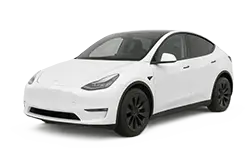
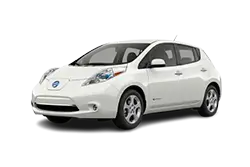
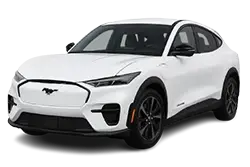
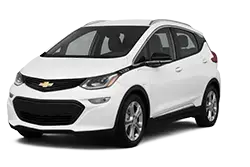
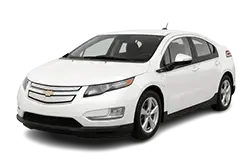
A 2022 Tesla Model 3, Nissan LEAF, Kia Niro EV, Chevy Bolt, Ford Mustang Mach-E, or Hyundai Kona Electric can become much more attractive once the used price drops far enough.
The smart move is not just “buy an EV.”
The smart move is: buy the right EV, at the right price, with the right battery health, for the way you actually drive.
Buyer Type | Better Choice | Why |
Wants maximum warranty and latest tech | New EV | More peace of mind, latest range and software |
Wants lowest total cost | Used EV | Avoids the steepest depreciation |
Drives mostly local miles | Used EV | Range loss matters less for daily commuting |
Has home charging | EV, new or used | Stronger fuel savings and convenience |
Cannot charge at home | Hybrid or carefully chosen EV | Public charging can weaken the savings |
Keeps cars 7+ years | New or used EV | More time to recover upfront costs |
Sells cars every 1–2 years | Used EV or avoid EV | New EV depreciation can be painful |
For most cost-conscious buyers, a used EV is the better value in 2026.
For buyers who want the newest battery technology, longer warranty runway, or specific features, buying new can still make sense. But you need to be honest about how long you will keep it.
EVs are great for the right driver. They are not great for everyone.
You should be careful about buying an EV in 2026 if one of these applies to you.
If you do not have home charging, you are depending on public charging. That means more planning, more waiting, higher charging costs, and potentially more frequent high-power charging.
That does not make EV ownership impossible. It just makes it harder.
If you drive more than 25,000 miles or 40,000 kilometers per year, you need to compare EV, hybrid, and plug-in hybrid options carefully.
For some high-mileage drivers, an EV can still be excellent. For others, a hybrid may be the smarter balance of fuel savings, range, and convenience.
EV charging networks are improving, but rural routes can still be difficult depending on where you live and travel.
If you road trip in rural areas several times per year, look closely at real charging availability before buying.
This is one of the biggest mistakes.
If you buy a brand-new EV and sell it quickly, depreciation can wipe out your fuel savings. Unless you get a major incentive, a major discount, or a very strong lease deal, short-term EV ownership can be financially risky.
Even though most EV batteries degrade gradually, battery failures can happen.
When they do, many owners assume the dealership is the only option.
It is not.
Greentec Auto specializes in EV and hybrid battery replacement, diagnostics, remanufacturing, and mobile installation options. Greentec’s site states that the company offers EV and hybrid battery replacement services across more than 35 locations, with solutions for many makes and models.
For Tesla owners specifically, Greentec Auto lists Tesla battery replacement options and pricing ranges that may be lower than dealership-level replacement quotes, depending on the model, pack size, labor, and whether the replacement is new, refurbished, or aftermarket.
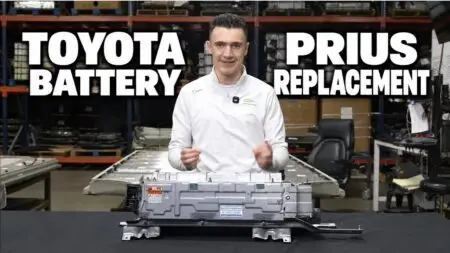
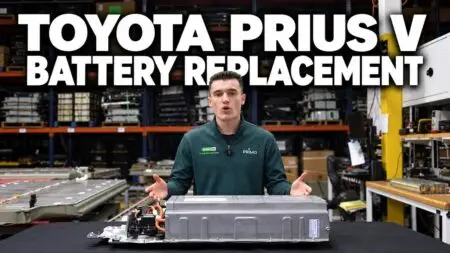
For hybrid owners, Greentec also offers Toyota Prius battery replacement options, mobile installation, and warranty-backed battery choices.
The point is simple:
A bad battery does not always mean the car is done.
Before replacing the entire vehicle or accepting a massive dealer quote, get the battery diagnosed by a specialist.
Yes, buying an EV in 2026 can be a smart move — but not automatically.
An EV makes the most sense if you can charge at home, drive enough miles to benefit from fuel savings, plan to keep the car long enough to beat depreciation, and buy at the right price.
A used EV may be the best value for many buyers because the first owner already absorbed the steepest depreciation while the battery may still have most of its usable capacity left.
But an EV may not be the best choice if you lack home charging, road trip constantly through rural areas, drive extreme mileage, or plan to sell the car quickly.
The best advice is simple:
Do not buy an EV because gas is expensive. Buy an EV because the full math works.
And if your EV or hybrid battery ever starts losing range, throwing warning lights, or getting a massive dealer quote, do not assume the vehicle is finished. Check your year, make, and model with Greentec Auto and get a battery quote before making a $10,000–$20,000 decision.
Yes, 2026 can be a good year to buy an electric car, especially if you are buying used, can charge at home, and plan to keep the vehicle long enough to benefit from lower fuel costs. Used EV prices have fallen significantly, which makes the value equation stronger for buyers who avoid new-car depreciation.
For most cost-focused buyers, a used EV is usually the smarter choice in 2026. New EVs can still make sense if you want the latest technology and full warranty coverage, but used EVs often offer the best balance of price, battery health, and remaining usefulness.
Geotab’s 2026 study found average EV battery degradation of 2.3% per year across more than 22,700 vehicles and 21 makes and models. Actual degradation depends on the vehicle, battery chemistry, climate, charging habits, and how often the owner uses high-power DC fast charging.
Occasional DC fast charging is normal and useful, especially on road trips. The concern is heavy reliance on high-power public fast charging as the main charging method. Geotab’s 2026 analysis identifies high-power DC fast charging as a major battery health risk factor.
You can buy an EV without home charging, but it is usually less convenient and less cost-effective. Home charging is one of the biggest reasons EV ownership saves money. Without it, you may rely more on public chargers, which can cost more and add time to your routine.
Many EV batteries can last well beyond the standard 8-year warranty period, but their range gradually declines over time. A battery that loses 2.3% capacity per year may still retain roughly 81% of its capacity after 8 years, depending on usage and conditions.
Yes. Dealerships are not the only option for EV or hybrid battery replacement. Independent specialists like Greentec Auto diagnose, replace, remanufacture, and install EV and hybrid batteries for many vehicle models.
Sometimes. If you drive extremely high mileage, cannot reliably charge at home, or take frequent rural road trips, a hybrid may be more practical than a full EV. The right answer depends on your route, fuel costs, charging access, and how long you plan to keep the vehicle.
*Offer cannot be combined with other promotions.
We use cookies and similar technologies to operate the website, understand how it is used, and support advertising. Optional analytics and marketing technologies will not be activated unless you give your consent. You can accept all, reject non-essential technologies, or manage your preferences. You can change your choices at any time.
Global Privacy Control has been detected. Advertising sale/share choices are disabled where configured.