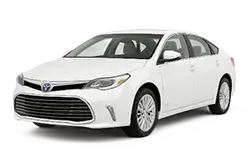
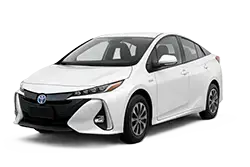
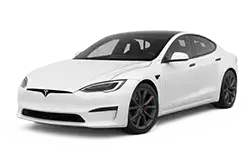
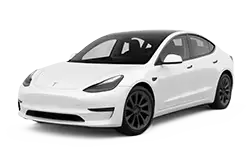
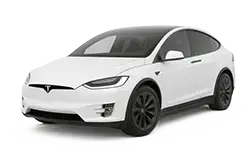
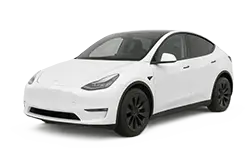
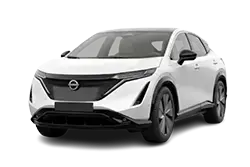
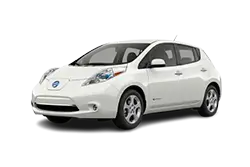
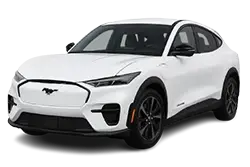
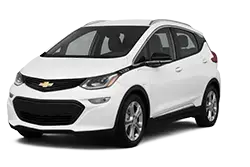
Electric cars are not bad. Some of them are incredible.
They are fast, quiet, smooth, and if you can charge at home, they can be extremely cheap to drive. The problem is not the EV itself. The problem is that too many people buy an electric car like it is just another gas car.
It is not.
The rules are different. The costs are different. The risks are different. And if you do not understand those differences before you buy, an EV can go from “smart financial decision” to “expensive mistake” very quickly.
Before you buy a new or used electric car in 2026, here are the seven biggest EV problems you need to understand.
Already own an EV or hybrid with battery warnings, range loss, or charging issues? Do not assume the car is done. Contact Greentec Auto for EV or hybrid battery diagnostics before approving a five-figure dealer quote.
Yes, buying an electric car in 2026 can make sense if you have home charging, drive enough miles to benefit from cheaper electricity, buy at the right price, and understand battery health before purchasing.
An EV may not make sense if you rely on public fast chargers, live in a very cold climate, take frequent rural road trips, or are buying new and planning to sell the car in two or three years.
The smartest EV buyer in 2026 is usually not the person paying full price for a brand-new model. It is often the second owner buying after the first owner already took the biggest depreciation hit.
EVs Make Sense If… | Think Twice If… |
You can charge at home overnight | You live in an apartment with no charger |
You drive enough miles to save on fuel | You barely drive |
You buy used at a strong discount | You buy new and trade often |
You live in a moderate climate | You live somewhere with harsh winters |
You understand battery health | You trust a dealer quote blindly |
You mostly commute locally | You road trip through rural areas often |
One of the biggest hidden costs of EV ownership is depreciation.
A lot of buyers focus on fuel savings, tax credits, charging costs, and maintenance. Those things matter. But if the car loses $10,000, $15,000, or $20,000 in value faster than expected, the fuel savings may not save the deal.
Used EV prices have been volatile. Cox Automotive reported that the average used EV listing price was about $35,895 in April 2026, while Recurrent’s used EV market data has also shown many used EVs moving into a much more affordable price range compared with earlier pandemic-era highs.
This is brutal for new EV buyers.
If you buy a new electric car and plan to sell it in two or three years, depreciation can be one of your biggest real ownership costs. This is especially true if the manufacturer cuts prices, battery technology improves quickly, or newer models offer more range for less money.
But for used EV buyers, this same problem can become an opportunity.
A Tesla, Nissan Leaf, Chevy Bolt, Ford Mach-E, or other used EV may be a much better deal after the first owner absorbs the steepest part of the depreciation curve. That is why the used EV market in 2026 is one of the most interesting areas for buyers who know what to inspect before purchasing.
The key is simple: do not just ask what the EV costs today. Ask what it may be worth when you are ready to sell it.
Cold weather is one of the biggest surprises for first-time EV owners.
A gas car may lose some efficiency in winter, but an EV can lose a noticeable amount of usable range because batteries are affected by temperature, cabin heating demands, driving speed, and whether the battery is preconditioned before driving.
Recurrent’s large winter EV range study found that at 32°F, EVs retain about 78% of their maximum range on average, and at 20°F, they retain about 70% on average. In practical terms, that means a vehicle advertised around 300 miles of range may feel closer to 210–235 miles in winter depending on model, tires, speed, heater use, and driving conditions.
That does not mean EVs cannot work in cold climates. Many do. Some modern EVs with heat pumps perform much better than older models.
But if you live somewhere cold, winter range loss is not theoretical. It happens every year for the entire time you own the car.
Before buying an EV in a cold-weather market, ask:
If the answer is no, the car may still be good, but it may not be good for your lifestyle.
EV ads usually talk about lower fuel costs and reduced maintenance.
They do not usually talk about insurance.
EV insurance can be more expensive than comparable gas-car insurance because EV repairs can get expensive quickly. Battery packs, sensors, cameras, aluminum structures, software systems, and high-voltage safety procedures all add complexity. In some cases, fewer shops and technicians are qualified to work on the vehicle, which can increase repair costs.
Recent ownership-cost reporting has found EV insurance can be meaningfully higher than gas-car insurance, with estimates often landing around 10% to nearly 50% higher, depending on the vehicle, driver, market, and insurer.
This does not mean every EV is expensive to insure. A used Chevy Bolt may not price the same as a Tesla Model S or Porsche Taycan. But you should never buy the car first and check insurance later.
Before signing anything, get an insurance quote using the exact VIN or exact trim you are considering.
That one step can save you from buying a car that looks affordable on the lot but becomes expensive every month.
This might be the most important EV ownership question:
Where are you plugging in the car every night?
The entire economic case for most electric vehicles is built around cheap, convenient home charging. The Department of Energy expects Level 1 and Level 2 charging to handle most EV charging needs, with the majority of future charging expected to happen at single-family homes.
That matters because home charging and public fast charging are not the same experience.
Level 2 home charging is usually where EV ownership feels easy. You get home, plug in, wake up with range, and avoid the gas station entirely. Public DC fast charging is different. It is faster than Level 2, but it is usually more expensive, less convenient, and harder on the battery if you rely on it constantly.
The U.S. Department of Transportation explains that Level 2 charging commonly uses 240V residential power or 208V commercial power and can charge many battery-electric vehicles to 80% in several hours, while DC fast charging is designed for much faster public charging.
If you live in an apartment, condo, or rental property without reliable charging, your EV may not save you as much as you expect. You may end up spending weekends at public chargers instead of simply plugging in at home.
Before buying, answer this clearly:
Can I charge this EV at home or at work most of the time?
If not, the EV may still work, but the financial case is weaker.
Fast charging is convenient, but it is not free from consequences.
The faster you push energy into a battery, the more heat and stress the battery management system has to control. Modern EVs are built to handle DC fast charging, but relying on high-power fast charging as your main charging method can accelerate battery degradation.
Geotab’s 2026 EV battery health analysis looked at more than 22,700 electric vehicles and found that high-power DC fast charging was a major stress factor. Vehicles with low DC fast charging frequency averaged about 1.5% annual degradation, while high-frequency, high-power DC fast charging users averaged around 3.0% annual degradation.
That does not mean one road trip will ruin your battery.
The issue is habit.
If you use DC fast charging occasionally for road trips, that is normal. But if your entire ownership plan depends on fast charging multiple times per week because you do not have home charging, you should understand what that can mean long term:
For battery life, Level 2 charging is usually the better daily charging method. Use fast charging when it solves a problem, not as your only plan.
EV road trips are improving, but they are not the same as gas-car road trips.
With a gas car, you pull in, fill up, and leave in a few minutes. With an EV, you need to plan around charger location, charging speed, station availability, battery percentage, temperature, and route.
In the best case, you find a working fast charger, plug in, charge to 70–80%, and continue. In the frustrating case, the charger is broken, occupied, blocked, slow, or there is a line.
Public charging reliability has improved in some areas, but it remains inconsistent. Research from Harvard Business School found that U.S. charging stations had an average reliability score of about 78%, meaning public charging still has reliability gaps compared with the gas-station experience many drivers are used to.
This matters most if you road trip frequently, especially through rural areas.
If you take one or two planned trips per year, an EV may be fine. If you drive long distances often, tow, travel through cold climates, or go through areas with limited charging coverage, you need to be much more careful about which EV you buy.
A 300-mile EV is not always a 300-mile road-trip vehicle.
This is the problem that scares EV owners the most.
A warning light comes on. The range starts dropping. The car stops charging correctly. The battery starts acting weird. The owner brings it to the dealer.
Then the quote comes back:
$10,000.
$15,000.
Sometimes over $20,000.
That is when a lot of owners panic and assume the car is done.
But here is what most people do not understand: an EV battery is not just one giant battery. It is a full high-voltage system made up of cells, modules, electronics, cooling components, sensors, wiring, contactors, and battery management hardware.
A dealer may quote a full battery replacement because that is the cleanest option inside their system. But a full replacement is not always the only possible path.
This is where diagnosis matters.
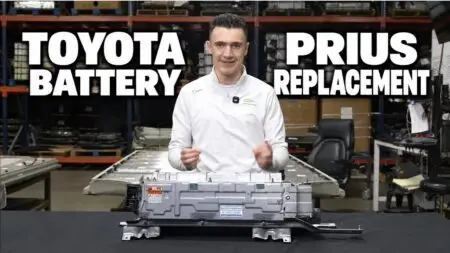
Greentec Auto specializes in EV and hybrid battery replacement, diagnostics, testing, and remanufacturing. Greentec Auto’s own location pages position the company as a hybrid and EV battery replacement provider with mobile installation options, and Greentec’s company story traces its battery work back to 2012 with 13+ years of hands-on experience.
The dealer is often in the business of selling cars. A battery specialist is in the business of extending the life of the car you already own.
That difference matters.
Before approving a five-figure EV battery quote, get a second opinion from a battery specialist. The most expensive repair is the one you never needed in the first place.
If your EV or hybrid has a battery warning, reduced range, or charging issue, contact Greentec Auto for diagnostics before assuming the vehicle is finished. Check your year, make, and model to see battery replacement pricing.
EVs still make a lot of sense for the right driver.
An electric car can be a smart financial decision if you:
An EV becomes risky when the buyer ignores the ownership model.
If you buy new, trade every few years, rely on public fast charging, live in a cold climate, and never check insurance or battery health, the savings can disappear quickly.
The EV is not the problem.
Buying the wrong EV for the wrong lifestyle is the problem.
For many buyers, a used EV may be the better financial move in 2026.
Buying New EV | Buying Used EV |
Higher upfront price | Lower purchase price |
Full manufacturer warranty | Warranty may be partly used |
Latest range and technology | Older range and charging speed |
Biggest depreciation risk | First owner already took depreciation hit |
Easier financing options | Requires stronger inspection |
Better for long-term ownership | Better value if battery health is good |
If you are buying new, plan to keep the car long enough to make the numbers work.
If you are buying used, do not shop only by price. A cheap EV with poor battery health, no warranty, or limited range may not be a deal.
The best used EV is not always the cheapest one. It is the one with the right battery condition, range, charging compatibility, warranty status, and replacement options.
Before buying a used electric car, check these items carefully:
What to Check | Why It Matters |
Battery health | Determines real range and long-term value |
Remaining warranty | Many EV batteries are covered for 8 years or a mileage limit, depending on model |
Real-world range | Advertised range may not match your climate or driving style |
Charging port type | Affects charger compatibility |
DC fast charging history | Heavy fast charging can increase degradation |
Home charging setup | Determines whether the EV will actually save money |
Insurance quote | Can change the monthly cost significantly |
Dealer battery quote history | Shows whether the car has had major HV battery issues |
Diagnostic scan | Reveals codes the dashboard may not fully explain |
Many EV battery warranties are around 8 years with mileage limits, but coverage differs by manufacturer and model. For example, Tesla’s battery warranties vary by model and configuration, with 70% minimum battery retention listed during the warranty period on Model 3 warranty materials.
Do not rely only on the seller’s word. Get the vehicle checked.
A used EV can be an amazing deal, but only if the battery is healthy enough to make the purchase make sense.
EVs are worth buying in 2026 if you can charge at home, buy at the right price, and choose a model that fits your climate and driving needs. They are less ideal for drivers who rely on public fast charging, take frequent rural road trips, or plan to sell a new EV after only a few years.
The biggest EV problem depends on the buyer. For new buyers, depreciation can be the biggest financial hit. For apartment dwellers, lack of home charging can be the biggest issue. For used EV buyers, battery health and replacement cost are often the biggest risks.
Yes. EVs can lose a meaningful amount of range in cold weather. Recurrent’s winter range research found EVs retained about 78% of maximum range at 32°F and about 70% at 20°F on average, though results vary by model and conditions.
Occasional fast charging is normal, but frequent high-power DC fast charging can increase battery degradation. Geotab’s 2026 study found vehicles with frequent high-power DC fast charging averaged higher degradation than vehicles that mostly used lower-power charging.
Not always. Home charging is usually where EVs deliver the strongest savings. Public DC fast charging can be much more expensive than home charging and may reduce or eliminate the fuel-cost advantage depending on local electricity prices, charger pricing, and vehicle efficiency.
A used EV can be the smarter buy if the battery is healthy and the price reflects depreciation. A new EV may make sense if you want the latest range, full warranty, and plan to keep the vehicle long term.
Do not approve the quote blindly. Get a second opinion from an EV and hybrid battery specialist. In some cases, the issue may need full replacement, but in other cases diagnostics may reveal a more targeted option.
Buying an EV in 2026 can be smart, but only if you understand the real ownership costs.
Do not buy one just because gas is expensive. Do not buy one just because the monthly payment looks good. And do not assume a dealer battery quote is the only option.
The best EV buyers ask better questions before they sign:
Where will I charge every night?
What will insurance cost?
How much range will I lose in winter?
How fast will this car depreciate?
What is the battery health?
What happens if the dealer quotes me five figures?
If you already own an EV or hybrid and the battery is acting up, Greentec Auto can help diagnose the issue and explain your replacement options before you overpay.
Check your year, make, and model to see EV or hybrid battery replacement pricing, or find a Greentec Auto location near you.
*Offer cannot be combined with other promotions.
We use cookies and similar technologies to operate the website, understand how it is used, and support advertising. Optional analytics and marketing technologies will not be activated unless you give your consent. You can accept all, reject non-essential technologies, or manage your preferences. You can change your choices at any time.
Global Privacy Control has been detected. Advertising sale/share choices are disabled where configured.