Prompt, quick, professional service. So much cheaper than getting another car. I would highly recommend their service to anyone who needs a hybrid battery replacement.

Chris Walker
January 2, 2025
Lisa Tufano
January 10, 2025
Ellrick Garcia
February 13, 2025



Why pay more at the dealership? At Greentec Auto, we offer affordable, accessible and reliable hybrid battery replacements at up to 50% less than dealership prices without compromising on quality. Get the best value with expert service, mobile installation, and a warranty you can trust.
Hey guys, this is Jaxx from Greentec Auto here and today I’m answering a question that 100% of Camry hybrid car owners always ask and it is the hybrid battery. So if you’re watching this video right now, maybe you drive a Camry and your battery has gone bad, maybe it’s going bad or you haven’t even bought a Toyota Camry yet because you heard about these crazy battery costs. Today I’m going to tell you the truth and everything you need to know about Camry hybrid battery replacement. So let’s get straight into it.
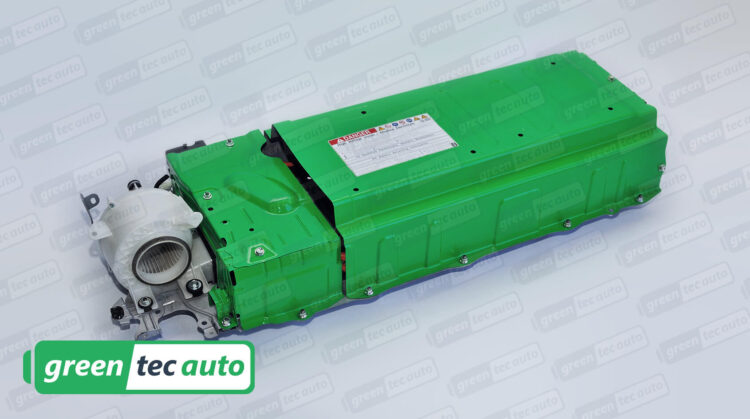
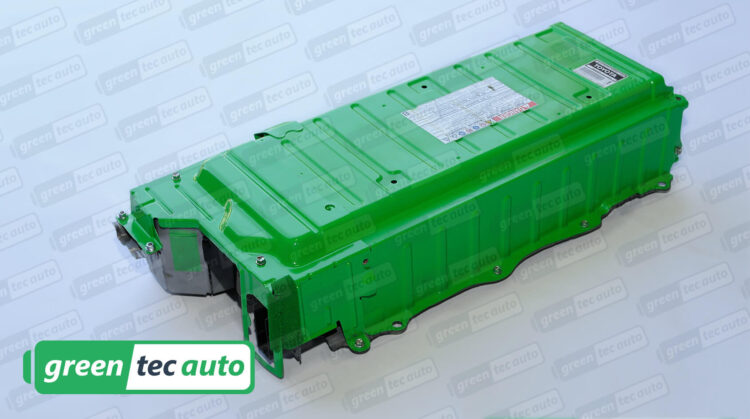
So, right in front of me, we have a Camry hybrid battery from 2007 all the way to 2011. It’s the exact same battery that’s inside of the car. So, here is what it looks like underneath the case. This is what it looks like with the case on top of this. Like, if you were to kind of open the trunk of your car and look at the battery inside, this is what it’s going to look like. You’re going to see a nice gray silver sheet case over top of the battery, which covers all this, which is everything from the fan, electrical components, the cooling, all the cells inside of the battery.
The biggest thing you need to know before getting your Camry hybrid battery replaced is cell replacement. Okay, you’ll see some people online on YouTube, maybe on Reddit talk about cell replacement, but let me explain what they mean when they say cell replacement. So, as you can tell right now, looking at all these different cells inside of the battery, what they do is they’re like, “Okay, this cell is bad. Let’s just go ahead and replace this cell and everything else is fixed.” Right? No, that’s not true. That’s a short-term band-aid fix and is not a long-term solution. We’ve had clients that have done the short-term band-aid fix three, four, or five times until they finally decide to get the full battery replaced. And I’ll tell you why. Because once you replace one cell, if one of the cells is bad, the rest of them are on the verge of going bad as well. And on top of that, everything is now unbalanced.
So, what we’re doing is it actually takes us 90 days, yes, 90 days, to make one Camry battery because we’re taking all of these cells outside the battery pack. Then it goes through our first test. If it doesn’t pass our first test, it instantly goes straight to Greentec recycling. If it does pass the first test, it’ll be put through our internal resistance and cycle testing to balance out all the cells inside the battery. Then we take it through further resting periods and stuff like this to ensure it’s going to be a long-term solution because we have warranties from 12 all the way to 48 months. We’re not just giving you a problem. We want this to be a fix that will last for years and years. We have customers that have had a battery from us 9 years ago and their car is still working fine.
And if your Camry is stranded on the road or in your garage and you see the check engine light on the dashboard and you don’t even want to touch it, don’t worry because we also offer a mobile installation service. So we have 34 locations across the United States where we can come out to you to get the battery installed. So our technician puts the battery in the car, boom, drives to your house, gets the battery installed within an hour. It’s a pretty easy installation. Pop the battery out, put the new one in, scan it, make sure everything’s running perfectly fine.
And also a good thing to know is if your battery hasn’t gone bad yet or if it has and you haven’t got a diagnostic from a dealership or anything yet, don’t do it because we actually offer free diagnostic service. We’re not going to charge you $100 or $150 — absolutely for free. You can either come in our shop or when we come out to you, we want a complimentary diagnostic to make sure the battery is actually the thing that needs to be replaced.
Now, some signs that your Camry battery is heading on its last legs and will need to be replaced is the following. So, pay attention. Number one is a drop in MPG. Your MPG could go from 40 all the way to 30 and lower and lower and that’s a sign that it’s not using as much power from the hybrid battery. Number two on this point, the engine is running more frequently. Okay, if the engine is running more frequently, and this is not something you have to guess, this is a lot of times something you can hear. You can tell that the hybrid battery is not performing as good as it could. The next one is the cooling fan running more frequently than normal. So, in the back of the car is where the cooling fan actually is. So, it sucks air from inside your car to cool down the battery. And if you hear that fan going on a lot and a lot and a lot, you could tell, okay, the battery is overheating. And batteries fail in the heat. So, if you drive somewhere hot like California, Arizona, Texas, Florida, anywhere hot, your battery is going to fail years before living somewhere like Alaska, for example.
While we’re talking about the fan, the next thing to watch out for is actually the fan. Because if you have pets in the back seat of your car — and I’ll tell a story for example. So this guy came to get his Prius battery replaced and we actually made a YouTube video about this. I think a month or two ago if you check our channel it was a Prius but Camry has the same kind of system and he had two Huskies in the back seat of his Prius and the hair gets inside of that fan and once it comes inside of the fan, it goes inside the fan and then boom.
The next thing I want to bring to your attention is something that you’ll never hear about anywhere on any other YouTube video. Although we did make a video about it I think a month or so ago. It’s very, very crucial and very, very important. And what is it you may ask? It is pet hair. Yes, pet hair. So, if you don’t own a pet, maybe you can skip 10 seconds for it. But for those who do, and for those who are interested, if you have a pet, having it in the backseat of your car is very, very dangerous. Why? Well, as I previously said, that fan in the back seat, it should be on the back right hand side of the seat, is sucking in air right from the car to cool down the battery. Now, if you have a pet in the back seat and it kind of likes to sit in the corner, it is taking its hair and the fan is sucking it inside. And when it does that, it can clog the fan. And if it clogs the fan, the fan can’t cool down the battery. And as I previously said as well, batteries fail in the heat, right? And overheating itself can easily make the battery fail. So, make sure if you have a pet, you probably don’t even want to bring them in the car because that is one of the biggest common problems we see with bad hybrid batteries.
Now for the actual cost of the battery itself. For installation, we have two sold-offs. We have in-shop installation and then mobile installation. And to find out which battery is most beneficial for you, we have a remanufactured battery with a 24-month warranty. And we also have a new cell option with a 48-month warranty. So if you’re like, okay, well, which one’s best for me? I would probably go with the new cell option if you’re trying to have the most longevity with the car. So a lot of people that come to us, battery’s bad, but the car is fine, right? If the car is in good condition, buying a new cell battery is great for the car because it makes the whole hybrid system run better and you’re going to have the most longevity you can with the car. If you’re looking for a more affordable remanufactured battery, it’s still going to last a long time, don’t get me wrong, but this is more for people like, okay, you know, I don’t want to keep the car forever, there’s a few other things wrong with the car and I’m just trying to get it replaced. Or if you’re just looking for a more affordable option, want to keep the car for another 4, 6, 8 years, the remanufactured option is still great for you.
Now, I’m going to pop the prices of the batteries on the screen right now so you can see the comparison from the new cell and the remanufactured and see how much the price difference is. And if you have any other questions, either drop a comment or click on our website at greentecauto.com. And if you stay till the end, I’m about to give you a $200 discount code for not if, but when your Camry battery needs to be replaced. So, here it is. G T A I. I’ll say that one more time. G T A I. So whether you’re ordering on our website or you’re ordering online and you’re giving us a call, just make sure you mention that discount code and we’ll take that off the price, no problem. And we’re not just selling you a battery, we’re selling you peace of mind. Hope you guys enjoy.
Toyota Prius batteries last around anywhere between 100 to 200,000 miles. It just depends on what climate you live in. There’s a lot of factors that play into how long the battery lasts and when it fails and when it doesn’t fail. So for example, the Prius packs don’t do great in warmer weather, so when you live in a warmer climate it can fail sooner than if you live in more of a cooler climate. So I would say anywhere between 100, 150, 200,000 miles — anywhere within those ranges is a good chance that you’re probably going to need to get your battery replaced.
In our experience, I’d say 100 to 150,000 miles, that’s probably the sweet spot where a lot of people call us and have a battery issue and want us to do a battery swap or something like that. But I’ve seen cars that go 200,000 miles, and I’ve seen some people that have to get them replaced at 75 to 80,000 miles.
When you maintain your vehicle, when you keep everything running smooth — spark plugs, oil change, your tire pressures are all good — and the car has everything working together as a team, yeah, you’re going to get more life out of your battery if you do the regular maintenance and stuff. If you don’t take care of it and you drive crazy, then it could fail sooner than others.
The Toyota Prius is a hybrid so it has a gas motor but also has a battery with it as well, so they work together as a team. That’s why you get that good gas mileage because the motor shuts off sometimes and runs on all electric when you’re under a certain speed, and it gets better gas mileage because the battery is helping out the motor and assisting it, instead of a traditional gas vehicle where it doesn’t have that assisting and is just running all on gas.
Some of the signs for a dying Toyota Prius battery are: your miles per gallon could start to decrease, maybe when you’re getting on the on-ramp on a highway you could see a little bit of drooping in acceleration power when you’re going a little bit sluggish. And then a telltale sign is normally when the red triangle light comes on and you get a bunch of lights on your dash — a lot of people call it lighting up like a Christmas tree. Once that happens, typically the best thing to do is to come into one of our locations and get it scanned, and most of the time when that happens it’s a bad battery and we can get it swapped.
Hey everybody, welcome to the channel. Today we’re back with another battery replacement video. Specifically, we’re talking about Prius battery replacement. So if you own a Prius, this video is a must-watch for you. We’re going to be breaking down everything you need to know about Prius battery replacement, from cost to signs that your battery has gone bad or maybe going bad, all the way to debunking industry myths about battery replacement.
Owning a Toyota Prius comes with great perks such as amazing gas mileage, reduced emissions, and long-term savings. But like all vehicles, its key components wear out over time, such as its hybrid batteries. Well, hybrid batteries can last anywhere from eight all the way to ten years, which equals up to around 150 to 200,000 miles. They do go bad, and how do you know when they go bad? Well, let’s find out.
Code P0A80, meaning “Replace Hybrid Battery Power Pack.” What it means for your battery: your battery is failing and it needs immediate replacement. Code P0A7F, “Hybrid Battery Pack Degradation.” What it means for your battery: your battery’s efficiency has dropped significantly. Code P3011 to P3024, “Battery Block Weakness.” What it means for your battery: specific battery blocks are weak and need attention. P3000 — when this code appears, it can trigger multiple warning lights all at once. You’ll likely see alerts from, number one, the Engine Control Module, meaning your check engine light could turn on; number two, the Transmission Control Module, affecting how the car shifts; number three, the ABS system, so your brake warning lights might flash; and number four, the HVAC system, which could impact your climate control. The next code is C1259, which comes from the ABS system. It’s basically saying, “Hey, there’s a problem with the hybrid battery and I need to adjust how the regenerative braking works.” Another one is C1310, which comes from the traction control system. It’s doing the same thing — recognizing that the hybrid battery has an issue and adjusting the way the power is managed.
Now for what all of you have been waiting for — what are some myths about Prius battery replacement? Number one, the biggest myth is that you have to go to your dealer. While you may have bought your car from your dealer, you don’t have to buy your battery there. Dealerships charge anywhere from 30 all the way to 50% more than Greentec Auto does. And why do they do that? Well, dealerships specialize in selling cars, not batteries. Another fact is dealerships all across the country buy batteries off us.
Another myth, and this is one I see all over the internet nowadays, is module replacement. Now you may ask, what is module replacement? For example, in a 2015 Toyota Prius there are 28 of these modules inside of the battery pack. Now some may say you just need to replace the bad module or the ones that are bad. The problem with that is if one of these are bad, the rest of the battery pack is on the verge of going bad as well, and on top of that you’ll be playing whack-a-mole for months or even years on end until you finally decide to replace the whole battery pack.
I’ll provide another example for you. This is my TV remote. Now two days ago the batteries went bad inside of it and I couldn’t use the remote. So when I went to go look around my house for some new batteries, I only had one brand new one to replace it. So I took one of the two bad batteries out and put a new one inside, and I will say the TV remote was back to normal and did work, but only for a few hours until the TV remote went bad again. This is exactly the same as battery replacement.
And for those of you who are wondering, our warranties start at 12 months and go all the way up to 48 months, and we service the Prius Prime, the Prius Plug-In, the Prius C, and the Prius V, as well as your standard Priuses.
If you’re seeing warning signs or error codes on your Prius battery, don’t worry. Greentec Auto has 13 years of experience in Prius battery replacement and 32 locations across the United States — more than likely one of them is near you. So if your hybrid battery has gone bad and you’re looking for an affordable, reliable, and accessible solution, Greentec Auto has you covered. Make sure you subscribe, hit the notification bell, and stay tuned for more videos like this.
The cost of a Toyota Prius battery ranges — they start from about $1,000 all the way up to $2,500 depending on which one you want to go with. We offer a couple of different options. We offer brand new cells with a 48-month warranty, and then we offer remanufactured ones with a 12-month warranty. The differences of those are the cells obviously, and the warranty — that’s the main difference. But it depends on what you want to do with your car. You know, if you baby your car and you plan on taking care of it and keeping it for a long time, then you would want to spend more towards the $2,500 range, which comes with a 48-month warranty. That’s a brand new battery — just like when you bought your car brand new, well the battery has brand new cells. So you’re going to get better miles per gallon, you’re going to get more back to how your car was originally, and that’s what you’re going to get back to with that battery.
Versus the lower-end option, which is just a remanufactured that comes with a 12-month warranty. We use those batteries from other batteries that we have, we test them, make sure that they’re all the same — there’s a bunch of procedures that we follow to make sure that it’s a good battery.
The main difference between the remanufactured and the new cell is mainly price and the warranty. So the price of the new cell is obviously a little bit higher because it’s brand new. The price of the remanufactured is lower obviously because it’s a reman, and it’s just two different customers that want that battery or two different applications.
So the main difference between our remanufactured cells and our new cells is obviously the new cells are new — they’re brand new, we purchased those and that’s what makes them new. The remanufactured cells, we get various cores in through all of our locations that we have, because we have 28 of them and people are constantly dropping off batteries and we’re constantly buying them. So the remanufactured cells are maybe four or five Prius batteries that we break down — we have our testing procedures that we put those cells and modules through so that way we can put them in a battery pack later, and that’s where the remanufactured battery comes from.


![Green dollar sign inside a circular green border, representing money or pricing.]」,](https://greentecauto.com/wp-content/uploads/2026/06/Screenshot-2026-06-03-at-00.23.08.webp)


The cost of shipping to you is included with your purchase. This offer is good for the entire continental United States. Add $200 for shipping to a residential address. Let Greentec Auto make it simple to return your core to us, ask about our reduced return shipping rates.

A refundable “core deposit” of $500.00 will be added to your order at checkout. Once we receive your old battery, we will refund the core deposit back to you minus the cost of return shipping. Cores must be returned within 45 days of purchase. This applies to shipping orders only. In all other circumstances, the core will be picked up at the time of service, no deposit required.

Once your new hybrid battery has arrived, put the core battery back into the same packaging your battery arrived in. As soon as we receive your core battery, we will refund the core deposit back to you. It’s that easy.
A Toyota hybrid battery replacement at Greentec Auto runs from $1,250 to $12,500 depending on the model, with most packs falling between $2,099 and $2,999. Every Toyota hybrid battery we sell carries a warranty of 18 to 48 months depending on the build, and we install at more than 30 locations across the U.S., Canada, and the U.K. Pick your model below for exact pricing and fitment.
The nickel metal hydride packs are the cheap ones. Every Toyota hybrid battery priced under $3,000 on this page is a nickel metal hydride pack from the conventional hybrid line: Prius, Camry, Avalon, Highlander, RAV4 Hybrid. Toyota built these in enormous volume for more than twenty years, the modules are standardized within each generation, and that scale is exactly why a Toyota hybrid battery replacement costs a fraction of what a comparable European or Korean hybrid pack costs.
The lithium packs are the expensive ones. The Prius Prime, the Prius Plug-in, the RAV4 EV and the bZ4X all use lithium ion chemistry with far more energy on board, and the price reflects that. A bZ4X pack is not a Toyota hybrid battery in the ordinary sense. It is a full traction pack for a battery electric vehicle, and it is priced accordingly.
Most people arrive at this page because a hybrid battery has failed and they are trying to work out who pays. The answer turns almost entirely on one date: whether your Toyota is a 2020 model year or newer.
On 10 October 2019, Toyota announced from Plano, Texas that it was extending hybrid battery coverage for all new model year 2020 Toyota hybrid, plug-in hybrid and fuel cell electric vehicles. The new term is 10 years from the date of first use, or 150,000 miles, whichever comes first.
That extension applied to the battery pack alone. Toyota was explicit that the other high voltage components stayed where they were: the hybrid battery control module, the hybrid control module and the inverter with converter remain covered under the Hybrid System Warranty at 8 years or 100,000 miles, whichever comes first.
So a 2021 Camry Hybrid at 120,000 miles still has pack coverage and no longer has inverter coverage. Those are two separate clocks on the same car, and a great many owners do not learn that until something fails.
Before the 2020 model year, the hybrid battery sat inside the Hybrid System Warranty itself, not in a line of its own. Toyota’s own warranty documentation for that era states the coverage as 96 months or 100,000 miles, whichever occurs first, and lists the hybrid battery alongside the battery control module, the hybrid control module and the inverter with converter.
Ninety six months is eight years. If your Toyota is a 2019 or older model and it is past eight years from first use or past 100,000 miles, the federal Toyota hybrid battery warranty is finished.
There is a second, longer warranty that a large number of Toyota owners do not know they have. Vehicles registered and operated in California, and in states that adopted California’s emission warranty provisions, carry the California Emission Control Warranty. Toyota documents that warranty at 15 years or 150,000 miles, whichever occurs first, and its hybrid battery footnote reads: warranty coverage for the hybrid battery is 10 years or 150,000 miles, whichever occurs first.
That is a materially better deal than the federal 8 years or 100,000 miles, and it applied to pre 2020 vehicles. Toyota’s warranty booklets of that era named Connecticut, Maine, Massachusetts, New Hampshire, New Jersey, New York, Rhode Island and Vermont alongside California as states that had adopted those provisions. The list of adopting states has changed over the years, so check the booklet that came with your own vehicle rather than relying on a list from a different model year.
If you have a 2016 Prius in Massachusetts at 140,000 miles and nine years old, that is worth a phone call to a Toyota dealer before you buy anything from anyone.
Yes. Toyota’s General Warranty Provisions state that warranty coverage is automatically transferred at no cost to subsequent vehicle owners. There is no transfer fee and no form to file. If you bought a used Toyota hybrid, the remaining coverage came with it, measured from the original date of first use rather than from the date you bought it.
The 2019 announcement made the same point in marketing language, describing the extended term as covering first ownership and all subsequent owners.
| Your Toyota | Pack coverage | Other high voltage parts | Transferable |
|---|---|---|---|
| Model year 2020 and newer, all states | 10 years from first use or 150,000 miles | 8 years or 100,000 miles | Yes |
| Model year 2019 and older, federal | 96 months or 100,000 miles | 96 months or 100,000 miles | Yes |
| Model year 2019 and older, California emissions states | 10 years or 150,000 miles | Covered to 15 years or 150,000 miles under the California Emission Control Warranty | Yes |
Terms above are Toyota’s, taken from Toyota’s own warranty documentation and its October 2019 announcement. Coverage is subject to Toyota’s conditions, exclusions and maintenance requirements. Confirm your own vehicle’s status with a Toyota dealer using your VIN.
If the Toyota hybrid battery warranty on your car is finished, you have four options and only four: pay a dealer for a Toyota hybrid battery, buy a replacement pack from an independent builder like us, buy a used pack out of a salvage vehicle, or sell the car. The sections below are about choosing between the first three honestly.
A Toyota hybrid battery is the longest lived traction pack in the mass market, and that is not brand loyalty talking. It is a consequence of three engineering decisions Toyota made early and then refused to change for twenty years.
Toyota keeps the pack in a narrow state of charge window. The hybrid system never lets a nickel metal hydride pack charge above roughly 80 percent or discharge below roughly 40 percent of its true capacity. The owner never sees a full charge or a full discharge, because the car will not allow one. Deep cycling is what kills cells, and Toyota engineered the deep cycles out.
Toyota cooled the pack with cabin air. A dedicated fan pulls conditioned air from inside the cabin, pushes it through the module stack and vents it. The pack therefore lives at roughly the temperature you live at, which is the single most important factor in nickel metal hydride longevity.
Toyota stayed with nickel metal hydride long after everyone else moved on. Lower energy density, yes. Far more tolerant of partial state of charge cycling and of heat, also yes. For a hybrid that never plugs in, that trade was correct.
The practical result, reported consistently by owners, fleet operators and the taxi trade, is that a Toyota hybrid battery commonly reaches 150,000 to 200,000 miles, and a meaningful number go well past that. Toyota does not publish a service life figure for the pack, so treat any number stated as a specification with suspicion, including ours. What we can tell you is what we see across the packs that come through our own shops.
| Toyota pack, age in service | What we typically see |
|---|---|
| Under 8 years | Failures are uncommon and usually traceable to a blocked cooling path, a dead cooling fan, or collision damage rather than to normal wear |
| 8 to 12 years | The main failure window. Module voltage spread widens, the pack starts refusing to hold charge, and codes appear |
| 12 to 15 years | Most original packs in hot climates have been replaced. Cooler climates and highway driven cars are still running |
| Over 15 years | Original packs still in service exist, mostly in mild climates on cars driven regularly rather than parked |
Drive it. Keep the cooling intake clear. Have the cooling filter inspected. Park in shade in hot climates. None of this is complicated and none of it costs money.
A Toyota hybrid battery almost never fails without warning. It gives you weeks and usually months. Here is the sequence, roughly in the order it happens.
| Code | What it means |
|---|---|
| P0A80 | Replace hybrid battery pack. The most common pack code and the most direct |
| P0A7F | Hybrid battery pack deterioration |
| P3000 | Battery control system malfunction, usually accompanied by a sub code |
| P3011 to P3024 | Weak battery block, numbered to the specific block. P3017 means block 7 |
| P0A1F | Battery energy control module malfunction |
| P0AFA | Hybrid battery system voltage low |
| P0A0D | High voltage system interlock circuit |
The block specific codes are the useful ones. P3011 through P3024 point at a numbered block within the pack, which tells a technician exactly where the voltage spread opened up. A pack showing a single weak block in isolation is a different conversation from a pack showing four.
Understanding this changes how you buy, so it is worth three minutes.
A nickel metal hydride Toyota hybrid battery is not one battery. A Prius Gen 3 pack, for example, is built from 28 prismatic modules wired in series, each module containing six cells. The Camry Hybrid and Highlander Hybrid packs use the same basic module architecture in different counts. The pack’s output is the sum of those modules, and the battery management system monitors them in blocks of two.
Here is the problem with that design. Because the modules are in series, the pack can only deliver what the weakest module can deliver. One module that has lost a third of its capacity drags the entire pack down to its level, regardless of how healthy the other 27 are.
Modules do not degrade evenly. The ones nearest the hot end of the airflow path run warmer for their entire service life, lose capacity faster, and fail first. This is why pack failures cluster at specific block numbers across thousands of the same model. It is a thermal gradient problem, not a manufacturing defect.
Capacity divergence. The gap between the strongest and weakest module widens until the management system can no longer balance it. This is ordinary wear and it accounts for the large majority of Toyota hybrid battery failures.
Internal resistance rise. A module can hold acceptable voltage at rest and collapse under load. Resistance rise is why a pack can pass a quick voltage check and still be finished.
Cooling path failure. The fan dies, the filter clogs, or a vent gets blocked by cargo. The pack then runs hot, degrades fast, and fails years early. This is the one failure mode that is entirely preventable and it is the one we see most often on otherwise healthy vehicles.
Lithium packs, meaning the Prius Prime, the Prius Plug-in, the RAV4 EV and the bZ4X, fail differently. Cell level balance is managed much more tightly, degradation is slower in percentage terms, and the dominant failure modes are module level faults and management system faults rather than broad capacity loss. They are also far more expensive to build, which is why the prices in the table above are what they are.
There are four ways to put a Toyota hybrid battery in your car. They are not equivalent and the price differences are not arbitrary.
| Option | Typical cost | Warranty | What you are actually getting |
|---|---|---|---|
| Toyota dealer, new OEM pack | Highest | Toyota’s replacement part terms | A new OEM pack, fitted by the dealer |
| Greentec Auto, new cells | $2,099 and up depending on model | 36 to 48 months on most builds | A pack rebuilt with brand new cells, tested as an assembly |
| Greentec Auto, remanufactured | From $1,599 on some models | 18 months | A pack rebuilt from tested, matched harvested modules |
| Salvage yard, used pack | Lowest | Typically 30 to 90 days or none | An unknown pack of unknown age with unknown history |
Prices shown on this page are current at the time of publication and are subject to change without notice. Final pricing depends on your exact model year, trim, pack configuration and VIN, on which build you choose, and on whether you select installation. Promotional pricing is time limited. Request a quote for your specific vehicle before you make a decision.
A used pack out of a wrecked car is the same age as the one you are removing. It has the same thermal history, the same divergence between modules, and the same remaining life, which is to say an unknown amount. People buy them because the number is small. A significant proportion are back in the same position inside two years, having paid twice and paid labour twice.
If you are going to buy used, at minimum insist on a block level voltage report under load, not a resting voltage reading, and insist on knowing the donor vehicle’s mileage and the state it came from. A pack out of Arizona and a pack out of Oregon are not the same product.
A remanufactured Toyota hybrid battery is not a cleaned up used pack. Modules are harvested, individually capacity tested and load tested, the weak ones are discarded, and the survivors are matched into sets with tight voltage and capacity tolerance. The pack is then reassembled with new bus bars and hardware where needed, balanced, and tested as a complete assembly before it ships.
A remanufactured pack is the right answer when the car has limited years left in it or when budget is the binding constraint. A new cell pack is the right answer when you intend to keep the car.
New cells are exactly that. The modules are new, not harvested. This is why new cell builds carry 36 or 48 month warranties and remanufactured builds carry 18. Across the Toyota line, the new cell builds are where most of our volume sits, because the price gap to a dealer pack is large enough that most customers take the longer warranty.

This page is about the high voltage traction pack that drives the car. It is not about the small accessory battery under the hood or in the corner of the cargo area that runs the lights and the computers. Those are two different parts with two different prices, and a weak accessory battery produces its own set of symptoms that have nothing to do with the traction pack. If your Toyota will not wake up at all but showed no hybrid warnings beforehand, start with the accessory battery.
Toyota has put the traction pack in three places across the range, and knowing which group your car falls into tells you a lot about the job ahead.
Behind the rear seatback. The classic Toyota layout. The pack sits vertically between the rear seat and the trunk or cargo area, and access is from inside the cabin with the rear seat folded or the seatback removed. This covers the early and middle Prius generations, the Prius v, the earlier Camry Hybrid, and the Avalon Hybrid. On the sedans this is why the trunk pass through is blocked or restricted.
Under the rear seat. Toyota moved to this layout as packs got smaller and denser, because it frees the cargo area entirely and drops the center of gravity. The later Prius, the later Camry Hybrid and the RAV4 Hybrid sit in this group. Access is from the rear seat cushion upward.
Under the floor, between the axles. The dedicated electric and plug-in layout. The RAV4 EV and the bZ4X carry a flat pack in the floor structure. This is a lift and a full underbody job, not a cabin job, and it is one of the reasons those packs cost what they do.
Each model page carries the exact location for each year range, because Toyota moved the pack mid generation on more than one model line. If you want to know before you book, send us the year and we will tell you.
This is the single most neglected maintenance item on every Toyota hybrid, and it is the one that most often turns a 200,000 mile pack into a 120,000 mile pack.
Every nickel metal hydride Toyota hybrid battery is cooled by a fan that pulls air from inside the cabin, drives it through the module stack, and vents it. That intake has a filter or a screen on it. On most models the intake is a vent low down near the rear seat, in the rear quarter trim, or under the rear rear deck.
Here is what happens over a decade. Dog hair, carpet fiber, dust and cabin debris accumulate on the intake screen. Airflow drops. The fan compensates by running longer and faster. The pack runs warmer for every mile you drive. Warmer modules lose capacity faster. The ones nearest the hot end of the airflow path, which were already the first to go, now degrade substantially faster. The pack fails years earlier than it should.
Then someone blocks the vent with luggage, or fits a cargo liner over it, or puts a dog crate against it, and the process accelerates again.
Toyota’s maintenance schedules call for the hybrid battery cooling air intake filter or screen to be inspected and cleaned. The specific interval and the specific part vary by model and model year, so check the maintenance schedule for your own vehicle rather than applying a number from a different one. Some Toyota models use a replaceable filter element, others use a cleanable screen.
In practice, for a Toyota hybrid battery cooling filter:
A Toyota hybrid battery filter replacement is a cheap job. Replacing the pack because the filter was never touched is not.
A resting voltage reading tells you almost nothing about a Toyota hybrid battery. A pack can read a healthy resting voltage across every block and still be finished, because the failure mode that matters is internal resistance under load, and resistance does not show up at rest.
A genuine Toyota hybrid battery health check needs three things.
Block level data, not pack level data. The management system monitors the pack in blocks. What matters is the voltage spread between the highest and lowest block, and how that spread behaves under acceleration and under regenerative braking. A pack with a tight spread and good absolute voltage is healthy. A pack with a wide spread is on its way out regardless of what the total reads.
Load. The data has to be captured while the pack is working. A scan tool reading in a stationary car with the system idling is not a test.
Stored codes read properly. The block specific codes in the P3011 to P3024 range tell a technician which blocks have already triggered a fault, which is history the live data does not show.
Diagnostics are free in shop at our locations. You bring the vehicle in, we read the pack properly, and you get a straight answer about whether you are looking at a Toyota hybrid battery replacement or at something else entirely.
That last point matters more than it sounds. A number of vehicles that arrive with a hybrid warning do not need a pack. A failed cooling fan, a bad accessory battery, a water pump, an inverter fault and a wiring fault can all present in ways that look like a dying pack to a general repair shop. We would rather tell you it is a fan than sell you a pack you do not need.
Mobile installation is available in many areas and is quoted separately.
Not what most people expect, and the answer differs sharply between the conventional hybrids and the electrics.
On a conventional Toyota hybrid, a failing Toyota hybrid battery does not usually leave you stranded on day one. The car degrades. Fuel economy falls, the engine runs more, assist disappears, and warning lights come on. Many owners drive for months in this state. Eventually the hybrid system refuses to enter Ready and the car will not move at all, because on a Toyota hybrid the traction pack is part of the starting and drive path. There is no limp home mode that bypasses it.
On the Prius Prime and Prius Plug-in, loss of the traction pack takes the electric only range with it and the car stops functioning as a plug-in, with the same end state once the pack fails outright.
On the RAV4 EV and the bZ4X, the pack is the only energy source. There is no engine. A failed pack is a stationary vehicle.
No. The gasoline engine in a Toyota hybrid is not connected to the wheels through a conventional transmission with a clutch and a starter path that works independently. The power split device needs the motor generators, and the motor generators need the high voltage pack. Remove the Toyota hybrid battery and the car does not move under its own power.
You can drive a Toyota hybrid with a badly degraded pack, which is a different question, and many people do for far too long. The cost of doing so is fuel, and the risk is that the inverter and the engine end up doing work they were not designed to do continuously.
Individual modules inside a pack can be replaced, and some shops do exactly that, swapping the one block that threw a code. It is cheap and it works for a while. The problem is that the module you install is new or strong and the 27 around it are ten years old, so the pack rebalances around the next weakest module and codes again. We do not sell single module work, because we do not want the car back in four months. We replace the pack as an assembly, matched and tested, and warranty it as an assembly.
There is no scheduled service on the pack itself. There is no fluid, no adjustment and nothing to replace until the pack is finished. Toyota hybrid battery maintenance comes down to four things and three of them cost nothing.
Things that do not help, despite what you will read: forcing the pack to full charge, letting it run flat, premium fuel, additives, and battery reconditioning gadgets. The management system already controls the charge window and you cannot improve on it from the driver’s seat.
Short version of what is distinctive about each Toyota pack family. The model pages go deeper.
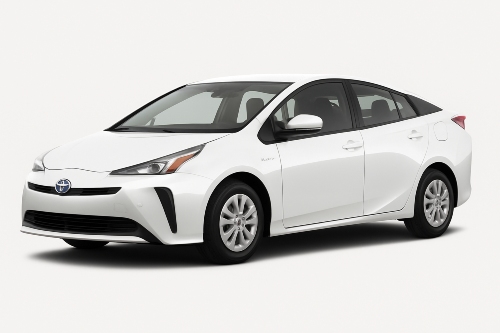
Prius. The highest volume Toyota hybrid battery in the world and the cheapest to replace, for exactly that reason. Four generations of conventional Prius plus the Prius v, the Prius c, the Prius Plug-in and the Prius Prime, spanning nickel metal hydride and lithium ion. Pack location moved mid line. Prices start at $1,250. This is also the family where used pack sellers are most active and where buying carelessly costs the most.
Camry Hybrid. Three distinct pack eras in one nameplate: 2007 to 2011, 2012 to 2017, and 2018 to 2021. The chemistry and the pack location both changed across those boundaries, so a Camry Hybrid pack is not a single part and year matters. New cell builds run $2,199 to $2,999.
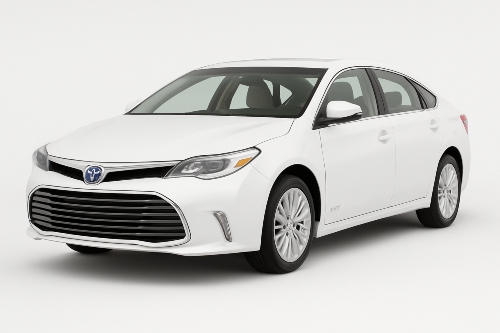
Avalon Hybrid. Shares its hybrid architecture with the Camry Hybrid of the same era, which is why the Avalon Hybrid pack is priced alongside it at $2,199 rather than at the premium the car’s position would suggest. One of the better value replacements in the range.
Highlander Hybrid. A larger, heavier vehicle working its pack harder than a Prius ever does, in a package that also tows. Packs from the 2006 to 2009 and 2010 to 2016 generations, $1,999 to $2,999. Cooling matters more here than on anything else in the conventional line, because the pack does more work per mile.
RAV4. Two completely different animals under one badge. The RAV4 Hybrid from 2016 to 2018 uses a conventional nickel metal hydride pack at $2,850. The RAV4 EV from 2012 to 2014 is a battery electric vehicle built with a Tesla supplied powertrain, carrying a far larger lithium pack at $9,999. Do not shop these as the same part.
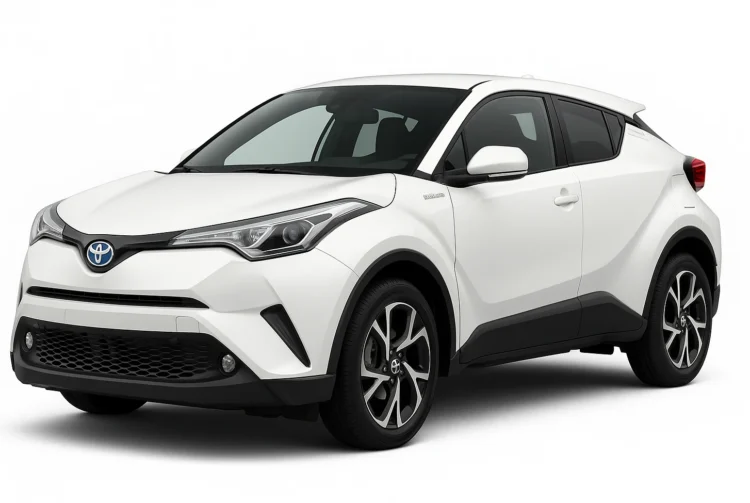
C-HR. A lithium pack covering 2016 to 2021 at $10,000. Confirm fitment against your own vehicle and market before ordering, because the C-HR was sold with different powertrains in different markets across those years.
bZ4X. Toyota’s first dedicated battery electric vehicle on the e-TNGA platform, 2023 to 2025, with a floor mounted lithium pack at $12,500 including a 36 month unlimited mileage warranty with professional installation. Falls under Toyota’s model year 2020 and newer coverage, meaning 10 years from first use or 150,000 miles on the original pack.
Installation. Installation at a Greentec Auto location is included in the installed price we quote. Mobile installation, where it is available, is a separate line and is quoted separately.
Shipping. Freight shipping is available on most orders. Residential delivery, liftgate service and remote addresses can carry additional charges, and we will state the shipping figure on your quote rather than leaving it to be discovered at checkout.
Core return. A hybrid battery is a core part and your old pack has value. A core deposit applies and is refunded when the old pack reaches us within the stated return window, less return shipping where applicable. The exact deposit figure and window are shown on your order.
Recycling. Every pack we take back is processed for recycling. Nickel metal hydride and lithium ion packs both contain recoverable material and neither belongs in a landfill.
If you notice warning lights on your dashboard, don’t rush to the dealership for an expensive diagnostic report. Many local auto parts stores can scan your vehicle and provide error codes for free just ask them to run a quick scan with a diagnostic tool.
Above, we’ve listed some of the most common hybrid error codes. Keep in mind that the check engine light must be onfor major issues to be detected. If your vehicle is experiencing hybrid battery failure, dealerships often charge thousands of dollars for a replacement typically with a limited warranty.
At Greentec Auto, we offer a cost-effective alternative, providing high-quality hybrid battery replacements at a fraction of the price. Plus, we back our batteries with a comprehensive warranty to give you peace of mind.
A Toyota hybrid battery replacement may cost between $1,500 and $4,000 depending on the vehicle model, battery type, and if you purchase an authentic new battery or remanufactured battery. Toyota Prius as well as other Toyota hybrids like Camry Hybrid or Highlander Hybrid will be priced differently. Otherwise, replacing your battery with an official hybrid battery replacement service provider like Greentec Auto will be more affordable as well as prolong your vehicle’s lifespan. Be certain to compare the price as well as warranty coverage of your chosen battery replacement option.
A Toyota hybrid battery can last between 8 to 10 years or 100,000 to 150,000 miles, depending on the driving conditions, maintenance history, and climate. Some Toyota hybrid owners have even reported longer battery lifespan with proper maintenance. Taking good care of it, such as regular maintenance checks, and not exposing it to extreme temperatures, can prolong the life of your hybrid battery. Knowing the average Toyota hybrid battery lifespan gives you a basis for planning for future maintenance costs.
Most Toyota hybrid batteries only need to be replaced once in the vehicle’s lifetime, typically after 8 to 10 years or 100,000 to 150,000 miles. If your hybrid shows signs like reduced fuel economy, battery warning lights, or slower acceleration, it may be time to consider a replacement. Staying ahead of hybrid battery failure ensures your Toyota Hybrid continues to perform efficiently and reliably.
*Offer cannot be combined with other promotions.
We use cookies and similar technologies to operate the website, understand how it is used, and support advertising. Optional analytics and marketing technologies will not be activated unless you give your consent. You can accept all, reject non-essential technologies, or manage your preferences. You can change your choices at any time.
Global Privacy Control has been detected. Advertising sale/share choices are disabled where configured.