14+ Years In Business
35+ Locations
4,000+ Reviews

Quick Answer
Battery pack isolation loss (sub-code 612 — most common):
Other HV system locations (when sub-code is not 612):
P0AA6 is a generic OBD-II code meaning “Hybrid Battery Voltage System Isolation Fault.” Unlike every other code in this series, P0AA6 is not primarily a battery performance or capacity code — it is a safety code. Understanding what it means requires understanding why hybrid vehicles are designed the way they are.
The floating high-voltage system: Every hybrid and EV contains two separate electrical systems. The 12-volt low-voltage system powers the accessories, ECUs, and conventional electrical components, and it is grounded to the chassis in the normal way. The high-voltage system — the traction battery, inverter, motor generators, and HV cables — operates at hundreds of volts and is deliberately kept isolated from the chassis ground and from the low-voltage system. This is called a floating HV system. The reason for this design is direct occupant safety: if the HV system were grounded to the chassis like the 12V system is, any contact between an HV component and the chassis would create a shock path. A person touching the chassis or any HV component while the system was operating could be exposed to lethal voltage.
The isolation monitoring circuit in every hybrid constantly measures the resistance between the HV system and the chassis ground. Normal, healthy isolation resistance is around 5 MegOhms — an extraordinarily high resistance that allows essentially no current to flow between the HV system and the chassis. P0AA6 is triggered when this resistance drops below 380k Ohms, indicating that something is creating a conductive path — even a high-impedance one — between the HV system and the chassis.
Hard shorts vs. soft shorts: There are two categories of isolation fault, and they are very different in severity.
A hard short is the worst case — an actual conductor from the HV system is making physical contact with the chassis, effectively grounding the HV system to the car body. In this case, the chassis itself becomes energized at high voltage. This is a genuine, immediate electrical hazard and is rare.
A soft short is far more common. It’s a high-impedance conductive path created by something like electrolyte leakage from an aging battery cell, moisture intrusion into the battery compartment, or a contaminated surface. The path can’t carry significant current, but the isolation monitoring circuit is sensitive enough to detect leakage currents in the microamp range — when these reach around 1,000 microamps, P0AA6 is set. A soft short is a serious fault that should be addressed, but it is far less immediately dangerous than a hard short.
The sub-code system — what 526 and 612 mean:
P0AA6 never appears alone on Toyota and Lexus hybrid vehicles. It always fires simultaneously with information code 526, the first-level alert that the isolation monitoring circuit has detected a fault.
Sub-code 526 alone tells you: an isolation fault was detected. It does not tell you where.
When the driver attempts to restart the vehicle after P0AA6 is set, the HV ECU runs an additional active diagnostic that tests each section of the high-voltage system individually to isolate the fault location. This produces a second, location-specific information code. Most Toyota hybrids have four to five possible location codes:
Sub-code 612 — HV Battery Pack identified as the isolation fault source. This is the most common second code. When P0AA6-526-612 is stored, the battery pack itself is where the isolation resistance has dropped — most often from electrolyte leakage from aging battery cells, moisture intrusion into the battery compartment, or contamination of the battery cover foam.
Other location codes (613, 614, etc.) point to other sections of the HV system — the inverter, HV cables, motor generators, or HV A/C compressor. Each one directs the technician to a different physical location for insulation testing.
When only 526 is stored without a second code: This happens when the isolation fault is intermittent — it was present when P0AA6 first set, but was not occurring when the driver attempted to restart and the HV ECU ran its location test. An intermittent isolation fault that doesn’t produce a second location code requires careful detective work: reviewing freeze frame data, looking for environmental triggers (rain, temperature), and physical inspection for moisture ingress or electrolyte residue.
WARNING BOX — Safety: P0AA6 is the only code in this series that represents a potential electrical safety hazard, not just a performance issue. Do not attempt to inspect, disassemble, or test the high-voltage battery, HV cables, inverter, or any orange-cable HV component without proper high-voltage safety training and equipment. Technicians have been killed working on hybrid HV systems without adequate precautions. Diagnosis requires a megohmmeter (insulation resistance tester) — not a standard multimeter — operated at the correct voltage range specified in the service manual. Using the wrong voltage range can permanently damage the inverter or HV A/C compressor.
Safety first: All HV system diagnostic work requires trained technicians wearing Class 0 or Class 00 insulating gloves rated for the HV voltages present, with the service disconnect plug removed before any physical contact with HV components.
Step 1 — Full Code Scan with Sub-Code Identification We use a Toyota-specific scan tool (Techstream or equivalent) to pull the complete fault code picture including both the primary P0AA6 and all stored information codes. Identifying whether sub-code 612 is stored tells us immediately whether the battery pack is the confirmed fault location before any physical diagnosis begins.
Step 2 — Freeze Frame and Environmental Review We review freeze frame data to understand the conditions when the fault set — ambient temperature, battery temperature, operating conditions. A fault that sets specifically after rain or during temperature swings points toward moisture ingress. A fault that correlates with high mileage and no specific environmental trigger points toward electrolyte leakage.
Step 3 — Visual Inspection of the Battery Pack Before megohmmeter testing, we perform a thorough visual inspection of the battery pack exterior, the battery cover, and the foam air dam for electrolyte residue (typically a white or crystalline residue at terminal areas), discoloration, corrosion, or signs of moisture intrusion. Electrolyte leakage on the foam air dam covering the battery is a documented and specific cause of P0AA6-612 that can sometimes be identified visually.
Step 4 — Insulation Resistance Testing with Megohmmeter Using an insulation resistance tester at the voltage range specified in Toyota’s service manual (typically 500V for standard Toyota hybrids — but this must be confirmed per model, as using too high a range can damage the inverter), we measure the insulation resistance between the HV battery terminals and chassis ground. A reading below 380k Ohms confirms the fault. This test also helps isolate whether the battery itself or the battery cover foam is the fault source.
Step 5 — HV Cable and Component Isolation Testing If the battery pack tests acceptable or sub-code 612 is not present, we test HV cable insulation and individual HV components (inverter, motor generators, HV A/C compressor) per the location indicated by the second information code.
Step 6 — Honest Recommendation If it’s the battery cover foam or a cleanable contamination source: remediation is possible without battery replacement. If the battery cells have leaked electrolyte extensively enough to compromise isolation: battery replacement is the appropriate path. If it’s a cable, relay, or HV component: targeted component repair or replacement. You’ll know exactly what we found and what it costs before any decision is made.
P0AA6 is a generic OBD-II code applicable to all hybrid and EV platforms, but is most extensively documented on Toyota and Lexus:
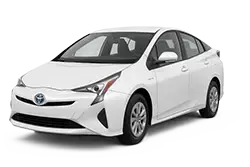
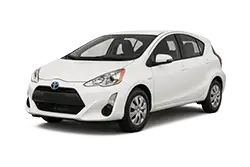
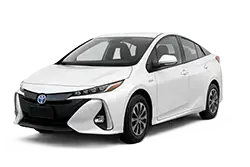
Toyota and Lexus (most commonly presenting with sub-codes 526/612):
Factory Service Bulletin: Toyota issued a Factory Service Bulletin specifically for 2004–2005 Prius regarding P0AA6. If your 2004–2005 Prius shows this code, check whether the TSB applies to your VIN before any paid diagnosis or repair.
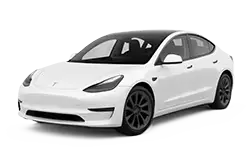
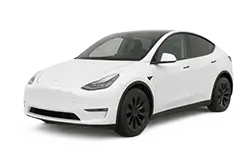
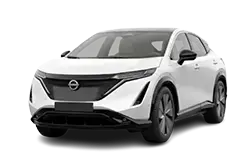
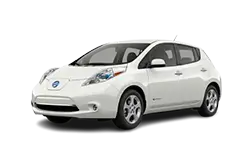
Other hybrid and EV platforms:
COST: WHAT DOES FIXING P0AA6 ACTUALLY COST?
If it’s moisture intrusion or surface contamination (cleanable): $200–$600 for inspection, cleaning, drying, and resealing. If the contamination is limited to the battery cover foam or surface components without underlying cell damage, this can resolve P0AA6 without battery replacement.
If it’s damaged HV cable insulation: $500–$1,500 for cable repair or replacement depending on which cable and its routing.
If it’s a failed HV component (relay, inverter section, HV A/C compressor): $500–$3,000+ depending on the specific component.
If it’s electrolyte leakage from the HV battery pack requiring replacement (sub-code 612 with confirmed battery source): Dealer replacement: $3,500–$5,000 for Toyota/Lexus. Greentec Auto remanufactured replacement: starting at $1,399 with our Unlimited Mileage Warranty — 30–50% less than dealer pricing. Call 1 800-773-6614 for a free quote on your specific make, model, and year.
Q: What does P0AA6 mean? A: P0AA6 means “Hybrid Battery Voltage System Isolation Fault.” The high-voltage system has developed a conductive path to the vehicle chassis, reducing insulation resistance below the 380k Ohm safety threshold. This is a safety-related code — hybrid HV systems are designed to be electrically isolated from the chassis to prevent shock hazards, and P0AA6 means that isolation has been compromised.
Q: What does sub-code 526 mean alongside P0AA6? A: Information code 526 is the first-level isolation fault alert — it fires simultaneously with P0AA6 whenever the isolation monitoring circuit detects a fault. It does not identify where in the HV system the fault is located. It simply confirms that an isolation fault was detected.
Q: What does sub-code 612 mean? A: Sub-code 612 is the location-specific information code that identifies the HV battery pack as the source of the isolation fault. When P0AA6-526-612 is stored, the HV ECU ran its restart test and confirmed the battery pack — not the cables, inverter, or other HV components — is where the insulation resistance has dropped below threshold.
Q: What if only 526 is stored with no second location code? A: This indicates the isolation fault was intermittent — present when P0AA6 first set, but not occurring when the driver attempted to restart and the HV ECU performed its location test. Intermittent P0AA6 without a second location code requires investigation of environmental triggers: recent rain, temperature changes, liquid spills in the vehicle interior, or recent cleaning.
Q: Can I drive with P0AA6? A: Not recommended. In most cases the HV system will be disabled, preventing normal hybrid operation. Even if the vehicle starts, an active isolation fault means the vehicle’s electrical safety systems are not functioning as designed. The nature of the fault (hard short vs. soft short) determines the actual risk level, but this should be treated as urgent and diagnosed before continued driving.
Q: Is this dangerous? A: It can be, particularly if the fault is a hard short rather than a soft short. A hard short can energize the vehicle chassis at high voltage, creating a shock hazard. A soft short (the more common type) has high impedance and cannot carry significant current, making it less immediately dangerous but still a serious fault that should be addressed promptly. Do not attempt HV system inspection without proper training and equipment.
Q: Can mouse urine actually cause P0AA6? A: Yes, this is a documented real-world cause. Mouse and rodent urine is conductive enough to create an isolation fault path between HV system components and the chassis. A 2013 Prius case is specifically documented in technical literature where mouse urine caused P0AA6 and required major disassembly and cleanup to resolve.
Q: Does P0AA6-612 always mean battery replacement? A: Not always. If the sub-code 612 isolation fault is caused by electrolyte seepage onto the battery cover foam rather than internal cell deterioration, cleaning and resealing the battery compartment may resolve the fault. If the battery cells themselves have leaked electrolyte internally to the point of compromising isolation, replacement is appropriate. Physical inspection and insulation resistance testing with a megohmmeter at the correct voltage is required to determine which situation applies.
Q: What is a megohmmeter and why is it needed? A: A megohmmeter (also called an insulation resistance tester or Megger) is a specialized instrument that applies a known high voltage (typically 500V for Toyota hybrid testing) to measure insulation resistance in the MegOhm range. A standard multimeter cannot perform this test — it does not apply the test voltage needed to properly assess high-voltage insulation integrity. Using the wrong instrument or the wrong voltage range on a megohmmeter can permanently damage the hybrid inverter or HV A/C compressor.
Free diagnostic. Same-day mobile install available. Unlimited mileage warranty included.
|
4,000+ Reviews
*Offer cannot be combined with other promotions.
We use cookies and similar technologies to operate the website, understand how it is used, and support advertising. Optional analytics and marketing technologies will not be activated unless you give your consent. You can accept all, reject non-essential technologies, or manage your preferences. You can change your choices at any time.
Global Privacy Control has been detected. Advertising sale/share choices are disabled where configured.