14+ Years In Business
35+ Locations
4,000+ Reviews
Quick Answer
First — 12V auxiliary battery (check immediately):
Second — Fuses in the converter circuit:
Third — Wiring, connectors, and grounds:
Fourth — DC/DC converter internal failure:
Fifth — HV battery degradation contributing:
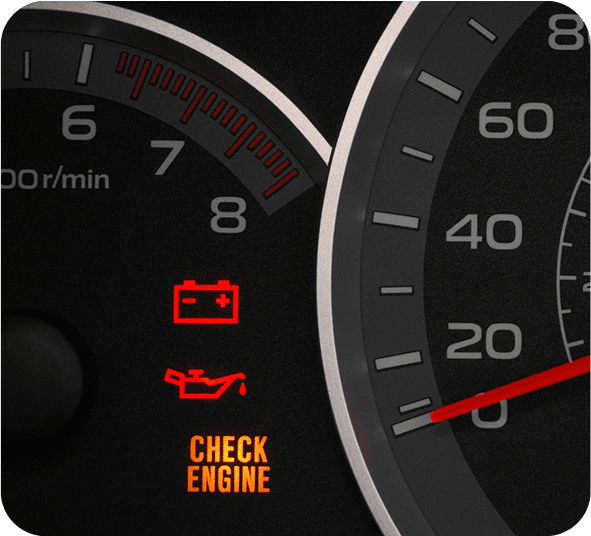
P0A08 is a generic OBD-II code with the formal definition “DC/DC Converter Status Circuit.” On Toyota and Lexus hybrid vehicles it appears as “DC/DC Converter Status Circuit” and is set by the Power Management Control ECU — also called the HV CPU — when it detects an abnormal signal from the DC/DC converter’s status monitoring circuit.
What the DC/DC converter does and why it matters: Every hybrid vehicle carries two electrical systems: the high-voltage traction system (typically 200V+ on Toyota) that powers the electric motor, and the conventional 12V system that runs the ECUs, lighting, accessories, and everything else a conventional car’s battery handles. These two systems cannot be directly connected — the HV system would destroy 12V components instantly.
The DC/DC converter bridges this gap. On Toyota hybrids, it uses a transistor bridge to convert the HV battery’s DC 201.6V into alternating current, a transformer to reduce the voltage, and then rectification to produce a stable DC 12V output. This output continuously charges the 12V auxiliary battery and powers the entire 12V electrical load. The converter actively controls its output voltage to maintain a constant charge at the auxiliary battery terminals.
The Power Management Control ECU communicates with the converter through a dedicated NODD signal line — transmitting stop commands and receiving normal/abnormal status signals from the converter. P0A08 is set when the HV CPU receives an abnormal status signal via the NODD line or detects that the auxiliary battery voltage has dropped below the threshold that indicates the converter has stopped working.
Why P0A08 is urgent: If the DC/DC converter is inoperative and the 12V battery drains without being replenished, the sequence of failures is predictable and rapid. ECUs begin resetting erratically. Power steering assist fades. Brake assist degrades. Dashboard lighting dims. Eventually the vehicle stalls — potentially in traffic, with reduced or absent braking and steering assistance. Unlike many hybrid codes where driving short distances is acceptable pending repair, P0A08 warrants stopping promptly and not driving long distances.
The location difference that changes everything — Prius vs. Camry Hybrid TC1:
On most Toyota hybrid vehicles — including the Prius across all generations — the DC/DC converter is integrated into the inverter assembly. It sits under the hood as part of the power electronics unit. When the converter fails, the inverter assembly is replaced or repaired, leaving the HV battery untouched.
On certain Toyota Camry Hybrid models using the TC1 battery configuration, Toyota integrated the DC/DC converter inside the HV battery assembly itself. This is an uncommon architecture choice that fundamentally changes the repair scenario: when the converter fails in this configuration, it is not accessible as a standalone component outside the battery pack. Full HV battery assembly replacement may be the required repair path for an internal converter failure on these models.
This is why the user description “DC/DC Converter Inside of Battery” specifically identifies the Camry Hybrid, it’s describing the physical location that distinguishes these vehicles from Prius-architecture hybrids.
Companion codes: P0A08 commonly appears alongside P0A09 (DC/DC Converter Status Circuit Low) and P0A0A (DC/DC Converter Status Circuit High) — these are voltage-level variants of the same converter circuit fault. P0A0F (DC/DC Converter Performance) is a companion on Camry Hybrid models. On 2005–2009 Prius models, a blown fuse on the positive battery terminal block is a documented specific cause — confirmed in real-world diagnosis cases.
WARNING BOX: Do not drive extended distances with P0A08 active. A non-functioning DC/DC converter is draining your 12V auxiliary battery with each mile driven. When the 12V system drops below operational thresholds, brake assist and power steering assist can fail suddenly and without additional warning. If P0A08 is active, have the vehicle towed or drive only the minimum distance necessary to reach a service location.
Step 1 — Full Code Scan Including All Companion Codes We pull every stored code across all modules. P0A08 appearing with P0A09 or P0A0F, and whether HV battery codes like P0A80 or P30xx are also present, shapes the diagnostic path significantly.
Step 2 — 12V Auxiliary Battery Load Test (First Physical Check) Before any HV system work, we load-test the 12V auxiliary battery. A battery reading acceptable voltage at rest can fail under the load of the converter circuit. Toyota hybrid 12V batteries are typically AGM-type with a 4–6 year life expectancy. If the battery is near or past that age, replacement as a first diagnostic step is strongly warranted — this $150–$300 fix resolves P0A08 in a significant number of cases.
Step 3 — Fuse Inspection We check every fuse in the DC/DC converter circuit — DC/DC-S, IGCT, and IGCT No. 2 on Toyota platforms. We test under load, not just visually, because cracked fuses can appear intact but fail when current flows.
Step 4 — NODD Signal Circuit and Wiring Inspection We inspect the NODD signal wire and connector between the converter and HV CPU, check chassis and battery grounds, and look for harness damage or corrosion that could disrupt the converter status signal.
Step 5 — Converter Output Verification We verify the converter’s 12V output voltage during operation. A converter that is present but producing an out-of-specification output is an internal converter failure — confirmed only after the 12V battery, fuses, and wiring have been eliminated as causes.
Step 6 — HV Battery Assessment (Camry Hybrid TC1) On Camry Hybrid models where the DC/DC converter is integrated inside the HV battery assembly, we assess the full battery system to determine whether the failure is in the converter function, the battery cells, or both — since the repair path for an internal converter failure may involve the battery assembly.
Step 7 — Honest Recommendation 12V battery: quick, affordable fix. Fuse: under $20. Wiring: targeted repair. Standalone converter failure on Prius: inverter assembly repair or replacement. Converter-inside-battery failure on Camry Hybrid: battery assembly replacement with our Unlimited Mileage Warranty. You’ll know which one applies before anything is authorized.
P0A08 as a DC/DC converter fault appears across all major hybrid platforms as a generic code, but is most documented on:
Toyota and Lexus:
Other platforms:
If it’s the 12V auxiliary battery: $150-$300. Check this first, it’s the most common cause and least expensive fix. Toyota hybrid 12V batteries are usually AGM-type.
If it’s a blown fuse: Under $20 for the fuse. Identify and address the cause of the blown fuse to prevent recurrence.
If it’s wiring, connectors, or ground repair: $100-$400 depending on scope.
If it’s a standalone DC/DC converter failure (Prius — converter in inverter assembly): Inverter assembly repair or replacement: $800–$2,500 depending on vehicle year and whether repair or full replacement is appropriate.
If it’s a DC/DC converter failure inside the HV battery assembly (Camry Hybrid TC1): Because the converter is integrated into the battery assembly, this may require full HV battery assembly replacement. Dealer replacement: $3,500–$5,000 for Camry Hybrid. Greentec Auto remanufactured replacement: starting at $1,399 with our Unlimited Mileage Warranty — 30–50% less than dealer pricing. Call 1 800-773-6614 for a free quote on your specific model and year.
Q: What does P0A08 mean? A: P0A08 means “DC/DC Converter Status Circuit.” The Power Management Control ECU has detected an abnormal condition in the circuit monitoring the DC/DC converter — the component that converts high-voltage battery power to 12V to continuously charge the auxiliary battery and power all electrical systems. It can be caused by a weak 12V battery, a blown fuse, wiring faults, or an internally failed converter.
Q: Can a weak 12V battery cause P0A08? A: Yes and it’s one of the most common causes. A 12V auxiliary battery that is degraded or failing places abnormal load on the DC/DC converter and creates abnormal feedback on the converter status circuit, triggering P0A08. Testing and replacing the 12V battery is always the first step, before any HV system diagnosis. This fix costs under $300 and resolves P0A08 in many cases.
Q: Why is P0A08 urgent? A: Because a non-functioning DC/DC converter means the 12V auxiliary battery is draining without being replenished. As the 12V system drops, brake assist, power steering assist, and ECU operation all degrade progressively. The vehicle will eventually stall — potentially without functioning safety systems at that moment. Unlike many hybrid codes, P0A08 warrants prompt service rather than monitoring over multiple drives.
Q: What is the difference between P0A08 on a Prius versus a Camry Hybrid? A: On Toyota Prius, the DC/DC converter is part of the inverter assembly under the hood — a standalone component that can be repaired or replaced without touching the HV battery. On certain Toyota Camry Hybrid models (TC1 configuration), the DC/DC converter is integrated inside the HV battery assembly. When the converter fails in this configuration, full battery assembly replacement may be required since the converter is not independently accessible.
Q: What is the NODD signal? A: The NODD signal is the dedicated communication line between the Power Management Control ECU (HV CPU) and the DC/DC converter. The ECU uses it to send stop commands to the converter and receive normal/abnormal status feedback. P0A08 is partly triggered when the HV CPU receives an abnormal signal on this line — which can happen due to a wiring fault in the NODD circuit even if the converter itself is functioning.
Q: Does P0A08 always mean the DC/DC converter needs replacement? A: No. The cause spectrum runs from a $20 fuse to a $2,500 converter replacement, with a 12V battery replacement ($150–$300) resolving it most often. Start with the cheap and simple causes — 12V battery, fuses, wiring — before condemning the converter or the HV battery assembly.
Q: What companion codes appear with P0A08? A: Most commonly P0A09 (DC/DC Converter Status Circuit Low) and P0A0A (DC/DC Converter Status Circuit High) — voltage-level variants of the same converter circuit fault. P0A0F (DC/DC Converter Performance) appears on Camry Hybrid models. HV battery codes like P0A80 or P30xx may also appear if HV battery degradation is contributing to the converter problem.
Q: Is P0A08 safe to drive with? A: Not for extended distances. If the converter is truly non-functional, the 12V battery is draining. Short distances to reach a service location may be acceptable depending on current 12V battery state, but driving normally with P0A08 active risks sudden system failures including loss of brake and steering assist.
Free diagnostic. Same-day mobile install available. Unlimited mileage warranty included.
|
4,000+ Reviews
*Offer cannot be combined with other promotions.
We use cookies and similar technologies to operate the website, understand how it is used, and support advertising. Optional analytics and marketing technologies will not be activated unless you give your consent. You can accept all, reject non-essential technologies, or manage your preferences. You can change your choices at any time.
Global Privacy Control has been detected. Advertising sale/share choices are disabled where configured.