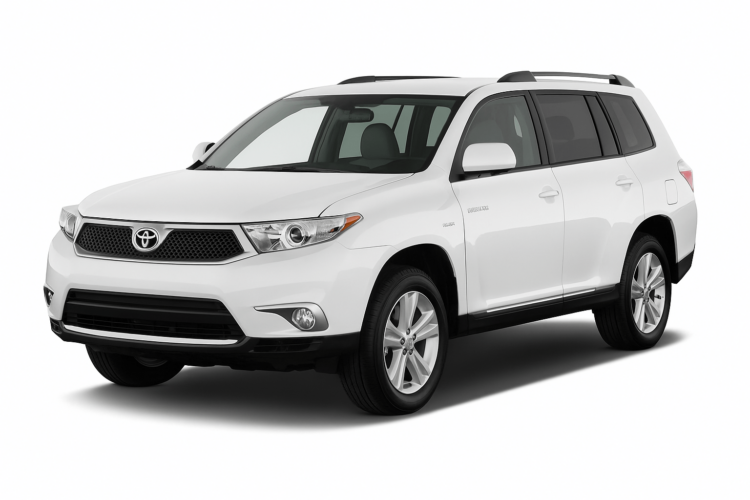
“After getting a shock estimate from the Toyota dealer on the cost to replace the main battery on my 2012 Toyota Highlander searched and found Greentech. The communication with Jaxx was very straightforward, cost options were clearly presented, appointment booked and job completed as promised. Would recommend Greentech to anyone having to replace a hybrid battery. Great customer service!! “

Paul McFadyen
Sep 4, 2025
“The time came to change the battery in my 2015 Toyota Highlander hybrid. Toyota could do it for $7000 with a 2 to 3 week backlog. Green tech could do it for $3500 within a week. The reviews were pretty good, and their interaction with me was professional and reassuring. They completed the replacement in less time than the estimate. We are very pleased with the outcome.”
Dan Corley
Apr 3, 2025
“GreenTec auto came to replace my hybrid battery on my 2015 toyota highlander. Sebastian n Raymond was quick and very detailed on their work. Very organized on taking apart and putting back together every part. Tell you about the battery once I have driven the car a few thousand miles. UPDATE. Its been about a month. Battery running great. Let’s hope it last??? Stay tuned…. “
Visa El
Oct 28, 2024



Why pay more at the dealership? At Greentec Auto, we offer affordable, accessible and reliable hybrid battery replacements at up to 50% less than dealership prices without compromising on quality. Get the best value with expert service, mobile installation, and a warranty you can trust.
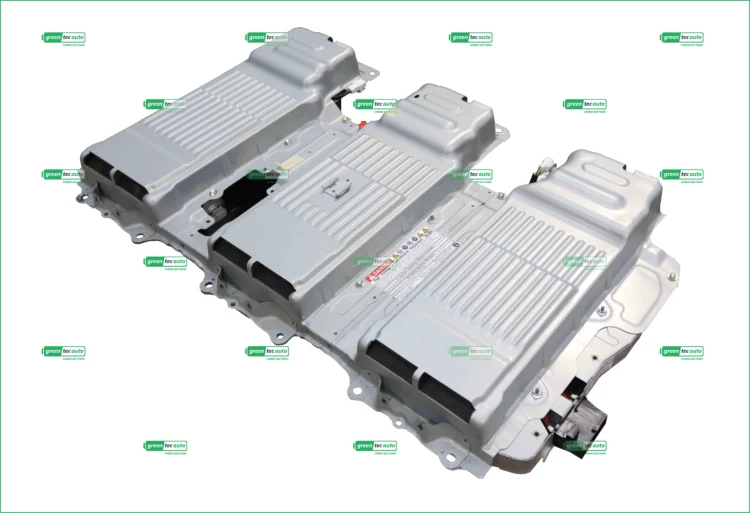
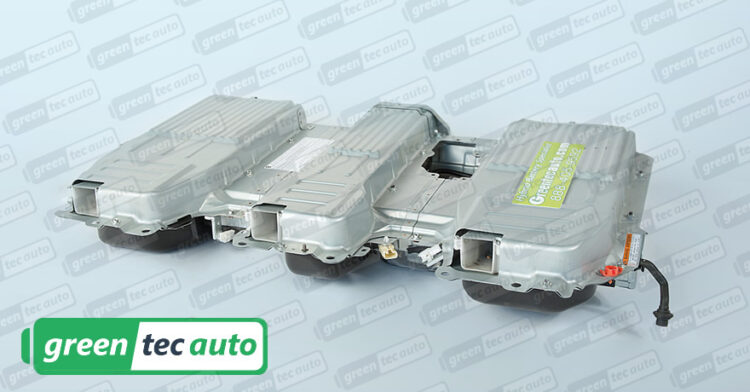
If your Toyota Highlander hybrid battery dies, should you replace [music] it or just get rid of the car? Because this is where a lot of people panic. They [music] see the warning lights. Their MPG drops. The gas engine starts running more than [music] usual. The battery gauge starts jumping up and down. And the first thought is, my [music] car is done. But that’s actually not true at all. A bad hybrid battery does not automatically mean you need a new car. It means you need [music] to ask one better question. Is the rest of the vehicle still worth saving? If your engine is good, the body is clean, the maintenance has been solid, and your car [music] still fits your life, replacing your hybrid battery can make a lot more sense than buying a new vehicle. Because here’s the part most people miss. A Toyota Highlander hybrid battery replacement is not always 10,000 or 15,000 dollars. [music] Based on the prices we sell Toyota Highlander hybrid batteries for, you’re looking at something like this. For example, [music] for a remanufactured battery like the one I have in front of me with an 18-month warranty, it’s going to be around 1,999 [music] dollars. Now, if you’re looking for a new cell battery, it’s going to be closer to that 2,999 [music] dollar mark. So now, the real question changes because it’s not is 2,000 or 3,000 dollars a lot of money. Of course it is. The real [music] question is, would you rather spend 2,000 to 3,000 to keep your car you already own or spend 25, 35, or even 45,000 dollars replacing the entire [music] vehicle? Also, ask yourself this. Who is going to buy a Highlander hybrid with a bad battery [music] inside of it? The answer is almost nobody. So, instead of taking a massive loss, [music] replacing the battery can extend the life of your car another five, eight, or even 10-plus years. That is [music] why the decision matters. Because when the rest of the car is in solid condition, hybrid battery replacement is not just a repair. It’s a second life [music] for the vehicle. Now, why do these batteries actually fail in the first place? Usually, it comes down to age, heat, usage, [music] and cooling. Hybrid batteries do not love extreme heat. They also do not love sitting [music] unused for long periods of time. And one thing a lot of Toyota owners never [music] think about is the battery cooling fan. Dust, lint, and pet hair can clog the airflow. And when that happens, the battery runs hotter. And when the [music] battery begins to run hotter, it wears out faster because it breaks down the chemistry inside of the cells. So, if you drive with pets [music] or your Highlander has a lot of dust and debris inside, checking the cooling fan and cleaning it can help protect the life and extend it long-term. If your Highlander hybrid is falling apart, needs engine work, suspension work, or electrical repairs [music] and a battery, then you need to be realistic. It may not be worth it. But, [music] if the main issue is just the hybrid battery and the rest of the vehicle is solid, don’t let one warning light [music] convince you the car is finished. Because at Greentec Auto, we’ve been replacing hybrid and EV batteries for over 30 15 years [music] across 34 company-owned locations in the US, Canada, and in the UK. [music] This is not something we just do on the side. This is all we do. All we do is replace hybrid and EV batteries. So, before you trade in your Highlander, take a lowball offer, or overpay at the dealership, check a real replacement option. Click on the link below at greentecauto.com


![Green dollar sign inside a circular green border, representing money or pricing.]」,](https://greentecauto.com/wp-content/uploads/2026/06/Screenshot-2026-06-03-at-00.23.08.webp)


The cost of shipping to you is included with your purchase. This offer is good for the entire continental United States. Add $200 for shipping to a residential address. Let Greentec Auto make it simple to return your core to us, ask about our reduced return shipping rates.

A refundable “core deposit” of $500.00 will be added to your order at checkout. Once we receive your old battery, we will refund the core deposit back to you minus the cost of return shipping. Cores must be returned within 45 days of purchase. This applies to shipping orders only. In all other circumstances, the core will be picked up at the time of service, no deposit required.

Once your new hybrid battery has arrived, put the core battery back into the same packaging your battery arrived in. As soon as we receive your core battery, we will refund the core deposit back to you. It’s that easy.
Replacement 288-volt packs for 2006 to 2016 Toyota Highlander Hybrids, $1,999 to $2,999, with warranty terms to 36 months on most qualifying batteries.
Prices on this page are accurate as of the date posted and are subject to change. Check the current price on the product listing at greentecauto.com before ordering.
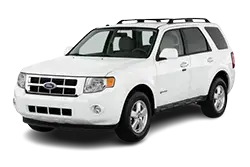
When the Highlander Hybrid went on sale here in 2006, nothing else like it existed. Ford had the Escape Hybrid, but the Highlander was the first three-row hybrid SUV an American family could buy, and it sold to people who intended to keep it.
That creates a situation no other hybrid in the country is in. Highlander Hybrid owners were the first Americans to put a hybrid SUV in the driveway, which means they are now the first Americans dealing with a hybrid SUV pack that has been working for twenty years. There is no older group. Whatever happens to these vehicles happens here first.
And the warranty question has one answer for every single one of them.
Toyota covered the hybrid battery on model year 2019 and earlier vehicles for 8 years or 100,000 miles, whichever came first. The hybrid system components, the hybrid control module, the battery control module and the inverter with converter, carried the same 8 year term.
Toyota extended that to 10 years or 150,000 miles starting with the 2020 model year. That extension did not reach backward. It applies to vehicles built from 2020 on.
So run the math on the newest vehicle in this category. A 2016 Highlander Hybrid delivered in late 2015 passed 8 years in 2023. One delivered at the end of the 2016 model year passed it in 2024. There is no in-service date anywhere between 2006 and 2016 that leaves a Highlander Hybrid inside Toyota’s hybrid battery coverage today, and most crossed the 100,000 mile line long before the calendar caught up with them.
This matters because the single most common thing a Highlander Hybrid owner says on the phone is some version of “I thought these were covered for ten years.” They are, if the vehicle is a 2020 or newer. The Highlander Hybrid in your driveway is not.
| Highlander years | Battery | Warranty | Price |
|---|---|---|---|
| 2010 to 2016 | Remanufactured | 18 months | $1,999 (was $2,399) |
| 2010 to 2016 | New generation cells | 36 months | $2,999 (was $3,299) |
| 2006 to 2009 | Options vary by build | See listing | $1,999 to $2,999 |
Prices on this page are accurate as of the date posted and are subject to change. Check the current price on the product listing at greentecauto.com before ordering.
The spread is $1,999 to $2,999. Two things decide where you land: which years you own, and whether you take remanufactured cells or new ones.
New cells are a better battery than remanufactured, and we are not going to pretend otherwise. A remanufactured pack is built from used modules that have been individually tested, graded and balanced into a working pack. It is a real product with a real warranty and it is the right answer for a lot of owners. New generation cells are fresh capacity with no accumulated cycle history, and they carry double the warranty term. The $1,000 difference buys a genuinely different thing.
The 2006 to 2009 listing has options. That product is configured on its own page rather than priced as a single item, because builds in those years vary. Select your options there and the price resolves.
Compare against a dealer quote, not a percentage. Toyota dealers quoting a hybrid battery assembly on a vehicle this old are working from a parts catalog, with labor billed separately by the hour on top. On the oldest Highlanders the more common dealer answer is that the part is not stocked at all, which is why an aftermarket market exists for this vehicle. If you have a written quote for your own Highlander, that is the number worth putting next to these.
Most pages about this vehicle are vague here. Toyota publishes dismantling manuals for emergency responders and technicians, and they are specific.
| Specification | 2006 to 2013 | 2014 to 2016 |
|---|---|---|
| Nominal voltage | 288 V | 288 V |
| Chemistry | Sealed nickel metal hydride | Sealed nickel metal hydride |
| Module count | 30 modules in series | 30 modules in series |
| Module voltage | 9.6 V each | 9.6 V each |
| Module weight | 3.3 lb (1.5 kg) | 3.3 lb (1.5 kg) |
| Pack weight | 152.1 lb (69 kg) | 151.7 lb (68.8 kg) |
| Pack location | Metal case on the floor cross member under the second-row seats | Same |
| Rear motor output | 67 hp (50 kW), permanent magnet | 67 hp (50 kW), permanent magnet |
Three things worth taking from that table.
The pack is remarkably consistent across the model’s life. Thirty 9.6-volt modules in series, 288 volts nominal, in the same place, at within half a pound of the same weight, from the first generation through the third. Toyota changed the vehicle around it considerably. The battery architecture barely moved.
288 volts is not what the motors see. The inverter boosts pack voltage to roughly 650 volts DC before it reaches the drive motors. When people say a Highlander Hybrid is a 288-volt vehicle they are describing the battery, not the system.
It is under your second-row seats, not in the cargo area. This surprises owners who expect a hybrid pack in the trunk. It sits in a metal case mounted to a floor pan cross member under the second row, hidden by carpet. That location has a direct consequence for cooling, covered further down.
This is where the Highlander Hybrid differs from every Prius, Camry and Civic on the road, and it changes what a failing pack actually costs you.
On an all-wheel-drive Highlander Hybrid there is no driveshaft running to the rear axle. There is no transfer case. Instead, Toyota put a 67 horsepower permanent magnet electric motor in the rear transaxle, and that motor is what drives the rear wheels. Its only source of power is the hybrid battery.
Think about what that means. On a conventional all-wheel-drive SUV, rear drive is mechanical. The engine turns a shaft, the shaft turns the rear wheels, and the system works whether or not anything electrical is healthy. On this vehicle the rear axle is electric, full stop.
So a Highlander Hybrid with a worn-out hybrid battery does not simply lose fuel economy. It loses the ability to deliver meaningful torque to the back wheels, because the pack that feeds the rear motor cannot supply current. The way owners usually put it is that the Highlander started behaving like a front-wheel-drive vehicle: fronts spinning on a wet launch ramp, or scrabbling out of a snowy driveway it used to climb without drama.
If you drive a Highlander Hybrid in a place with real winters, or you tow, or you use the vehicle anywhere loose underfoot, the hybrid battery is not a fuel economy component. It is a traction component, and it is worth treating as one.
Fuel economy sliding. Usually the first sign, and usually dismissed. A Highlander Hybrid that used to return high twenties and now returns low twenties on the same commute is telling you something, and no tire pressure check will fix it.
The state of charge gauge swinging. A healthy pack holds in a band around the middle, charging on deceleration and discharging under load, moving smoothly. A pack at the end of its life charges to full in a short distance, dumps to empty under light throttle, then refills. That swing is the clearest symptom of lost capacity, and it usually shows up before any code sets.
The engine running when it should not. Idling at a stoplight when it used to shut off. Running at higher rpm while stationary, apparently charging for no reason. The control module is running calibration routines more aggressively because its stored map of the pack keeps turning out to be wrong.
Weak or absent rear-wheel drive. Covered above. On an AWD Highlander this is a hybrid battery symptom that most shops will not connect to the hybrid battery.
The battery cooling fan running loudly and often. Under the second row, audible from inside the cabin. Worth investigating rather than tuning out.
Warning lights. The hybrid system warning, the check engine light, or the master warning. By the time these appear, the pack has usually been declining for a while.
Have the codes read before anyone quotes you a pack.
| Code | Meaning | Pack replacement usually needed |
|---|---|---|
| P0A80 | Replace hybrid battery pack | Yes, this is the signature code |
| P0A7F | Hybrid battery pack deterioration | Yes |
| P3000 | Battery control system malfunction | Investigate, often accompanies others |
| P3011 to P3024 | Battery block 1 through 14 becoming weak | Identifies which section is failing |
| P0A1F | Battery energy control module | Module, not always the pack |
| P0A0D | High voltage system interlock circuit | Interlock or service plug, not the pack |
| P0AA6 | High voltage system isolation fault | Isolation fault, can be the pack or a cable |
| P0A93 | Inverter cooling system performance | Inverter cooling, not the battery |

These are the most useful codes on the vehicle and the most ignored. Each one points at a specific block within the pack. A single block code on an otherwise healthy pack can sometimes be addressed without replacing everything. A spread of block codes across several sections is a pack telling you it is finished.
Anyone who quotes you a battery off a P0A80 alone, without reading what else is stored, has not actually diagnosed the vehicle.
The cooling path, and why the second-row location matters
The pack sits under your second-row seats and is cooled by a fan that pulls air from inside the cabin. There is an intake, there is ducting, and there is a filter in that path.
Now consider what a Highlander Hybrid is used for. Three rows. Kids. Sports equipment. Dogs. Road trips. Groceries. Everything that happens in the back of a family SUV happens directly on top of the thing that keeps the battery cool.
A clogged intake starves the modules of airflow. The pack then operates above the temperature Toyota engineered it for, and sustained heat is the main thing that degrades nickel metal hydride cells. The fan compensates by running harder and longer, which is why an audibly busy battery fan is a symptom rather than a quirk.
What to do: have the intake and filter inspected whenever the pack is being looked at, and at least before and after summer. It is a cheap inspection on a vehicle where the alternative is a four-figure part.
If a previous replacement was rushed, the ducting can be left cracked or disconnected. A replacement pack fitted behind damaged ducting will then cook itself on the same schedule the previous one did, and the owner walks away believing aftermarket batteries are junk. The ducting is a functional component, not interior trim.
If you are replacing the pack now, deal with the cooling path at the same time. Installing fresh modules into the same thermal conditions that cooked the last set is the most expensive false economy on this vehicle.
Owners search for how to disconnect or remove a Highlander Hybrid battery, usually before bodywork, seat removal or other service. Toyota’s dismantling guidance is worth reading before anyone opens anything.
If a body shop is working on the rear of your Highlander Hybrid after a collision, make sure they know there is a 288-volt pack under the second-row seats before the seats come out.
Most Highlander Hybrid packs reach somewhere between 8 and 12 years, or roughly 100,000 to 180,000 miles, before capacity loss becomes a daily problem. Some go considerably further. Some do not reach ten years at all, and the difference is usually environmental rather than mechanical.
What shortens pack life on this vehicle:
What extends it: regular use including longer drives, a clear cooling path, and parking in shade or a garage where that is an option.
A Highlander Hybrid is worth more than most hybrids on the road, which changes the calculation compared to a Prius or an Insight.
It usually makes sense when: the engine and transmission are sound, the body is solid, you like the vehicle and intend to keep it, and the battery is genuinely the thing holding it back. A $1,999 remanufactured pack into a three-row SUV with years left in it is one of the more straightforward decisions in hybrid ownership.
It usually does not when: the vehicle has serious structural rust, a failing transmission, or significant other deferred work. No battery is worth putting into a vehicle that is finished for other reasons, and we will say so rather than sell you one.
The in-between case is a Highlander in decent shape where the owner is weighing replacement against selling. Worth knowing: a Highlander Hybrid with a known-bad pack sells for a steep discount, because every informed buyer prices in the replacement and then some. The gap between what you lose on the sale and what the pack costs is often smaller than people expect.
| Remanufactured | New generation cells | |
|---|---|---|
| Price | $1,999 | $2,999 |
| Warranty | 18 months | 36 months |
| What it is | Tested, graded and balanced used modules | Fresh cells with no cycle history |
| Best for | Vehicles with a defined remaining horizon, tighter budgets | Vehicles you intend to keep, hot climates, high mileage ahead |
Warranty terms apply to most qualifying batteries.
The climate argument is the one that actually decides it. If the Highlander lives somewhere genuinely hot and you plan to keep it, the longer warranty term on new cells is buying coverage in exactly the conditions that shorten pack life. If the vehicle is in a mild climate with a few more years of duty ahead, remanufactured is sensible.
Mobile installation is available in most of our service areas. A technician travels to you, which matters more on a vehicle this size: no tow to arrange, and no three-row SUV sitting at a shop while your family does without it. Coverage depends on your address, so confirm it when you book.
In-shop installation is available at Greentec Auto locations across the U.S., Canada, and the U.K. There are more than 30 of them.
Shipping to your own technician is available on most orders if you would rather have your own shop handle the work.
Installation is quoted separately from the pack price. Note also that installation records are used for warranty verification, so if your own shop is doing the work, keep the paperwork.
The deposit exists because the old pack has real recoverable value and because return freight on a dangerous-goods item is not free. It is refundable because you get it back when the core comes home.
Packs move by freight on a pallet, because a 152 pound high voltage battery is classified as dangerous goods for transport. Expect a delivery appointment rather than a doorstep drop, and expect the carrier to want a phone number.
Every Highlander Hybrid pack that comes back to us is tested at the module level.
Modules that fail testing go to Greentec Recycling for materials recovery. These are nickel metal hydride packs, so the recoverable value is in the nickel and the other metals in the cells, with established recycling routes.
Modules that still hold usable capacity go to Greentec Energy, where they find second-life applications in home energy storage and electric vehicle conversions. A module that can no longer deliver 50 kilowatts to a rear transaxle on demand can still be perfectly useful sitting in a garage storing solar output, and that is a better outcome than smelting it.
Greentec Recycling is a new operation, established in 2025. We will not quote you tonnage figures we have not accumulated yet. What we can tell you is where the material goes, and that it is not landfill.
If you notice warning lights on your dashboard, don’t rush to the dealership for an expensive diagnostic report. Many local auto parts stores can scan your vehicle and provide error codes for free just ask them to run a quick scan with a diagnostic tool.
Above, we’ve listed some of the most common hybrid error codes. Keep in mind that the check engine light must be onfor major issues to be detected. If your vehicle is experiencing hybrid battery failure, dealerships often charge thousands of dollars for a replacement typically with a limited warranty.
At Greentec Auto, we offer a cost-effective alternative, providing high-quality hybrid battery replacements at a fraction of the price. Plus, we back our batteries with a comprehensive warranty to give you peace of mind.
It can cost anywhere from $1,999 to $3,299 to replace a Toyota Highlander Hybrid battery, based on the year and model of the battery. At Greentec Auto, you can get a remanufactured Highlander hybrid battery for as low as $1,999 with an 18-month warranty, or new cells for $3,299 with a 36-month warranty. We carry products for both 2006–2009 and 2010–2016 Highlander hybrid batteries, with mobile or in-shop professional installation and nationwide shipping.
Toyota Highlander hybrid batteries generally last 8-10 years or 100,000-150,000 miles. Some Highlanders have even been reported to last longer with normal driving and maintenance. You will know that your Highlander hybrid battery is due for replacement when you notice decreased fuel efficiency, “Check Hybrid System” alerts, or when the gas engine kicks in more frequently than normal.
Technically, yes, but it is not advisable to install a Toyota Highlander hybrid battery by yourself unless you are a qualified technician. Hybrid battery systems are high voltage and will need special tools and safety training. At Greentec Auto, we provide professional in-shop and mobile installation service to get your Highlander hybrid battery installed correctly and safely and installation is necessary for warranty verification.
*Offer cannot be combined with other promotions.
We use cookies and similar technologies to operate the website, understand how it is used, and support advertising. Optional analytics and marketing technologies will not be activated unless you give your consent. You can accept all, reject non-essential technologies, or manage your preferences. You can change your choices at any time.
Global Privacy Control has been detected. Advertising sale/share choices are disabled where configured.