


“Second Prius battery replacement, first Prius lasted a full 439,000 miles in the original and the replacement, second Prius original battery replaced at 224,000 miles and expecting at least another 200K on this one. Both replacements are Greentec, make them your first call, they are very nice, batteries are great and you save a ton vs. the manufacturer.”

Paul Boender
Aug 21, 2025
“Mike was awesome to deal with from start to finish. It’s incredibly refreshing to have such amazing customer service and attention to detail. You could tell that he did everything he could to help me and it was a great experience. I will be going back there again! My 2011 Prius battery replacement went very smooth! “
Sheldon Sutherland
Feb 17, 2022
“Had a great experience with Gus, who helped me replace my Prius battery in a professional and efficient way. He handled the work quickly and answered all my questions with patience and kindness, and did a detailed diagnostic before replacing the battery. I called many shops in town to compare, and Greentec is definitely the best out of all of them. I highly recommend this place if you have any EV or hybrid car problems.”
Wuyang Yang
Sep 5, 2025



Why pay more at the dealership? At Greentec Auto, we offer affordable, accessible and reliable hybrid battery replacements at up to 50% less than dealership prices without compromising on quality. Get the best value with expert service, mobile installation, and a warranty you can trust.
If you own a Toyota hybrid or you’re thinking about buying one, there is a lie you’ve probably been told. And it usually comes from a dealership, sometimes a mechanic, and sometimes a random YouTube video. They say your hybrid battery will die at 100,000 miles, maybe 150,000 if you’re lucky, and replacing it will cost you $4,000. That’s just flat-out wrong. In the next 8 minutes, I’ll show you the actual data on how long Toyota hybrid batteries really last based on real-world fleets, taxi drivers, and over two decades of Toyota hybrid history. And trust me, you’re going to be surprised. On top of that, for the smart ones who stick with me throughout today’s video, I’m going to be giving away a $150 discount code for not if, but when your Toyota hybrid battery goes bad. Let me start by telling you where the 100,000-mile-and-dead myth actually comes from. And stay open with me here, because it’s actually from Toyota’s factory warranty. For most of hybrid history, Toyota covered the hybrid battery for 8 years or 100,000 miles. That is an industry-leading warranty. But somewhere along the way, people started reading that warranty as a prediction. As if Toyota was telling you, “Well, we cover it for 100,000 miles because that’s when it’s going to die.” But that’s actually not what a warranty means. A warranty is the worst-case scenario the company is willing to insure against, not the expectation of a lifespan. And here’s the part none of these YouTubers are talking about. In 2020, Toyota didn’t shorten their warranty. They actually extended it. Companies do not extend warranties on parts they expect to fail. They extend warranties when they have years of internal data showing these parts last far longer than the original number.
So, how long do they actually last in the real world? This is where it gets interesting. The honest answer is between 150,000 and 200,000 miles for the average owner, and way more if you actually take care of it. I know what you’re thinking right now. Those high numbers are outliers and they don’t apply to me. But let me show you why they actually do. The single biggest source of real-world Toyota hybrid data is not regular drivers. It’s taxi fleets and rideshare drivers. Because these people drive 50,000 to 100,000 miles a year, stop and go, stop and go, all day, every day. And taxi fleet Prius units routinely hit 300,000 to 400,000 miles on the original battery. And I’m not making this up. You can go see for yourself. Go to an airport, hop in a Prius, and ask them how many miles they have put on it. In fact, a 2008 Prius owner recently came to us and finally needed their battery replacement, and they were at 260,000 miles. For the replacement, it only cost them $1,500 from us. So, now that we know how long Toyota hybrid batteries actually last, and now that you know to just completely let go of the 100,000-mile-and-dead-battery myth, that brings up the real question. Why do some Toyota hybrid batteries last 300,000 miles while others die way earlier? Because batteries don’t usually die randomly. There are real things that shorten their life, and most of them are not what people think.
So, let’s dive in and talk about what actually kills a Toyota hybrid battery early. There are three big factors, and we’re going to go through them in order of impact. Number one is heat. This is the single biggest factor, period. A Toyota hybrid battery is the happiest between 0 and 30°C. That’s 32 to 86°F. So, if you live somewhere hot in America, or even somewhere like Dubai, and your car spends every single day in a 110-degree parking lot, your battery is slowly being cooked. Hot-climate Prius owners sometimes need replacements at 75,000 to 90,000 miles. Moderate-climate Prius owners cruise past the 200,000-mile mark with zero issues. Same car, same battery, different climate. Getting into number two: a clogged cooling vent. This one nobody knows about because nobody actually works on these. Toyota hybrid batteries have a small cooling fan inside of the car, usually behind the back seat, with a vent that pulls in cabin air to keep the pack cool. That vent fills up over time. Dust, pet hair, crumbs, lint — all of it. If the fan can’t pull in air, the battery overheats, even in cool climates. This is a five-minute job to clean with a vacuum cleaner, because if these cells overheat, it breaks down the chemistry inside of the cells and your battery will fail. Getting into number three: sitting unused. Hybrid batteries hate sitting. So, if your Prius sits in the garage for months at a time without being used, the battery slowly self-discharges. When it drops below a certain voltage, individual modules, like the one I’m holding, can and will become permanently damaged. So, if you have a hybrid you don’t drive often, start it up. Drive it at least every week. That’s it. So, heat, cooling vents, and sitting unused. Avoid these three things, and your Toyota hybrid battery will probably outlast the rest of the car.
And listen, right now there’s no shortage of misinformation online. The question of your hybrid battery going bad is not a matter of if, but when. Maybe it happens at 90,000 miles. Maybe it happens at 260,000 miles. Maybe you get lucky and it goes even longer. But when that day comes, your car is not automatically done. That’s the part that most people get wrong, and it ends up costing them. They see warning lights, bad MPG, the gas engine running constantly, or the battery gauge jumping up and down. And their first thought is, “I guess I need a new car.” But don’t worry, because Greentec Auto has been replacing hybrid and EV batteries for the last 13 years across 34 company-owned locations in the U.S., Canada, and the U.K. This is not something we do on the side. This is all we do. We’ve seen customers drive their car through its first full life, replace the battery with us, and still have that same car 9 years later. So, when your Toyota hybrid battery starts acting different, don’t panic. Don’t let one warning light convince you the car is finished. And definitely don’t overpay before you know your options. What you should do is click the link below at GreentecAuto.com. Put in your year, make, and model, and you can see how much it’s going to cost to get your hybrid battery replaced. And on top of that, as I promised, use coupon code GT AI to get $150 off for not if, but when your battery goes bad. See you guys in the next one.
If you own a Toyota hybrid, or you’re thinking about buying one, there’s a lie you have probably been told. You hear people say replacing the hybrid battery will cost you $6,000 or maybe even more. They say when the battery goes bad, you might as well just junk the car or sell the car. The truth is, that is flat-out wrong. The same battery problem can cost one person $1,000 and another person $10,000. The difference is where they went, what they were told, and if the vehicle was properly diagnosed. Maybe your battery has just failed, maybe it’s getting weak, or maybe you’re worried about buying a hybrid because you heard about these crazy battery replacement costs. Either way, we’re going to show you exactly what your options are. And on top of that, we’re going to give you a discount code for not if, but when your hybrid battery goes bad. So, we’re going to get into the real cost right away. After that, we’ll quickly cover how long Toyota hybrid batteries last, how to preserve their life, and the main signs that yours may be dying. So, how much does a Toyota hybrid battery replacement actually cost? At the Toyota dealership, a complete replacement can cost anywhere from $4,000 all the way to $6,000 after the battery, labor, and additional fees. Depending on the model and the year, it can be even more. A Prius will normally cost less than something like a Toyota RAV4 or Highlander, but some dealerships also charge four to five hours of labor, and larger vehicles can take even longer because there are parts in the interior that they have to remove just to get to the battery itself. And there are a couple reasons why dealership prices can be so high. Number one, dealerships may not always have a hybrid battery sitting in stock. In many cases, they have to order it in before they can even begin the replacement. We’ll leave the links below, but let’s look at a few real examples. One Chevrolet Volt owner reported waiting 13 months for a replacement on their high-voltage battery. Another woman with a 2015 Hyundai Sonata Hybrid waited more than nine months and went through three different loaner vehicles while the dealership waited for the battery. And one Honda Clarity owner said it took four months from the time the battery was diagnosed until the car had fully been repaired. And these are only a few examples. You can do your own research and find plenty of similar stories, especially with older, discontinued, or harder-to-source batteries. So, dealership replacement isn’t just expensive. Sometimes it can also leave your car sitting for months.
And that brings us straight to number two. Dealerships are in the business of selling cars, not batteries. Their goal is for you to come in with a failed hybrid battery, see an extremely high quote, and start thinking, “Well, I might as well just buy a new car.” That quote can make it seem like the vehicle is completely finished and no longer worth fixing. But in many cases, and in most cases, that’s not true at all. The car may still have years of life left. It may simply need a more affordable replacement option than the dealership itself. At Greentec Auto, most of our standard Prius hybrid battery options generally range from $1,000 to $3,000. The exact price depends on the model, the year, and whether you choose a new or remanufactured battery. We also have multiple warranty options. Now, when you look at Prius Plug-in and Prius Prime batteries, those batteries can cost more because they’re larger and completely different systems. We carry battery options for every single Toyota hybrid battery out there, from newer Prius models to the Prius C, Prius V, Prius Plug-in, and Prius Prime. We also carry batteries for vehicles like the Toyota Camry, Toyota Avalon, RAV4, Highlander, and many, many more. We offer in-shop installation, and we also offer mobile installation where we come out to you to replace the hybrid battery. We’ve developed a network of over 34 locations across the United States, Canada, and the UK. And for the past 13 years, this is all we have been doing. This is not something we do on the side. This is all we do every single day. But don’t just take our word for it. Look at some real customer numbers. Number one, Jessica was quoted over $10,000 by Toyota. Greentec completed the job for under $3,000. That’s more than $7,000 saved. Next, Lisa was quoted $8,500 by her regular repair shop. Greentec completed the repair for $2,400. That’s $6,100 saved. Another customer was quoted $12,000 by the original manufacturer. Greentec completed the job for $2,700. That’s $9,300 saved. Now, don’t let those numbers just pass through your head. Customers saved close to $10,000 simply because they knew another option existed. So, if you own a Toyota Hybrid and you now know about Greentec, you may have potentially just saved yourself almost $3,000 to $10,000. Congratulations. And these aren’t the only customers we have. We have many, many, many more.
Now that you know the cost, how long do these hybrid batteries actually last? A lot of people still believe Toyota hybrid batteries automatically die at 100,000 miles. That myth partially came from the Toyota dealer warranty. People saw an 8-year warranty or 100,000-mile warranty and treated it as the expiration date. But a warranty is not the predicted lifespan of the battery. It’s simply the period the manufacturer agrees to cover. Many newer Toyota Hybrid batteries in the United States have battery coverage up to 10 years or 150,000 miles, depending on the year and the location. And many real-world Toyota Hybrid batteries last around 150,000 to 250,000 miles. At Greentec Auto, we’ve replaced tens of thousands of Toyota Prius Hybrid batteries over the years. We regularly see customers with 260,000 to 300,000 miles and even more on a day-to-day basis. Now, that doesn’t mean every battery is going to last 300,000 miles, but it proves that 100,000 miles is not an automatic death sentence. Which sparks the question: how do you actually preserve your hybrid battery’s life? Number one, keep the battery cooling fan clean. That vent can collect dust, lint, crumbs, and pet hair. When airflow becomes blocked, the battery has a harder time staying cool. Second, don’t leave the vehicle sitting unused for months at a time. Toyota hybrid batteries are designed to be used, so drive the vehicle regularly. Third, don’t ignore warning lights. The earlier you get a hybrid system properly diagnosed, the more options you may have.
Now, how do you know if the battery is getting weak? Number one, your fuel economy drops. If you’re driving the same way you normally do, but you suddenly start getting worse gas mileage, that can be one of the first signs that the hybrid battery is no longer working as efficiently as it used to. Number two, the car starts feeling different. Acceleration may feel slower or less consistent, and you may notice the gasoline engine turning on much more often because the hybrid battery isn’t providing the same level of support. Number three, the battery gauge starts acting strange. Instead of charging and draining gradually, the gauge may jump from high to low very, very quickly. That rapid movement can be a sign that the battery is struggling to hold a stable charge. Number four, warning lights begin to appear. You may see a Check Hybrid System warning on your dashboard, or a diagnostic scan might reveal that the battery has a related trouble code. A warning light does not automatically mean the complete hybrid battery is dead. Sometimes it’s the small 12-volt battery. Sometimes it’s a sensor, a cooling fan, an inverter issue, or another part of the hybrid system. We’ve had customers come to us ready to spend thousands of dollars on a battery they actually didn’t even need. That’s why getting a diagnostic comes first — not panic, not guessing, and not automatically buying another car. So, if your Toyota hybrid battery is showing warning lights, losing fuel economy, or driving efficiency has gone down, click on GreentecAuto.com, enter your year, make, and model, and then you can check out all the battery options we have available for you. And of course, the discount code for the video is GTAI. So, you can either go on our website or give us a call, use the discount code, and get a discount for when your hybrid battery goes bad. Like, subscribe, and I’ll see you guys in the next video.


![Green dollar sign inside a circular green border, representing money or pricing.]」,](https://greentecauto.com/wp-content/uploads/2026/06/Screenshot-2026-06-03-at-00.23.08.webp)


The cost of shipping to you is included with your purchase. This offer is good for the entire continental United States. Add $200 for shipping to a residential address. Let Greentec Auto make it simple to return your core to us, ask about our reduced return shipping rates.

A refundable “core deposit” of $500.00 will be added to your order at checkout. Once we receive your old battery, we will refund the core deposit back to you minus the cost of return shipping. Cores must be returned within 45 days of purchase. This applies to shipping orders only. In all other circumstances, the core will be picked up at the time of service, no deposit required.

Once your new hybrid battery has arrived, put the core battery back into the same packaging your battery arrived in. As soon as we receive your core battery, we will refund the core deposit back to you. It’s that easy.
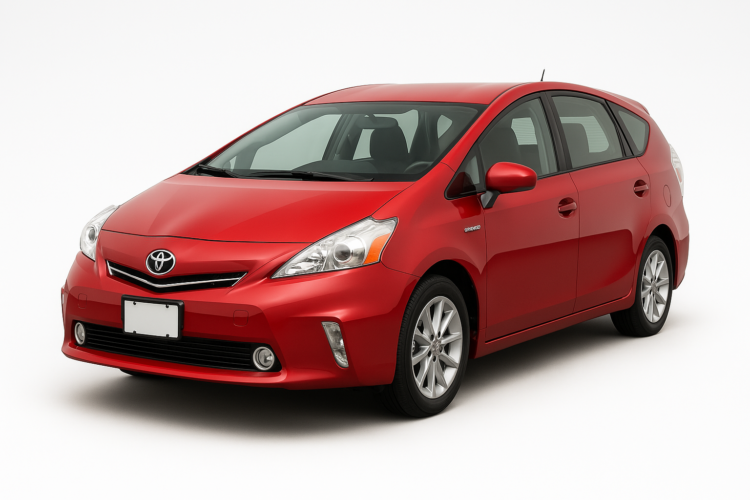
A Toyota Prius hybrid battery replacement at Greentec Auto costs $1,250 to $4,995 depending on your generation and the build you choose, with most Prius battery packs priced between $1,399 and $2,099. Warranties run 12 to 48 months on most qualifying batteries. We have replaced hybrid and EV batteries since 2012 and install at more than 30 locations across the U.S., Canada, and the U.K. Find your year below.
A Toyota Prius battery replacement is priced by generation rather than by individual year, which is why a 2005 and a 2009 cost the same and a 2009 and a 2011 do not. Read the table and the shape of the Prius battery market becomes obvious. The three conventional generations, which is 2001 through 2015 and the overwhelming majority of Prius cars still on the road, all land between $1,399 and $2,099. The plug-in cars cost two to three times that, because a plug-in pack carries several times the energy.
The Prius hybrid battery is the cheapest traction pack to replace in the entire hybrid market, and the reason is volume. Toyota has built more Prius packs than any other hybrid pack on earth. That means a deep supply of cores, mature processes, and genuine competition among builders. Owners of lower volume hybrids get none of that and pay for it.
Prices on this page are accurate as of the posting date and are subject to change. Final pricing depends on your exact model year, trim, pack type and VIN, on the build you select, and on whether you choose installation. Check current pricing at greentecauto.com or request a quote for your specific vehicle.
Eight Prius pages sit beneath this one. Each carries exact fitment, pack specifications and current pricing for its years.
| Your Prius | Years | Pack | Go to |
|---|---|---|---|
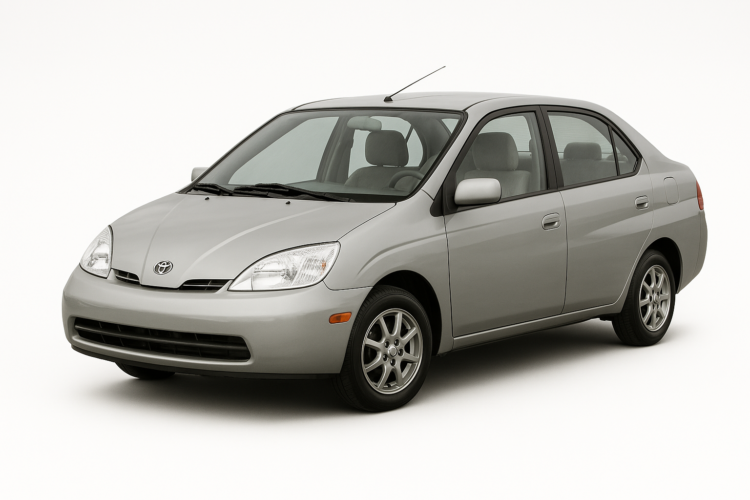
| Prius, 1st generation | 2001 to 2003 | Nickel metal hydride, 273.6 volts | Prius 2001 to 2003 |
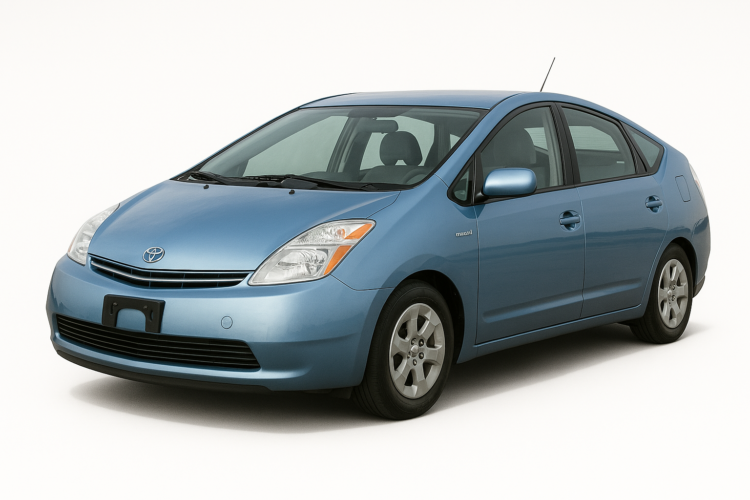
| Prius, 2nd generation | 2004 to 2009 | Nickel metal hydride, 201.6 volts | Prius 2004 to 2009 |
| Prius, 3rd generation | 2010 to 2015 | Nickel metal hydride, 201.6 volts | Prius 2010 to 2015 |
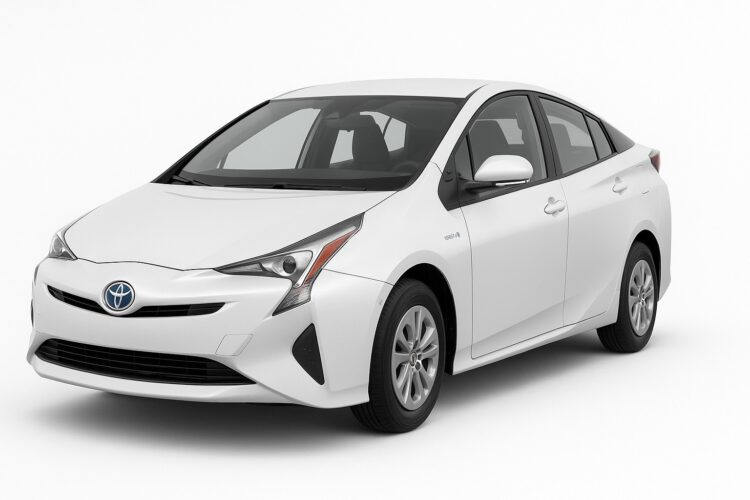
| Prius, 4th generation | 2016 to 2022 | Nickel metal hydride at 201.6 volts OR lithium ion at 207.2 volts, depending on grade | Prius 2016 to 2022 |
| Prius v | 2012 to 2017 | Nickel metal hydride, 201.6 volts | Prius v |
| Prius c | 2012 to 2019 | Nickel metal hydride | Prius c |
| Prius Plug-in | 2012 to 2015 | Lithium ion, 4.4 kWh | Prius Plug-in |
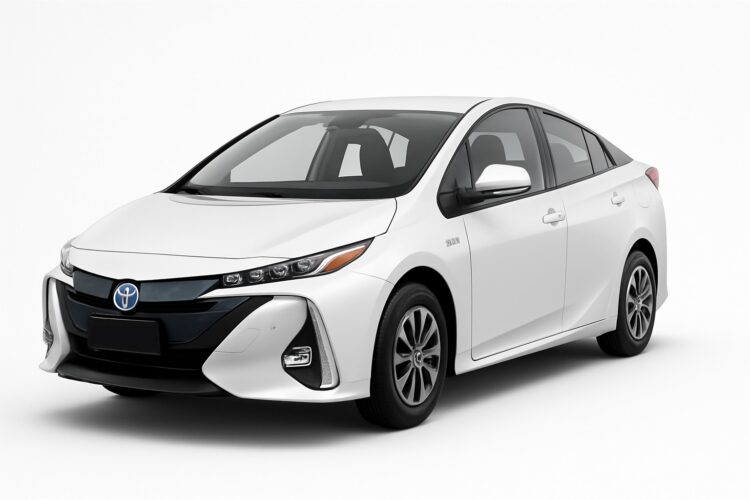
| Prius Prime | 2017 to 2022 | Lithium ion, 8.8 kWh | Prius Prime |
Not sure which one you have? The cost to replace a Prius battery depends entirely on getting this right, so send us the VIN. The model code inside it identifies your pack, and we will confirm fitment in writing before you spend anything.
This is the table most Prius owners cannot find anywhere, and it is the table that stops people buying the wrong pack.
| Generation | US years | Chemistry | Nominal voltage | Capacity | Pack location |
|---|---|---|---|---|---|
| 1st, NHW11 | 2001 to 2003 | Nickel metal hydride | 273.6 V | 1.78 kWh, 6.5 Ah | Behind the rear seat |
| 2nd, XW20 | 2004 to 2009 | Nickel metal hydride | 201.6 V | 1.31 kWh, 6.5 Ah | Behind the rear seat |
| 3rd, XW30 | 2010 to 2015 | Nickel metal hydride | 201.6 V | 28 modules at 7.2 V | Cargo area, mounted to the cross member behind the rear seat |
| 4th, XW50, Two grade | 2016 to 2022 | Nickel metal hydride | 201.6 V | Approximately 1.2 kWh | Under the rear seat |
| 4th, XW50, other grades | 2016 to 2022 | Lithium ion | 207.2 V | Approximately 0.75 kWh | Under the rear seat |
| Prius v | 2012 to 2017 | Nickel metal hydride | 201.6 V | Shares the 3rd generation architecture | Behind the rear seat |
| Prius Plug-in | 2012 to 2015 | Lithium ion | Not published by Toyota | 4.4 kWh, up to 15 electric miles | Under the cargo floor |
| Prius Prime | 2017 to 2022 | Lithium ion | Not published by Toyota | 8.8 kWh, 25 mile EPA electric range | Under the cargo floor |
A few details worth knowing because they come up constantly:
The second and third generation packs are both 201.6 volts and they are not the same part. More on that below, because it is the most expensive mistake in the Prius world.
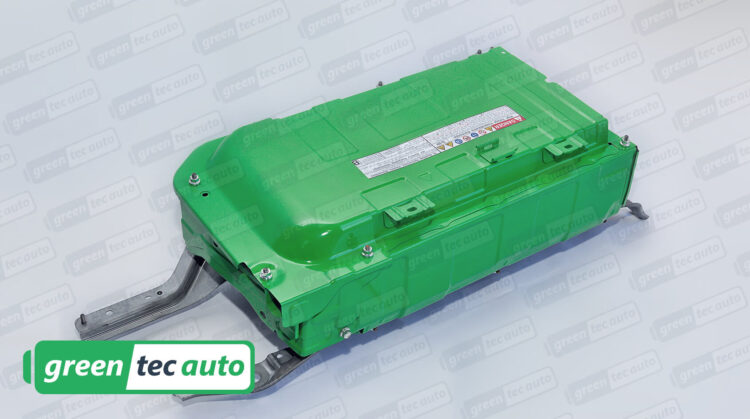
The third generation pack is 28 nickel metal hydride modules in series, each module 7.2 volts. Toyota’s own technical documentation gives the module at 2.3 lb and the assembled pack at 90 lb. That 90 lb figure is why this is a two person lift and not a one person lift.
Your Prius runs on far more than 201.6 volts. The inverter and converter boost the pack output to 650 volts DC before it reaches the drive motor. The number on the pack label is not the number in the drive system, which is one reason a Prius hybrid battery is not a driveway job.
The fourth generation moved the pack. Toyota’s documentation puts the third generation pack in the cargo area behind the rear seat. On the fourth generation it sits under the rear seat instead, which is why a 2016 Prius has usable cargo space where a 2014 has a bulkhead.
If you own a fourth generation Prius, read this section before you buy a Toyota Prius battery replacement from anyone, including us.
Toyota did something on the fourth generation Prius that it had never done before on the model line. It shipped the car with two different battery chemistries at two different voltages, and the choice depended on the grade you bought, not the year.
Two chemistries. Two voltages. Two completely different part numbers. Same badge on the back of the car.
Your model year does not tell you which Prius hybrid battery you have. Neither does the trim name on the window sticker if the car has been sold a few times. A 2017 Prius and a 2017 Prius are not the same vehicle for this purpose, and a pack ordered off a year lookup has a real chance of being the wrong pack.
The two systems also run different ECU mapping, so this is not a case where close enough works.
The model code is the reliable answer, and it is printed on the label in the driver’s door jamb as well as encoded in the VIN:
| Model code | What it means |
|---|---|
| ZVW50 | Nickel metal hydride pack |
| ZVW51 | Lithium ion pack |
| ZVW52 | Prius Prime, the plug-in car, a different pack again |
This is the method Prius technicians use and it is the method we use. We do not ask you to decode it yourself.
Send us your VIN. We read the model code, confirm which Prius hybrid battery your car actually takes, and put it in writing before you pay for anything. It takes us a minute and it is the single most useful thing we can do for a fourth generation owner.
The 2004 to 2009 Prius and the 2010 to 2015 Prius both run a 201.6 volt nickel metal hydride pack built from 28 modules in series. Identical headline numbers. People see that and assume the packs swap.
They do not.
The module construction changed, the pack housing changed, the bus bar layout changed, the sensing changed, and the battery management calibration changed with it. A second generation module and a third generation module are different parts that happen to produce the same voltage. Fitting the wrong generation produces a car that may appear to work briefly and then throws codes, or that never completes a balance cycle at all.
The practical rule: generation is defined by the car, not by the voltage on the label. 2004 to 2009 is second generation. 2010 to 2015 is third generation. The Prius v shares the third generation architecture but is its own listing. If a seller offers you a “201.6 volt Prius pack” without naming the generation, that seller does not know what they are selling, and that is a reason to walk away rather than a reason to negotiate.
This is the mechanism behind most of the horror stories. Someone buys a 201.6 volt Prius pack online at a good price, fits it to the wrong generation, and ends up paying for the part twice and the labor twice. Every pack we ship is matched to a confirmed generation against the VIN, which removes the question entirely.
The honest answer is that Toyota publishes no service life figure for the pack, so anyone quoting you a specification is quoting something Toyota never wrote. What we can give you is what fourteen years of replacing these packs actually looks like, by generation, which is more useful anyway.
| Generation | What we see on original packs |
|---|---|
| 1st, 2001 to 2003 | Essentially all original packs are long gone. Anything still running at this age is remarkable rather than typical |
| 2nd, 2004 to 2009 | The classic replacement window closed years ago. Cars arriving now are usually on their second or third pack |
| 3rd, 2010 to 2015 | The current volume. Most of these are now failing or have just failed. The oldest are sixteen years old |
| 4th, 2016 to 2022 | Early days. Failures are uncommon and usually traceable to a blocked cooling path or a specific fault rather than wear |
| Plug-in and Prime | Lithium degrades more slowly in percentage terms. Capacity loss shows as shrinking electric range before it shows as a fault |
Across the conventional generations, a Prius battery commonly reaches 150,000 to 200,000 miles, and the failure window usually opens somewhere between eight and twelve years in service. A meaningful number go considerably further. That spread is not random, and four things decide where your car lands in it.
Heat. Phoenix, Las Vegas, Houston and the Gulf Coast kill Prius packs faster than Seattle, Portland or Michigan, and it is not close. This is the dominant variable.
The cooling path. More on this below. A blocked intake is the most common preventable cause of an early Prius hybrid battery failure that we see.
Whether the car gets driven. A Prius that sits for months self discharges and drifts out of balance. Cars parked through a deployment, an illness or a long winter age their packs faster than cars driven daily.
Trip length. A Prius used entirely for short errands never settles into a stable pack temperature and never completes a proper balance cycle.
A new cell pack is built with brand new modules, so it starts from full capacity the way the original did. What it does not come with is a guarantee, because the thing that decides pack life is how and where the car is driven, and that is yours rather than ours. What we will say is that the warranty on a new cell Prius pack runs up to 48 months, and we do not write warranties we expect to pay out on.
A Prius tells you before it strands you. Usually months before. Here is the sequence in the order it actually happens, with the Prius specific detail that generic hybrid advice leaves out.
| Code | What it means on a Prius |
|---|---|
| P0A80 | Replace hybrid battery pack. The single most common Prius battery code |
| P0A7F | Hybrid battery pack deterioration |
| P3000 | Battery control system malfunction, normally with an information sub code attached |
| P3011 to P3024 | Weak battery block, numbered. P3017 is block 7, P3021 is block 11 |
| P0A1F | Battery energy control module malfunction |
| P0AFA | Hybrid battery system voltage low |
| P0AA6 | High voltage system isolation fault |
The numbered block codes are the ones worth paying attention to. They tell a technician exactly where the voltage spread opened up. One weak block in isolation is a different situation from four, and a shop that reads the codes properly can tell you which one you are in before you spend money.
Prius owners search for this more than almost anything else, and the generic answers online are wrong often enough to be expensive.
The red triangle with the exclamation mark. This is the master warning light, and on its own it means the car has detected a fault and stored a code. It does not by itself mean the Prius hybrid battery has failed. It is the light that accompanies a hybrid system fault, and the fault can be the pack, the cooling fan, the inverter, a wiring issue or something else entirely. The triangle is a summons to a scan tool, not a diagnosis.
The CHECK HYBRID SYSTEM message. More specific. The hybrid control system has found something it does not like and has usually reduced power. Again, this covers a family of faults and not just the pack.
The hybrid battery warning on the multi information display. The closest thing to a direct pack warning, and the one most likely to end in a Prius hybrid battery replacement.
The check engine light on its own. Can be entirely unrelated to the hybrid system. A Prius has a conventional gasoline engine with conventional emissions equipment, and it throws conventional codes.

Get the codes read before you buy a pack. Not the light, the codes. A red triangle is a reason to have the car scanned, not a reason to order a Prius battery. A significant proportion of cars that arrive at our shops with a lit triangle do not need a pack: the fault turns out to be a failed cooling fan, a wiring problem, an inverter fault, a water pump, or a tired small starter battery under the hood producing symptoms that imitate a hybrid fault.
Diagnostics are free in shop at our locations, and a fair number of Prius owners leave having been told their pack is fine. That is a better outcome for us than selling a Toyota Prius battery replacement to somebody whose real fault was a cooling fan.
Depends on your generation, and the answer changes how the job is done.
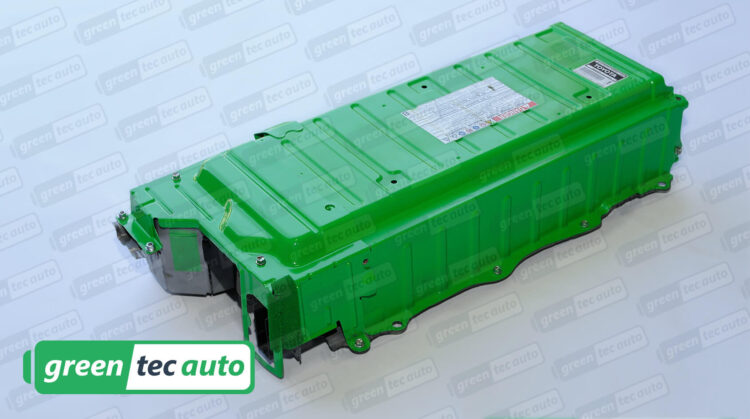
2001 to 2015, all conventional generations, plus the Prius v. The pack sits behind the rear seat, between the seatback and the cargo area. Toyota’s own technical documentation for the third generation puts it in the cargo area, mounted to the cross member behind the rear seat. Access is from inside the car with the seatback folded or removed. This is why a pre 2016 Prius has a bulkhead instead of a flat cargo floor.
2016 to 2022, fourth generation. Under the rear seat. Toyota moved it there on the fourth generation redesign, which freed up the space behind the seat and is the reason a 2016 Prius swallows more cargo than a 2014. Access is from the rear seat cushion upward.
Prius Plug-in and Prius Prime. Under the cargo floor. These packs are physically much larger and the job is correspondingly longer.
The Prius battery is not the small battery under the hood or in the corner of the cargo area that runs the lights, the locks and the computers. That one is cheap and it produces its own symptoms, including a Prius that is completely unresponsive with no prior hybrid warnings at all. If your car went from fine to dead overnight with no build up, start there before you start here.
A pack behind or under the rear seat is a cabin job. The car does not need to come off the ground. The high voltage service plug comes out first and the system sits for the specified period before anyone touches a bus bar, because a Prius hybrid battery feeds a drive system running at 650 volts DC. The third generation pack alone weighs around 90 lb. This is not a driveway job with hand tools and a video, whatever the video says.
If you read one maintenance section on this page, make it this one. The cooling path is the most neglected item on every Prius and the most common preventable cause of an early pack failure.
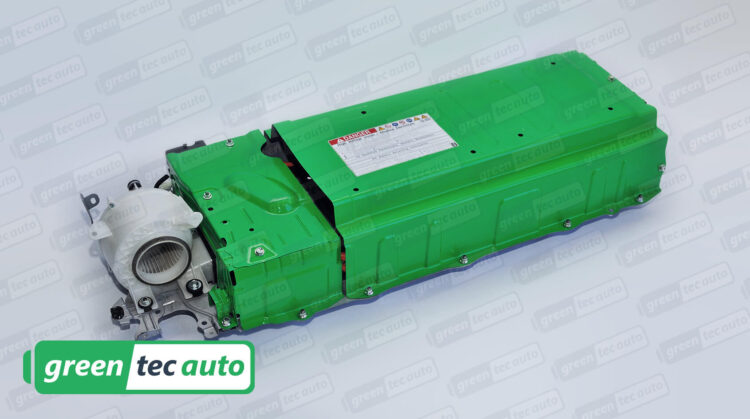
Every nickel metal hydride Prius hybrid battery is cooled by a fan that draws air from inside the cabin, pushes it through the module stack and vents it. On the second and third generation cars the intake sits low behind the rear seat, usually in the side trim. On the fourth generation it is under the rear seat with the pack.
Here is what happens over a decade. Dog hair, carpet fiber, dust and cabin debris build up on the intake screen. Airflow falls. The fan compensates by running longer and harder. The pack runs warmer on every single mile you drive. Warmer modules lose capacity faster, and the ones nearest the hot end of the airflow path, which were always going to fail first, now get there years earlier.
Then somebody puts a box against the vent, or fits a cargo liner over it, or puts a dog crate in the back, and the whole process speeds up again.
Check your own Prius maintenance schedule for this item. Toyota does list inspection and cleaning of the pack cooling intake, but which part your car uses and how often it is called for both change across the twenty one model years covered on this page. Some years take a replaceable element and others a screen you clean and refit.
In practice:
A Prius hybrid battery cooling fan or filter service is one of the cheapest jobs on the car. Replacing the pack because nobody ever touched the filter is one of the most expensive.
Searches for Prius battery reconditioning run into the thousands every month, so the question deserves a straight answer rather than a sales pitch.
Reconditioning means taking the existing modules out of your Prius battery, charging and discharging them repeatedly on a bench to try to recover capacity, balancing them, and putting the same modules back in the car. Nothing new goes in.
Does it work? Sometimes, for a while. On a pack where the modules are reasonably matched and the problem is imbalance rather than genuine capacity loss, reconditioning can buy real time. On a pack where the modules have simply worn out, which is most packs that have thrown a code, it buys a few months at best.
The honest limitation: reconditioning cannot put capacity back into a module that no longer has it. It redistributes and rebalances what is left. A ten year old module that has lost a third of its capacity is still a ten year old module afterwards.
The cheapest offer you will find is replacing just the one module that triggered the code. It works and it is inexpensive, and here is the problem with it. You have fitted one strong module beside 27 that are the same age as the one that just failed. The battery management system rebalances the pack around the next weakest module, and that one throws a code in due course.
We do not sell single module work on a Prius hybrid battery. Not because it cannot be done, but because we do not want the car back in four months with the customer feeling misled. We replace and warranty the pack as a matched, tested assembly.
A grid charger is a device that charges the pack outside the car’s normal narrow operating window, which the hybrid system never allows. Used thoughtfully on a pack that has been sitting, it can genuinely help with balance. It is a maintenance tool, not a repair, and it will not rescue a pack that has lost capacity.
If your Prius hybrid battery has thrown P0A80 or a string of block codes, reconditioning is a short term answer to a long term problem. If the car is worth keeping, a replacement pack with a real warranty is the cheaper decision measured over the time you will own it. If the car is being sold next month, that is a genuinely different calculation and we will say so.
Resting voltage is close to worthless as a measure of Prius battery health. Every block can read a respectable number with the car sitting still while the pack is finished, because what actually ends a Prius battery is internal resistance climbing under load, and load is the one condition a resting measurement never applies.
A real test needs three things:
Block level numbers. Your Prius reports in blocks, and the figure that decides the diagnosis is the gap between the strongest block and the weakest. Watch what that gap does when you accelerate hard and when you brake and regenerate. Narrow and stable is a sound Prius battery. Wide and growing is one that is finished, however healthy the pack total looks.
Captured on the move. The numbers have to come off a Prius that is being driven. Plugging a tool into a parked car and reading the screen is not a Prius battery test, whatever the shop that did it charged for it.
The stored codes, read properly. The numbered block codes are history the live data will not show you.
Prius owners have better options here than owners of almost any other hybrid, because the community built tools for it. An OBD2 dongle paired with a Prius specific app will give you block voltages and let you watch the spread on a drive. That is a genuinely useful screening tool and we have no problem recommending that people use one before they call anybody.
What it will not do is distinguish between a weak pack and a weak pack caused by a dead cooling fan, and it will not read the inverter and wiring faults that imitate pack failure. Use it to decide whether to get the car looked at, not to decide what to buy.
Diagnostics are free in shop at our locations. We read the pack under load, block by block, pull the stored codes, and tell you what we find, including when what we find is not the pack.
Both are real options and they are not equivalent. New cells are the better pack and the pricing and the warranty both say so.
| New cells | Remanufactured | |
|---|---|---|
| What is inside | Brand new modules | Harvested modules, individually capacity and load tested, weak ones discarded, survivors matched into tight tolerance sets |
| Warranty | Up to 48 months on qualifying Prius packs | 12 to 24 months depending on the build |
| Price on a 2nd or 3rd generation Prius | $2,099 | $1,399 |
| Best for | A Prius you intend to keep | A Prius with limited years left, or where budget is the binding constraint |
The $700 gap on a second or third generation Prius buys you new modules and roughly double the warranty. For most people keeping the car, that is the easier decision than it looks on the price list. For a car heading to a sale or an older Prius with other problems, remanufactured is a legitimate and honest choice and we sell plenty of them.
It is not a cleaned up used pack and it is not a salvage pack with a sticker on it. Modules are harvested, tested individually for capacity and under load, the weak ones go to Greentec Recycling, and the survivors are matched into sets with tight voltage and capacity tolerance before the pack is reassembled, balanced and tested as a complete assembly.
A used Prius battery out of a wrecked car is the same age as the one you are taking out, with the same thermal history and the same unknown remaining life. It is cheap for a reason. If you are going to buy one anyway, insist on block level voltage data captured under load rather than at rest, the donor car’s mileage, and the state it came from. An Arizona pack and an Oregon pack are not the same product at the same price.
Check before you pay anyone, including us. The dividing line for a Prius is the 2020 model year.
2020 and newer Prius. Toyota extended pack coverage to 10 years from the date of first use or 150,000 miles, whichever comes first, starting with model year 2020. In 2026 that means every 2020 through 2022 Prius is still inside the term on years, and the question is only mileage.
2019 and older Prius. Toyota wrote these packs into the Hybrid System Warranty rather than giving them a line of their own, at 96 months or 100,000 miles, whichever came first. That is eight years, which puts every Prius through the 2018 model year outside the term on age regardless of mileage, and leaves 2019 cars running out during 2027.
The exception worth a phone call. In California and in states that adopted California’s emission warranty provisions, the hybrid battery term on those older cars was 10 years or 150,000 miles. If you have a 2016 or 2017 Prius in one of those states and you are under 150,000 miles, that is worth checking with a Toyota dealer before you buy a pack from anybody. The adopting state list has changed over the years, so check the booklet that came with your own car.
A used Prius keeps its coverage. Toyota transfers warranty coverage to later owners automatically and charges nothing to do it. The clock runs from the date the car was first put into service, not the date on your bill of sale, so a 2021 Prius bought second hand still holds whatever is left of the original ten years.
Full terms, including what stayed at 8 years and 100,000 miles when the pack coverage was extended, are on our Toyota hybrid battery page.
It gets taken apart and tested at module level. Modules that fail testing go to Greentec Recycling, where a nickel metal hydride Prius pack is processed for its nickel and other metals, and a lithium ion Prime or Plug-in pack is processed for its lithium and cobalt. Modules that pass but are not suitable for a vehicle pack go to Greentec Energy for home energy storage and EV conversion work. Nothing goes to a landfill.
We have been replacing hybrid and EV batteries since 2012, which makes this our fourteenth year. The business started in Sacramento, California, and our main U.S. distribution center is now in Kansas City. The Prius is the pack we have built more of than any other, and a Toyota Prius hybrid battery replacement is the job we have done the most times. That experience is the reason we can tell a fourth generation owner which chemistry their car takes from a VIN instead of guessing from a year.
If you notice warning lights on your dashboard, don’t rush to the dealership for an expensive diagnostic report. Many local auto parts stores can scan your vehicle and provide error codes for free just ask them to run a quick scan with a diagnostic tool.
Above, we’ve listed some of the most common hybrid error codes. Keep in mind that the check engine light must be onfor major issues to be detected. If your vehicle is experiencing hybrid battery failure, dealerships often charge thousands of dollars for a replacement typically with a limited warranty.
At Greentec Auto, we offer a cost-effective alternative, providing high-quality hybrid battery replacements at a fraction of the price. Plus, we back our batteries with a comprehensive warranty to give you peace of mind.
Prius hybrid replacement costs anywhere from $999 to $7,495, depending on your vehicle model, the type of Prius battery replacement (new, remanufactured), and the warranty. You can expect over $2,500 from the dealer for an OEM replacement from Toyota. At Greentec Auto, we offer quality, professionally constructed Prius hybrid batteries at far less, with choices that will fit your budget and your car. Whatever Prius battery replacement you need we have, any generation, any model, with a 12 to 48-month warranty, also offering mobile installation .
Most Prius hybrid batteries last anywhere from 8 to 10 years, or about 100,000 to 150,000 miles, sometimes even longer. A lot of Prius drivers say their batteries keep going strong well past that, especially when the car’s driven regularly and well taken care of. Prius batteries are made to last, and driving often actually helps keep them in good shape. When it’s finally time for a new one, Greentec Auto has affordable, reliable Prius battery replacement options to help you get back on the road without breaking the bank.
Yes, replacing a Prius hybrid battery is well worth it. A new or remanufactured Prius battery revives your vehicle, recovers gas mileage, delivers performance, and preserves resale value. Prius hybrid battery replacement is far less expensive than buying a new car, and it’s also a smart way to be green, too. At Greentec Auto, we offer low-price and convenient Prius battery replacement with certified professionals and warranty-backed options.
*Offer cannot be combined with other promotions.
We use cookies and similar technologies to operate the website, understand how it is used, and support advertising. Optional analytics and marketing technologies will not be activated unless you give your consent. You can accept all, reject non-essential technologies, or manage your preferences. You can change your choices at any time.
Your browser sends a Global Privacy Control signal, so advertising stays off unless you switch it on yourself.