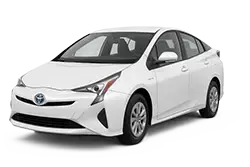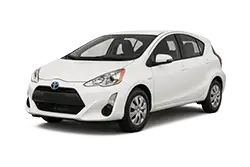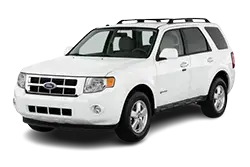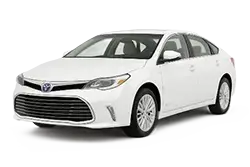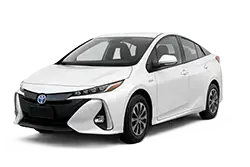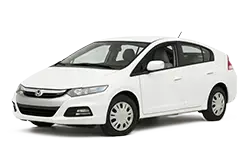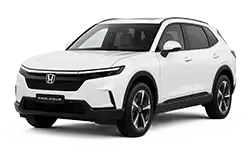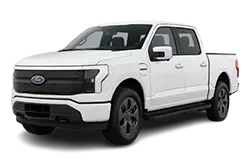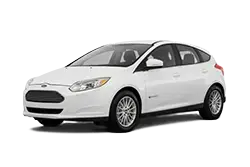
The two main types of hybrid car battery are nickel-metal hydride (NiMH) and lithium-ion (Li-ion). Lead-acid appeared in some early hybrid designs and is no longer used for traction. NiMH remains common in conventional hybrids. Li-ion dominates plug-in hybrids and electric vehicles.
But if you are reading this, you probably do not want a chemistry lecture. You want to know which one is in your car, and whether it matters when the pack needs replacing.
Short answer: it matters a great deal, and you cannot work it out from the badge on the back.
Here is the fact that proves it. The 2016 to 2022 Toyota Prius shipped with two different chemistries at two different voltages, and the grade decides which one you got, not the model year. A Prius Two has a 201.6 volt NiMH pack. The other grades have a 207.2 volt lithium-ion pack. From 2019, AWD-e models went back to NiMH for better cold performance while front-wheel-drive stayed lithium-ion.
Same car, same year, same showroom. Two completely different batteries, with different ECU mapping, that are not substitutes for one another.
That is why “what chemistry does a Prius use” is the wrong question, and “what is in my Prius” is the right one. This guide answers both.
Most conventional hybrids use NiMH. Most plug-in hybrids and EVs use lithium-ion. The exceptions are where people get caught.
Vehicle | Typical traction chemistry |
|---|---|
Toyota Prius, 2001 to 2015 | NiMH |
Toyota Prius, 2016 to 2022 | Either, depending on grade. See the next section |
Toyota Prius v (2012 to 2017) | NiMH |
Toyota Prius c (2012 to 2019) | NiMH |
Toyota Prius Plug-in (2012 to 2015) | Lithium-ion, 4.4 kWh |
Toyota Prius Prime (2017 to 2022) | Lithium-ion, 8.8 kWh |
Toyota Camry Hybrid | NiMH on earlier generations, lithium-ion on later ones |
Toyota RAV4 Hybrid | NiMH on most generations |
Toyota Highlander Hybrid | NiMH on earlier generations, lithium-ion on later ones |
Toyota Sienna Hybrid (2021 onward) | NiMH, 288 V |
Toyota Corolla Hybrid | Lithium-ion on recent model years |
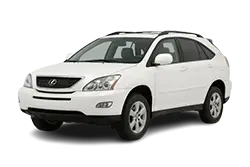
Lexus hybrids | NiMH on most, lithium-ion on several newer models |
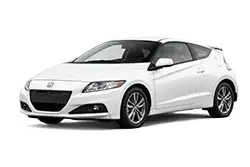
Honda Insight, Civic Hybrid, CR-Z (IMA era) | NiMH |
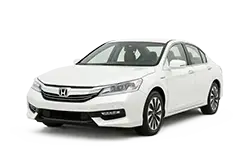
Honda Accord Hybrid (i-MMD era) | Lithium-ion |
Ford Escape and Fusion Hybrid | NiMH on earlier years, lithium-ion on later ones |
Mild hybrids with a 48 volt system | Lithium-ion |
Treat this as orientation, not confirmation. Chemistry changed mid-generation on several of these lines, and in the Prius case it changed within a single model year. The only reliable way to identify your pack is by VIN.
The most important practical consequence: Honda’s IMA trouble codes P1447 and P1449 apply to the NiMH IMA generations and not to the lithium-ion i-MMD Accords, so even the diagnostic language differs by chemistry. Someone applying IMA-era advice to a lithium-ion Accord is working from the wrong manual.
This is the single most useful thing on this page, and almost nothing written about hybrid battery types mentions it.
The fourth-generation Prius, sold in the US from 2016 to 2022, came with either chemistry:
Grade | Chemistry | Nominal voltage | Approximate capacity |
|---|---|---|---|
Prius Two | NiMH | 201.6 V | about 1.2 kWh |
Other grades | Lithium-ion | 207.2 V | about 0.75 kWh |
From model year 2019, AWD-e models used NiMH because it performs better in cold conditions, while front-wheel-drive models stayed lithium-ion.
Two owners with 2018 Priuses in the same parking lot can need entirely different packs. The voltages differ, the capacities differ, and the ECU mapping differs, which means these are not close-enough substitutes.
The model code, found on the driver’s door jamb label and encoded in the VIN, is the method technicians use:
Model code | Pack |
|---|---|
ZVW50 | NiMH |
ZVW51 | Lithium-ion |
ZVW52 | Prius Prime (plug-in) |
This mapping comes from technician and owner community practice rather than a Toyota publication, so treat it as the identification method rather than as documentation. The reliable step is to have the VIN checked and confirmed in writing before any pack is ordered.
Generation matters as much as chemistry, and voltage alone will mislead you. The second-generation Prius (2004 to 2009) and third-generation (2010 to 2015) are both 201.6 volt NiMH packs built from 28 modules. They are still different parts. Module construction, housing, bus bar layout, sensing, and battery management calibration all changed between them.
This is the mechanism behind most salvage-pack horror stories. Somebody buys “a 201.6 volt Prius pack” because the number matches, fits it to the wrong generation, and ends up with trouble codes instead of a working car.
Define the pack by the vehicle, never by the voltage on the label.
NiMH stores energy through reactions involving nickel and a metal hydride. It has been the workhorse of conventional hybrids since the beginning, and it stayed there for reasons that are still valid.
Where NiMH is strong:
Where NiMH gives ground:
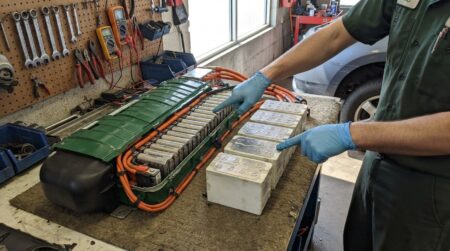
That heat point is worth dwelling on, because it is the practical one. NiMH packs in conventional hybrids are typically air cooled, with a blower pulling cabin air across the modules. Keep that intake clear and the pack lasts; block it and it cooks. This is the highest-value maintenance habit available to an owner of a NiMH hybrid.
Lithium-ion works by moving lithium ions between electrodes during charge and discharge. It stores considerably more energy for a given size and weight than NiMH, which is why it took over everywhere that energy capacity is the binding constraint.
Where lithium-ion is strong:
Where lithium-ion gives ground:
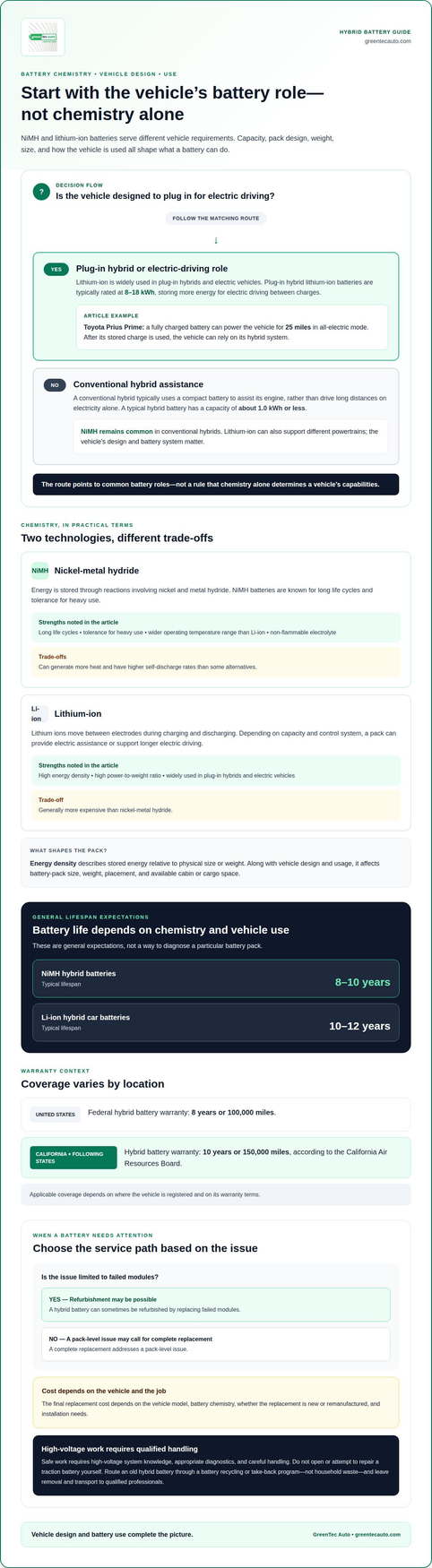
The clearest way to see how chemistry and vehicle design interact is to look at what each pack is asked to do:
Vehicle type | Typical pack capacity | What the pack does |
|---|---|---|
Conventional hybrid | Roughly 0.75 to 1.9 kWh | Assists the engine in repeated short bursts; never drives far alone |
Mild hybrid (48 V) | Small | Assists the engine; cannot drive the car alone at all |
Plug-in hybrid | Roughly 4 to 18 kWh | Drives on electricity for a limited range, then reverts to hybrid operation |
Electric vehicle | Roughly 40 to 100+ kWh | Drives the car entirely |
For a concrete example: the Prius Plug-in (2012 to 2015) carried a 4.4 kWh lithium-ion pack good for up to about 15 electric miles. The Prius Prime that replaced it (2017 to 2022) carried 8.8 kWh and an EPA electric range of 25 miles. Same manufacturer, same nameplate family, double the pack. Later Prime generations increased it again, so electric range figures are generation-specific and worth checking against your own model year.
Battery controls deliberately limit how much of a lithium-ion pack is used in everyday driving. The practical full point sits around 90 to 95 percent state of charge and the practical empty point around 5 to 10 percent. Those buffers protect the cells at both extremes, which is why your car never reports using the entire physical capacity.
This is also why obsessing over the charge display is pointless on a conventional hybrid: the vehicle manages that window itself and you cannot override it. On a plug-in, your charging habits do matter, and following the manufacturer’s guidance beats any rule of thumb you read online.
If you look up your pack’s specification you will find a nominal voltage, and it is worth understanding that this number is not the voltage the drive system actually runs at.
Published nominal pack voltages:
Vehicle | Nominal pack voltage |
|---|---|
Prius, 1st generation (2001 to 2003) | 273.6 V |
Prius, 2nd generation (2004 to 2009) | 201.6 V |
Prius, 3rd generation (2010 to 2015) | 201.6 V |
Prius, 4th generation NiMH (Two grade) | 201.6 V |
Prius, 4th generation lithium-ion | 207.2 V |
Toyota Sienna Hybrid (2021 onward) | 288 V |
Here is the part that matters for safety. Toyota’s own technical documentation for the third-generation Prius states that the inverter and converter boost the pack from 201.6 volts to 650 volts DC.
The label says 201.6. The drive system runs at 650.
That is the single clearest reason hybrid battery work is not a do-it-yourself job. It also explains why high-voltage work requires a tested isolation procedure, insulated tools, Class 0 gloves, and a mandatory wait for the inverter capacitors to discharge after the service disconnect is pulled. A disconnected pack does not mean a de-energized system.
And the weight is the second reason. Toyota’s documentation lists the assembled third-generation Prius pack at 90 pounds (41 kg), with individual modules at 2.3 pounds each. That is a two-person lift in a confined space, and dropping a high-voltage battery is a hazard of its own.
Energy density describes how much energy a battery stores relative to its size or weight. In vehicle design that relationship decides where the pack can physically go and how much cargo and cabin space is left over.
This is why pack location varies even within one model line. Earlier Prius generations mounted the pack behind the rear seat. The fourth generation moved it under the rear seat, which changed the packaging entirely. Plug-in versions put it under the cargo floor.
Capacity and physical fit are different measurements, and this is where buyers go wrong. Capacity in kWh tells you how much energy is stored. It tells you nothing about the assembled pack’s dimensions, its mass, its mounting points, its connector layout, or what the vehicle’s battery management system expects to see.
A replacement pack has to match on all of it:
A similar-looking battery with a matching voltage is not automatically a suitable substitute. That is the whole lesson of section 2, and it is the reason a replacement decision starts with the vehicle’s exact year, make, model, and grade rather than with a chemistry comparison.
Three technologies that get mentioned alongside the main two and serve different purposes.
Mild hybrids pair a combustion engine with a small 48 volt lithium-ion battery. The electric side assists the engine, smooths stop-start operation, and recovers some braking energy, but it does not drive the transmission. A mild hybrid cannot move on electric power alone. If you own one, your battery serves a much narrower role than a full hybrid’s traction pack, and it is a different kind of part entirely.
Ultracapacitors store energy in an electric field rather than through a chemical reaction. They charge and discharge extremely fast, which makes them good at capturing hard braking energy and delivering short bursts for acceleration or hill climbing. They hold far less energy than a battery of the same size, so they supplement storage rather than replace it. Some hybrid systems have used them in that supporting role.
Lead-acid appeared in some early hybrid designs as a traction battery and has not been competitive for that job in a long time, because its energy density and cycle life are both well below NiMH and lithium-ion. Lead-acid is still extremely common in cars, just in a different job: it is the chemistry in most 12 volt auxiliary batteries, which is a separate component with a separate purpose.
The traction pack is one component in a coordinated electrical system, and knowing the other parts makes a diagnosis far easier to follow.
The traction battery stores high-voltage electricity for the electric motor and receives energy back during regenerative braking. On many hybrids the motor and generator functions are combined in motor-generator units that both drive the car and recover energy during deceleration.
The inverter with converter turns the pack’s direct current into the alternating current the motor uses, and it is also what boosts pack voltage to the much higher drive-system voltage described above. It is a separate component from the battery, and on Toyota vehicles it carries its own warranty term.
The DC/DC converter steps high-voltage DC down to low-voltage DC for accessories and to keep the auxiliary battery charged.
The power electronics controller manages energy flow from the pack and controls the motor’s speed and torque, coordinating delivery as driving demands change.
The thermal management system keeps the pack, motor, and power electronics within operating temperature. Designs differ: many conventional hybrid packs are air cooled through a cabin-air intake, while most EVs and some hybrids use liquid cooling for the pack. Check your own vehicle, because maintenance advice written for one design does not apply to the other.
The 12 volt auxiliary battery operates at a far lower voltage, powers accessories and electronics, and typically lasts only three to five years rather than the decade-plus a traction pack can manage. Because it fails more often, it produces a disproportionate share of alarming-looking symptoms: odd warning messages, electronics misbehaving, a car dead after sitting a few days. It is one of the first things a competent diagnostic rules out, and it is a far cheaper answer than a traction pack.
When a warning appears, any of these components can be the cause. That is the argument for diagnosing before quoting.
You will see confident chemistry-specific lifespan figures published, often something like NiMH lasting 8 to 10 years and lithium-ion 10 to 12. Treat those numbers with suspicion, because the evidence does not support that neat a split.
Two things are worth knowing instead.
First, manufacturers do not publish a service life figure for these packs. Toyota, for example, publishes warranty terms and no expected service life at all. Any figure you read, including the commonly quoted 100,000 to 200,000 miles or 8 to 15 years, is field observation rather than specification, and should be framed that way.
Second, the real-world evidence cuts against the chemistry-based split. NiMH packs in conventional hybrids routinely run well past the 8 to 10 year figure, with plenty of Toyota hybrids passing 200,000 miles on the original battery. Meanwhile lithium-ion packs in hot climates with poor thermal management have failed early.
What actually predicts lifespan, in rough order of importance:
The honest version: a NiMH pack that lived in a garage in Oregon with a clean cooling intake will outlast a lithium-ion pack that spent eight summers in a Phoenix parking lot. Chemistry is not what decides it.
Worth checking before paying for anything, because coverage occasionally makes the whole question moot. Coverage depends on model year and where the vehicle is registered, not on chemistry.
Toyota hybrid battery coverage, as an example:
Vehicle | Pack coverage | Other high-voltage parts |
|---|---|---|
Model year 2020 and newer, all states | 10 years from first use or 150,000 miles | 8 years or 100,000 miles |
Model year 2019 and older, federal | 96 months or 100,000 miles | 96 months or 100,000 miles |
Model year 2019 and older, California-emissions states | 10 years or 150,000 miles | To 15 years or 150,000 miles under the California Emission Control Warranty |
Toyota announced the extension to 10 years or 150,000 miles in October 2019, applying to all new model year 2020 hybrid, plug-in hybrid, and fuel cell vehicles. Note that other high-voltage components, including the inverter with converter and the hybrid and battery control modules, stayed at 8 years or 100,000 miles. That creates two separate clocks on the same car: a 2021 hybrid at 120,000 miles has pack coverage and no longer has inverter coverage.
The under-known one worth a phone call. For model year 2019 and older vehicles registered and operated in California or a state that adopted California’s emission warranty provisions, the hybrid battery footnote ran to 10 years or 150,000 miles. Toyota’s booklets of that era named Connecticut, Maine, Massachusetts, New Hampshire, New Jersey, New York, Rhode Island, and Vermont alongside California. The list of adopting states has changed over the years, so check the booklet that came with your own vehicle rather than a list from a different model year.
A 2016 Prius in Massachusetts at 140,000 miles may still have pack coverage. That is worth ten minutes on the phone before spending anything.
Coverage transfers automatically to later owners at no cost, measured from the original date of first use rather than from when the second owner bought the car.
Terms are the manufacturer’s and are subject to their conditions, exclusions, and maintenance requirements. Confirm your own vehicle with a dealer using the VIN.
Chemistry is useful context and it is not the answer to a replacement question. A pack has to match your vehicle’s voltage, dimensions, mounting, connectors, and ECU expectations, and on some vehicles the correct answer depends on the grade rather than the model year.
So the order of operations is: find out what is actually in your car, confirm it in writing, then decide what to do about it. Comparing NiMH against lithium-ion in the abstract will not get you a part that fits.
Greentec Auto replaces hybrid and EV batteries at more than 30 locations across the U.S., Canada, and the U.K., and has been doing this work since 2012.
Send the VIN and get the pack confirmed in writing. Because chemistry and voltage can differ within a single model year, as the fourth-generation Prius shows, matching a replacement to the vehicle rather than to a chemistry is the part that actually determines whether it works. A VIN check settles it.
Free battery testing and diagnostics come first, because several cheaper faults produce the same symptoms as a failing pack: a cooling fan, a temperature or voltage sensor, wiring, the inverter, or the auxiliary battery. Replacing a pack that was not the fault does not fix the car.
Greentec Auto supplies replacement batteries across Toyota, Lexus, Honda, Ford, and other hybrid and EV platforms. Mobile installation is available on many vehicles for an additional cost, and some models require shop installation. Modules that fail testing go to Greentec Recycling, where nickel and other metals are recovered from nickel-metal hydride packs and lithium and cobalt are recovered from lithium-ion packs.
Check your year, make, and model on greentecauto.com, or send the VIN and have the correct pack confirmed before you order anything.
Hybrid traction batteries use either nickel-metal hydride (NiMH) or lithium-ion chemistry. NiMH remains common in conventional hybrids, while lithium-ion dominates plug-in hybrids and electric vehicles. Lead-acid appeared as a traction battery in some early hybrid designs and is no longer used for that purpose, though it remains the chemistry in most 12 volt auxiliary batteries. Ultracapacitors are sometimes used alongside a battery to handle short power bursts, but they store far less energy and supplement rather than replace it.
By VIN, not by model year. Chemistry changed mid-generation on several vehicle lines, and in at least one case within a single model year: the 2016 to 2022 Toyota Prius shipped with 201.6 volt NiMH on the Two grade and 207.2 volt lithium-ion on other grades, with AWD-e returning to NiMH from 2019. Technicians identify it from the model code on the driver’s door jamb label and in the VIN. Have it confirmed in writing before ordering a pack.
NiMH tolerates a wider operating temperature range, handles the constant shallow charge and discharge cycles of a conventional hybrid well, uses a non-flammable electrolyte, and costs less. Lithium-ion stores considerably more energy for its size and weight, delivers a higher power-to-weight ratio, and scales up to the capacities plug-in hybrids and EVs need, at higher cost and with a narrower comfortable temperature range. Neither is simply better; they suit different jobs.
Both were sold, and the grade decides it. The Prius Two used a 201.6 volt NiMH pack of roughly 1.2 kWh. Other grades used a 207.2 volt lithium-ion pack of roughly 0.75 kWh. From model year 2019, AWD-e models used NiMH for better cold-weather performance while front-wheel-drive models stayed lithium-ion. The packs have different voltages and different ECU mapping, so they are not substitutes. Identify yours by VIN before ordering.
It varies by generation. The first-generation Prius (2001 to 2003) used 273.6 volts. The second, third, and the NiMH fourth-generation packs are 201.6 volts. The lithium-ion fourth-generation pack is 207.2 volts. The important caveat is that the pack label is not the system voltage: Toyota’s own third-generation technical documentation states the inverter boosts the pack from 201.6 volts to 650 volts DC. That is the voltage the drive system actually operates at.
No, and this is the most expensive mistake in this category. The second and third-generation Prius are both 201.6 volt NiMH packs built from 28 modules, and they are still different parts: module construction, housing, bus bar layout, sensing, and battery management calibration all changed between generations. Fitting the wrong generation produces trouble codes rather than a working car. Define the pack by the vehicle, never by the voltage on the label.
Less neatly than published figures suggest. Manufacturers do not publish a service life figure for these packs, so any number you read is field observation rather than specification. In practice heat exposure, cooling system condition, trip patterns, and driving style all predict lifespan better than chemistry does. NiMH packs routinely run past 200,000 miles in conventional hybrids, while lithium-ion packs in hot climates with poor thermal management have failed early.
Because a conventional hybrid does not need high energy density. It needs a pack that will take thousands of small, repeated charge and discharge cycles reliably, tolerate a wide temperature range, and cost less. NiMH does all three well, and its wider temperature tolerance is why Toyota specified NiMH for AWD-e Prius models aimed at colder markets. Lithium-ion wins where capacity per pound and per cubic foot is the limiting factor, which is plug-in hybrids and EVs.
Conventional hybrid packs are small, roughly 0.75 to 1.9 kWh, because the pack assists the engine rather than driving the car alone. Plug-in hybrids run roughly 4 to 18 kWh: the Prius Plug-in (2012 to 2015) carried 4.4 kWh for about 15 electric miles, and the Prius Prime (2017 to 2022) carried 8.8 kWh for 25 EPA electric miles. EVs run from roughly 40 kWh upward. Capacity figures are generation-specific, so check your own model year.
No. A mild hybrid pairs a combustion engine with a small 48 volt lithium-ion battery that assists the engine, smooths stop-start operation, and recovers some braking energy. It does not drive the transmission, and a mild hybrid cannot move on electric power alone. The battery serves a much narrower role than a full hybrid’s traction pack and is a different kind of component, so hybrid traction battery advice does not transfer to it.
It can, and the service life you get depends entirely on the quality of the work. A pack rebuilt with modules individually tested under load, matched for capacity and internal resistance, with failures rejected and the finished pack balanced, is a legitimate product. Swapping only the single worst module leaves the remaining modules at the same age, which is why that approach often means a second visit within months. New-cell packs avoid the question because every cell starts at the same point, and they deliver longer service life than remanufactured options.
No. The pack feeds an inverter that boosts voltage to several hundred volts DC, up to 650 volts on a third-generation Prius, which is enough to be lethal. Doing it safely requires a tested isolation procedure, insulated tools, Class 0 insulated gloves, a properly rated meter, and a mandatory wait after removing the service disconnect so the inverter capacitors can discharge. The assembled pack on a third-generation Prius also weighs about 90 pounds, making it a two-person lift in a confined space. Do not open a traction battery enclosure.
We use cookies and similar technologies to operate the website, understand how it is used, and support advertising. Optional analytics and marketing technologies will not be activated unless you give your consent. You can accept all, reject non-essential technologies, or manage your preferences. You can change your choices at any time.
Your browser sends a Global Privacy Control signal, so advertising stays off unless you switch it on yourself.