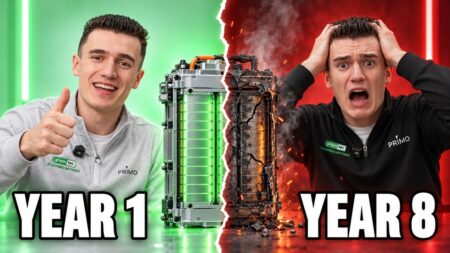
The five costs that catch buyers off guard are depreciation, insurance, tires, public fast charging, and battery replacement. Depreciation is the largest of them. Electric vehicles lose an average of 57.2% of their value over five years compared with 35.4% for hybrids, according to iSeeCars, and the overall average across all vehicles is 41.8%. That means hybrids beat the market average while EVs lose far more than it. Battery replacement is the cost people fear most, and dealership quotes can run from several thousand dollars to over $20,000 depending on the vehicle.
Let’s start with depreciation, because this is where people can lose thousands without even realizing it.
A vehicle does not just cost you money when you buy it. It also loses value over time. And electric vehicles have been struggling with this compared with conventional hybrids.
A 2026 iSeeCars depreciation study found that on average, electric vehicles lose 57.2% of their value after the first five years, compared with 35.4% for hybrids.
Here is the part that makes those numbers hit harder. The overall average across all vehicle types is 41.8%. So hybrids are not just beating EVs. Hybrids are beating the market average, and EVs are losing significantly more than it.
Vehicle type | 5-year depreciation |
|---|---|
Hybrid | 35.4% |
All vehicles (average) | 41.8% |
Electric vehicle | 57.2% |
So it sparks the question: what is the difference?
One major concern is the battery. When somebody considers buying a used EV, they have to think about the battery’s age, its remaining range, and what happens if it needs replacing. A Tesla battery replacement can potentially cost up to $20,000 or more depending on the model and what needs to be done.
That is a huge expense to consider when you are buying a used electric vehicle.
But here is the good news. If you are buying a hybrid, battery replacement can be significantly less than an EV. Those are not universal prices, and they vary by vehicle, but the difference can be substantial.
There are other factors pushing EV values down too:
Even if your battery never fails, the next buyer may still worry about that potential expense. And that concern affects what they are willing to pay for your vehicle.
In other words: if someone is considering buying your vehicle, the fear of a future replacement can cost you money before that replacement ever needs to happen.
That is worth reading twice. You can lose real money to a repair you never had to make.
Some electric vehicles are more expensive to insure than comparable gas-powered vehicles, and the reasons come down to repair economics.
Why EV insurance can run higher:
But this varies by vehicle, by insurer, by location, and by driver. There is no universal rule here, and some EVs insure perfectly reasonably.
So always get a quote for the exact model you are considering, before you buy it. Not the category. The specific year, make, and model. Call two or three insurers and compare. It takes twenty minutes and it can change which vehicle you choose.
This one matters enough to get its own section, because we see the consequences of it on the phone.
If you are buying an EV or a hybrid and you are considering an extended warranty or a third-party protection plan, make sure you understand exactly what it covers.
The biggest question you need to ask is: does it cover the high-voltage battery?
And then keep asking:
Here is the thing you do not want to discover after something goes wrong. We have had customers call us about battery replacements because they thought their warranty company was going to cover it, and it turned out they did not have that coverage at all.
So read the fine print. Read the actual contract before you sign it, not the brochure.
Electric vehicles can genuinely save you money on routine maintenance. No oil changes, fewer moving parts, less brake wear thanks to regenerative braking. That part is real.
But there are two costs that quietly take some of it back.
Depending on the vehicle, its weight, its torque, your tire selection, and your driving habits, you may go through tires faster than you expect.
EVs are heavy, because batteries are heavy. They also deliver instant torque, which is fun and is hard on rubber. And many of them come on specialized low-rolling-resistance tires that cost more to replace than a comparable set for a gas car.
If you own an EV, try your best to charge at home if you can. Public fast charging can cost considerably more than charging at home, sometimes dramatically more per kilowatt-hour.
This depends on your electricity rate and your charging provider, so run your own numbers. But the general pattern holds: home charging overnight is the cheap option, and relying on public DC fast charging as your primary method erodes a meaningful share of the fuel savings you bought the car for.
There is a second cost to heavy fast charging too, and it is not on any bill: repeated DC fast charging, especially in hot weather, adds thermal stress that accelerates battery wear. You pay for that later rather than at the charger.
These costs matter because the money you save on fuel is not necessarily the money you save overall. And that is one reason conventional hybrids and plug-in hybrids appeal to so many drivers.
For a lot of drivers, that combination offers an attractive balance between fuel savings and convenience.
But whichever one you choose, there is one expense you really need to understand before you buy.
Imagine waking up one morning, getting into your hybrid, pressing the start button.
Suddenly warning lights appear on the dashboard. If you drive a Toyota or a Lexus, you see the warning most owners know as the red triangle of death. Other manufacturers show it differently: Ford displays “Stop Safely Now,” Chevrolet may say “Propulsion Power is Reduced,” and BMW shows a drivetrain warning. Whatever the wording, your vehicle is reporting a hybrid system problem.
So you take it to the dealership, hoping it is something minor.
Then you receive the estimate. $30,000.
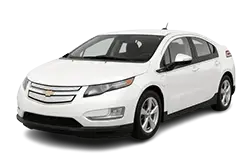
And that is not an exaggeration. In a widely reported Chevrolet Volt case, an owner was quoted roughly $30,000 to replace the battery pack. The detail that makes it land: the car itself was worth around $10,000. The quote was roughly three times the value of the vehicle.
Now, that is an individual reported case and not the typical price for every battery replacement. But imagine receiving that estimate on a vehicle worth less than the repair.
What would you do? Would you pay the bill? Would you sell the vehicle? Or would you give up on the car altogether?
And it is not just about fully electric vehicles. Hybrid owners can face expensive battery replacements too, although conventional hybrid batteries often cost considerably less than EV packs.
A failing hybrid battery does not always mean the whole car is finished.
And this matters not only for when your battery goes bad, because eventually it will. It matters before you buy an electric or hybrid vehicle, because knowing your replacement options changes how you think about the whole purchase.
A dealership quote is one option. It is not the only option.
This is the part I promised you at the beginning.
If a dealership gives you a battery replacement quote, always get a second opinion before paying that bill. Not because dealerships are doing anything wrong, but because dealer pricing reflects a new OEM pack at dealer labor rates, and that is the most expensive route to the same outcome.
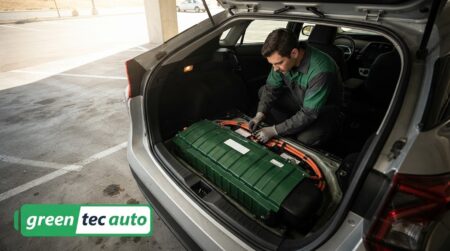
For the past 14 years, Greentec Auto has specialized in hybrid and EV battery replacement, with the goal of helping drivers find more affordable alternatives to expensive dealership quotes. With more than 30 locations across the United States, Canada, and the U.K., we work with a range of over 200 hybrid and electric vehicle batteries.
Rather than assuming the most expensive quote is your only option, you can explore alternatives that fit your vehicle and your budget.
Here are two individual customer cases from our own records:
Dealer quote | Greentec Auto | Saved |
|---|---|---|
$10,000 (quoted by Toyota) | Under $3,000 | Over $7,000 |
$12,000 (quoted by the manufacturer) | Just under $2,700 | About $9,300 |
Think about those numbers for a second. Ten thousand down to under three thousand. Twelve thousand down to under twenty-seven hundred.
These are individual documented cases, not typical results, and your own quote depends entirely on your vehicle. But they show why a second opinion is worth the phone call.
Pricing accurate as of November 13, 2026. Prices are subject to change. Check your year, make, and model on greentecauto.com for current pricing.
If you are reading this while shopping rather than while staring at a warning light, here is the summary.
None of this is a reason not to buy an electric or hybrid vehicle. It is a reason to buy one with your eyes open.
Before you buy, find out:
And if you are buying used, a hybrid or EV with a documented battery replacement and remaining warranty coverage is often a better buy than one with an original pack of unknown health at the same mileage. That documentation removes the exact uncertainty that makes these cars hard to sell.
That cuts both ways, which is the useful part. The same uncertainty that costs you money when you sell is the uncertainty you can buy your way out of when you are purchasing.
If you are watching your dashboard right now, or you are shopping and want to know what you would be in for, the answer takes one phone call.
Check your year, make, and model on greentecauto.com, or give us a call. Tell us the year, make, and model, and we can send you a battery quote so you know what a replacement would actually cost, before you ever need it.
Greentec Auto also offers free battery testing and diagnostics, so you can find out whether the pack is genuinely the problem before anybody spends money. Modules that fail testing go to Greentec Recycling, where nickel and other metals are recovered from nickel-metal hydride packs and lithium and cobalt are recovered from lithium-ion packs.
Mobile installation is available on many vehicles for an additional cost, and some models require shop installation.
The five that catch buyers off guard are depreciation, insurance, tires, public fast charging, and battery replacement. Depreciation is the largest: EVs lose an average of 57.2% of their value over five years compared with 35.4% for hybrids and 41.8% across all vehicles. Insurance can run higher because repairs cost more and require specialized facilities. Tires wear faster on heavy, high-torque vehicles. Public fast charging costs considerably more than charging at home.
Generally less well than hybrids or gas vehicles. The iSeeCars depreciation study puts five-year EV depreciation at 57.2%, against 35.4% for hybrids and an all-vehicle average of 41.8%. The main drivers are uncertainty about battery health and replacement cost on the used market, fast-moving range and charging technology that dates older models, and incentives on new vehicles that pull used values down. Individual models vary considerably, so check the specific vehicle rather than the category.
Often, yes, though it varies a great deal by vehicle, insurer, location, and driver. EV premiums can run higher because replacement parts are expensive, repairs may require specialized facilities, higher purchase prices mean higher replacement values, and damage near the battery pack can total a vehicle that would otherwise be repairable. Get quotes from two or three insurers for the exact year, make, and model you are considering before you buy, because the category average will not tell you what you will actually pay.
It depends entirely on the vehicle, the pack, and whether you go to a dealer or the aftermarket. Dealer quotes on EV packs can reach $20,000 or more on some models, and one widely reported Chevrolet Volt case involved a roughly $30,000 quote on a car worth about $10,000. Conventional hybrid batteries typically cost considerably less than EV packs. Because the range is so wide, the only useful number is a quote for your specific year, make, and model.
Not always, and this is where people get caught. Ask specifically whether the high-voltage battery is covered, whether gradual capacity degradation is excluded, whether there is a cap on what the plan will pay, whether a deductible applies, whether service records are required, and whether coverage transfers if you sell. Many plans cover sudden failure but exclude the gradual capacity loss that is actually how these batteries wear out. Read the contract, not the brochure.
Home charging is almost always cheaper, and often by a wide margin, depending on your electricity rate and which charging network you use. Public DC fast charging carries a significant premium per kilowatt-hour. There is also a hidden cost beyond the bill: repeated fast charging, especially in hot weather, adds thermal stress that accelerates battery wear over time. If you cannot charge at home, factor public charging costs into your comparison before buying an EV.
For many drivers, yes, mainly because of depreciation. Hybrids hold their value better than EVs by a wide margin, and hybrid battery replacement typically costs considerably less than an EV pack. A conventional hybrid also needs no charger installation and no charging plan at all. An EV can still win on fuel and maintenance costs if you charge at home and keep the car a long time. The answer depends on your driving, your charging access, and how long you plan to own it.
Get a second opinion first. A dealer quote reflects a new OEM pack at dealer labor rates, which is the most expensive route to the same result. Before paying anything, get a diagnosis confirming the pack is actually the fault, check your warranty and any open recalls by VIN, then get a complete aftermarket quote for your exact vehicle with battery type, labor, and warranty terms itemized. Ask whether the warranty covers parts and labor and whether the cells are new or the modules are used.
No. A failing pack is a replaceable component, not the end of the vehicle, and in most cases replacing it costs far less than replacing the car. The question worth asking is whether the rest of the vehicle has years left in it. If the car is otherwise sound and you plan to keep it, replacement is usually the far cheaper path. If major repairs are also due or there is significant rust, that changes the math, and the battery was never really the issue.
*Offer cannot be combined with other promotions.
We use cookies and similar technologies to operate the website, understand how it is used, and support advertising. Optional analytics and marketing technologies will not be activated unless you give your consent. You can accept all, reject non-essential technologies, or manage your preferences. You can change your choices at any time.
Your browser sends a Global Privacy Control signal, so advertising stays off unless you switch it on yourself.